


Naro Khachoma, Naropa’s Space Lady
Recently I was contacted by a member of Tsem Tulku Rinpoche’s sangha who asked if I could write a blog post about Tsem Tulku Rinpoche’s activities and recent birthday. In familiarizing myself with his activities, I was really happy to see that within the larger website for his organization, Kechara, there are a number of specific blog posts about the Gelug approach to Vajrayogini: Naro Khachoma.
I invite you to take a look: http://blog.tsemtulku.com/tsem-tulku-rinpoche/category/vajra-yogini
This form of Vajrayogini was given directly to the Mahasiddha Naropa by Vajrayogini herself. Naropa passed the practice of Naro Khachoma to the two Nepali Pamthingpa brothers (Vagisvarakirti and Bodhibhadra) who after spending years studying and practicing with Naropa, brought the teachings back to Nepal. According to Glenn H. Mullin the Pamthingpa brothers spent years in retreat in their hermitage in Parping, a very important site to Vajrayogini practice. Below is a picture of the main Vajrayogini temple in Parping that I visited in 2008.

Eventually the Pamtingpa brothers eventually ended up teaching Melgyo Lotsawa Lotro Drakpa, an early Sakya translator/practitioner and teacher of the great Sakya teacher Kunga Nyinpo. In this way Naro Khachoma practice was included within the Sakya lineage, and later worked its way into the Gelugpa lineage. Naro Khachoma, or Naropa’s Space Lady, is still a very highly regarded practice within these two lineages; a practice that is profoundly powerful in its effacacy of transmuting one’s experience of ordinary being into that of the blissful immediacy of Vajrayogini and her consort Heruka Chakrasmvara.
Perhaps Tsem Tulku Rinpoche could one day share his thoughts on death and the process of dying and aspects of bringing Vajrayogini to these events with us here…
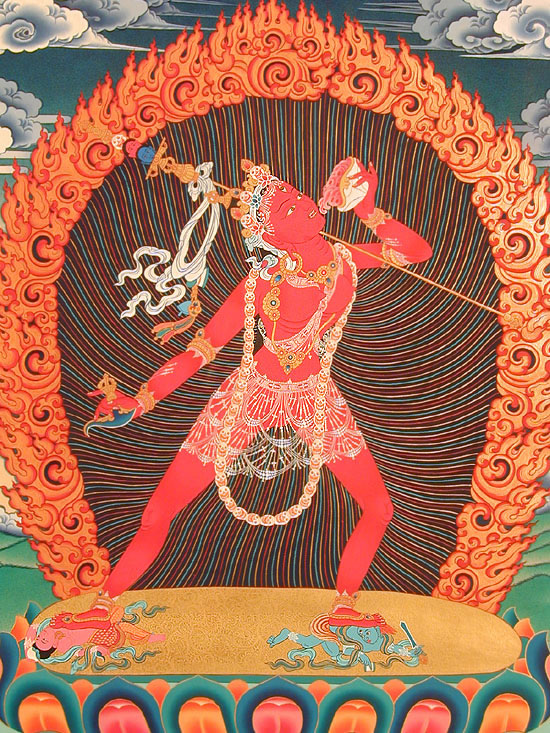
Praising Vajrayogini and the Dakinis
I prostrate of the glorious
Vajra Dakini, queen of the dakinis,
The savior of beings who has
The five wisdoms and the three bodies.
I prostrate to all of the many vajra dakinis
Who cut the bonds of conceptual thought
Even while doing various forms
Of worldly activity.
(Taken from Sermey Khensur Lobsang Tharchin Rinpoche’s Sublime Path to Kechara Paradise.
Chod, Death and Green-Wood Cemetery
A couple of days ago I learned that in 1860 Green-Wood Cemetery in Brooklyn attracted 500,000 visitors, rivaling Niagara Falls as America’s greatest tourist destination. This monumental 478 acre cemetery is home to 560,000 graves including that of Leonard Bernstein, Jean-Michel Basquiat, Louis Comfort Tiffany, Boss Tweed and many other illustrious artists, politicians and inventors. It’s also an amazing place to practice Chod.

Over the years we have very effectively averted our eyes from death; we love to avoid the topic of death as well as that of illness and old age. Perhaps there is convenience in this as it allows ourselves to feel ever young and invincible. However a visit to Green-Wood (or any cemetery) helps to shake loose the taboo nature that death occupies, effectively reeling it in from the periphery of our experience of daily life. On a recent trip with my son and girlfriend we meandered through the beautiful grounds of Green-Wood observing the memorialized names of those who are no more. The comparatively young age at which many of Green-Wood’s residents passed away- at least a third of the grave we saw that day were those of young children or young women who died in child-birth, is particularly striking. As one would expect to find, there is a wide variety of ages and cultural back grounds represented, further demonstrating with basic simplicity the fact that death does not discriminate.
It is easy to gloss over the recognition of impermanence that the Buddha came to recognize so early in his spiritual quest. The realization that all beings are subject to birth, sickness, old-age and death serve as the core existential foundation-stone upon which the rest of Buddhism in all of its forms is based. Perhaps over time this can seem to feel a little stale, as just as in his day when the Buddha was still Prince Siddhartha, we are so adept at hiding sickness, old age and death from our immediate view; death and even illness for that matter has become somewhat abstracted, and aging is something that we are told by media to avoid as best as possible. Talk about suffering! Nevertheless, we are born, we will experience illness, most of us will experience old age, and all of us will experience death- there’s no real hiding this fact. However there is joy to be had, and this joy can be found when coming to terms that these profound events affect everyone, that we are all linked together by these similar existential events, and there is a certain beauty in knowing that not only are we not alone, but we are surrounded by countless other beings who share similar existential circumstances.

Earlier today I went to Green-Wood cemetery to practice Chod. I went because I had the day off and it felt like a personally meaningful means through which I could resolve a certain anxiety that I felt regarding my upcoming clinical placement at New York Presbyterian Cornell-Weill as a chaplain-intern. It’s a new beginning for me- one that I would like to approach in a thoughtful and centered manner. Chod is an amazing form of meditation that was developed by Machig Labdron, a female Tibetan Buddhist master who lived in twelfth century Tibet. As a child she was precocious, and grew up to become an accomplished yogini who, in formulating the meditation practice known as Chod, yoked prajnaparamita literature with elements of tantric Buddhism into a system of meditation that has the unique reputation as the only dharma that was formulated in Tibet and then spread southwards into India. As the inspiration behind the synthesis of Chod lays within both the Mahayana tradition (through the prajnaparamita sutra, or the perfection of wisdom sutra) and aspects of Vajrayana (tantric Buddhist practice, most notably the practice of Vajravarahi), it is a very well balanced and multifaceted practice. Indeed, Chod can be approached as a complete path.
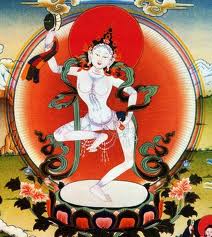
Traditionally Chod was practiced in charnel grounds and other fear inducing sites. Such sites were common in India and Tibet as many mountain passes, cross-roads, trees, and other sites were thought to be inhabited by malevolent spirit beings. Charnel grounds in particular were regarded as frightful not only because one commonly found bodies in various states of decay and decomposition, but because wild scavenging animals were easily found feasting on human remains. They are excellent places to face your fears. In fact, it is said that the Buddha had instructed many of his students to go to charnel grounds in order to contemplate impermanence amidst the decaying bodies of other humans.

Needless to say, such places aren’t really easy to find here in 21st century America- so, one has to be creative. Some of the beauty of Green-Wood lies in the fact that many of the grave markers are themselves quite old. Marble doesn’t hold up to elements as well as granite and other masonry material- it is soft and as it ages it slowly wastes away leaving eerie images behind. Some marble grave markers become hard to read thereby reinforcing the point that this is a place where people are left with very few to continue to witness the fact that they were ever there. Even the stone memorial markers are subject to impermanence.
One of the central features of Chod is the practice of visualizing that one chops oneself into pieces that then form an offering. We slice off our skin and chop up our body, remove the organs, cut out the eyes, perhaps smash the skull, and allow the marrow to slowly flow. In varying configurations we offer this mandala offering to all of the Buddhas, our lineage masters, dakinis and the wisdom protectors as well as to our own personal demons that represent our fears, our attachments, our insecurities, as well as to local gods, demons and spirits, as they too need care. In essence, we offer every aspect of the matrix of our being to all other beings that we can conceive of, what remains is liberated Buddha-essence: non-referential and timeless. It is a means of dramatically looking at where and what the “me” that we constantly tend to self identify with actually is. It’s also a means of facing the attachment that we all too naturally tend to develop towards our bodies, our personalities, and other ways in which we self-identify as independently existing entities.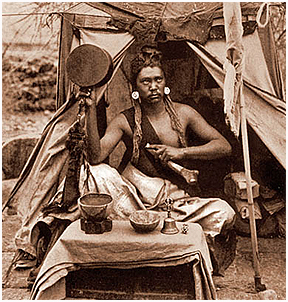
What was striking today after having made a certain ruckus in the cemetery with my chod drum, bell and thigh-bone horn as any good chodpa is willing to do, is that just sitting in a state of open reflection of the impermanence of life while at Green-Wood is particularly profound. It became evident that one need not only do Chod to necessarily feel the supportive reminder of how fragile and relatively short this life of ours may be. The contemplation of impermanence as well as the Four Noble Truths in a cemetery is a wonderful way to find freshness in the joyously simple truths-by-extension that flow effortlessly from such meditations. In fact, I was left with the feeling that we need more cemetery practice- more excitement. There are many places that tend to be avoided or simply glossed over that occupy great seats of power as places through which we can challenge and confront those things that are inconvenient.
It seems important to make the time to do such practices. It seems even more important to find powerful places to do such practices; it’s apparent to me that in the heart of Brooklyn such a powerful place exists- I look forward to finding other such sites. Gowanus canal?
Buddhism, Islam, and appearance
This post is intended to address the disturbing reactions to the Islamic cultural center that is proposed to be built near the world trade center site. The anger and “islamaphobia” that has arisen as a result of the proposal to build the center acts as a direct challenge to the ideals that America as a nation ideally represents. That some New Yorkers are participating in the protests and exhibitions of intolerance seems provincial and pedestrian given the fact that they live in what is an international city, home to people from countries all over the globe, who in turn represent and practice a wide variety of the world’s faiths. Needless to say, the intensity of these reactions seem to be based upon fear of difference and or fear of the unknown.
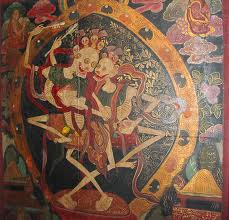
Despite my own personal feelings on this issue, I thought that this is the perfect time to share a picture I took at an exhibition of Indian Sufi art titled Light of the Sufis: The Mystical Arts of Islam that was held at the Brooklyn Museum of Art from June to September of 2009.

The painting depicts three sufi mendicants and one Buddhist yogin (practicing what I would assume is a Vajrayana completion-stage yoga based upon his asana as well as the use of the meditation belt). Even though the exhibition gave very little information regarding the subject of the painting, the moment I saw the portly yogin I was convinced that an interfaith meeting of some sort was underway.
I brought this image with me to India to show H.E. Gyaltsab Rinpoche as he has a passionate interest in history, especially regarding the overlap between Buddhism and Islam. By most accounts Vajrayana (tantric Buddhism) was born somewhere in or around the Swat Valley in northern Pakistan. Other portions of Pakistan, Afghanistan, and northern Central Asia figure largely in the development and dissemination of tantric Buddhism. Many great buddhist teachers spent time in this region- generally refered to as Uddiyana. Such illustrious figures include the Mahasiddhas Tilopa and Kambala, and more recently Orgyen Rinchen Pal (1230-1309 CE) who brought to Tibet a unique system of meditation based upon the Kalachakra Tantra. It is also said that Padmasambhava (Guru Rinpoche) was said to be born somewhere within the Swat valley- the same valley that over the past year has seen terrible devastation in relation to the war in Afghanistan.

Bodhisattva image from Afghanistan
In response to the photo of the painting that I brought, H.E. Gyaltsab Rinpoche told me the story of a Buddhist teacher who was described in a historical treatise by Gendun Chophel. There was once a yogin (Rinpoche never gave the name) who wandered through Afghanistan and some of what is now Iran, and after some time started to teach. According to Rinpoche, this very realized teacher interchanged Buddhist philosophical terms such as Dharmakaya and nature-of-mind with Allah when he taught as a means to appeal to his audience. The sensitivity and depth of his teachings were eventually recognized by an elder Sufi teacher who came to name this Buddhist as his successor. When the elder teacher passed away, this Buddhist teacher took over teaching the sufi congregation and when he in turn passed away was eventually recognized as a great Muslim saint. It seems that the attachment to Buddhist dharma or Islamic dharma wasn’t an issue for this great and now unfortunately relatively forgotten teacher; the play of appearance was a means to express something beyond any particular cultural reference.
I am reminded of the story of Taranatha and one of his teachers named Buddhaguptanatha. Buddhaguptanatha (1514-1610? CE) was an Indian Buddhist yogin who also held and practiced several Hindu yogic traditions. Taranatha apparently discovered this fact while Buddhaguptanatha was in the midst of bestowing a series of empowerments that he himself had received from his guru, Shantigupta. Taranatha was particularly challenged by the idea that his teacher also practiced Hinduism. Sensing his student’s sectarian reaction Buddhaguptanatha became upset and abruptly left Tibet leaving the series of empowerments incomplete. It is humbling that even for a teacher as great as Taranatha, the notion of “pure” Buddhism being mixed with Hinduism was a challenge- that on some level his own sense of distinction got the better of him. It seems that as Buddhists we must be willing to let go of the “Buddhism” in the Dharma- relaxing into appearance as it comes. However, maybe this isn’t something that just Buddhists should try to do- what if we just let appearances arise and not be too concerned with their comparative characteristics?

From the standpoint of meditation I am particularly fascinated by how we naturally fall back into habits based upon the conception of time and definitions. There is a certain convenience to viewing the world in terms of borders, of ideas as separate and in contrast to one another, and of faiths as distinct and at odds with one another. However, when we really look, especially at ourselves and the way we interact with things around us, the sense of separation isn’t as distinct. When we allow ourselves to slip out of the me/mine self/other dynamic, things blend together in a way where perhaps all the distinctions become unnecessary and overly unimportant- or at the very least, less distinct. Appearance just is, and need not be elaborated upon.
Now might be a good time to examine just how and why we react so strongly against the things that disturb us; the things that cause fear are often not fully seen for what they truly are.
Anniversary of Bokar Rinpoche’s parinirvana
Today is the six-year anniversary of the parinirvana of Kyabje Bokar Rinpoche. With that in mind I want to share a prayer for the return of Bokar Rinpoche by His Holiness the 14th Dalai Lama. May there be no hindrances in his swift return!!
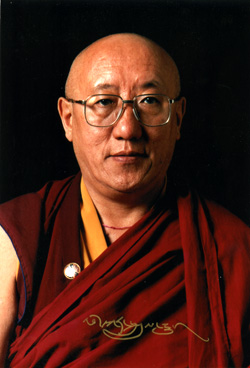
A Prayer for the Swift Return of Kyabje Bokar Rinpoche
by His Holiness the 14th Dalai Lama
From the empty, unimpeded play of dharmadhatu-awareness
The myriad objects of refuge abiding in oceans of pure realms
Perpetually radiate compassionate enlightened activity.
Grant your blessings that the intent of these aspirations is expediently fulfilled.
Treasury of the secret and profound teachings of the practice lineage,
Your wisdom having fully blossomed, with fearless confidence
You expound the essence of the dharma of definitive meaning.
Unrivaled supreme lama, please heed our call.
Upholder of the heart essence of the Victor’s teachings,
Benevolent nurturer of beings, we beseech you to continuously
Provide refuge to those endowed with faith and without protection.
Gazing upon us with compassion, may your incarnation swiftly appear!
By the potent waves of the authentic blessings of the peaceful and wrathful three roots,
Unencumbered by obstacles and unfavorable circumstances,
May the desired fruits of our intentions fully ripen and
May they continuously manifest in glorious abundance!
The illuminator of the practice lineage, Bokar Karma Ngedon Chokyi Lodro Rinpoche having quite suddenly entered the state of peace, his monastery and Khenpo Lodro Donyo with offerings have requested me to write a prayer for his swift return. Thus I, the Dalai Lama Tenzin Gyatso, a monk of Shakyamuni’s tradition, have written this on the 23rd day of the 7th month on the Wood Monkey year of the seventeenth cycle, September 7, 2004.
Khenpo Lodro Donyo Rinpoche on Practice for Others
I recently arrived home from a wonderful and highly recharging six-week period in India. While there, I split my time between Mirik, near Darjeeling, where Bokar Ngedhon Chokhorling (Kyabje Bokar Rinpoche’s seat in India) is located, Ralang, Sikkim, where His Eminence Gyaltsab Rinpoche’s seat-in-exile is located, and in Varanasi/Sarnath.

As I posted before I left, I had intended in requesting the ven. Khenpo Lodro Donyo Rinpoche, the dharma brother and direct heart-son of Kyabje Bokar Rinpoche, for some thoughts regarding the way we may be of benefit for people through the practice of ritual and the recitation of prayers and mantras for those who are sick, dying or who have passed away. While I was in Mirik, an old friend and former professor emailed me regarding the launch of changchub.com. He was quick to offer compliments regarding the structure of the site, and also expressed: “offering prayers on the behalf of others is something deeply established in the monastic tradition of the Himalayas; however, it is quite new to our culture.” Then he posed an excellent question: is it time for this in the west, and may such prayers be offered by lay people as well as monks?
This question is a good one. Thank you for bringing it up Robert!
For me, it raises questions in terms of what the true difference between the lay practitioner and the ordained practitioner may actually be- it reminds me of both the Vimalakirti Sutra and also the spirit of enquiry expressed in Vipassana (Tib. Lhaktong) meditation.
So, what is the difference between lay and ordained? Additionally, the question can be extended to what is the difference between “eastern” and “western” cultures?
Clearly, the goal of reflecting on these questions in an open way is not to carelessly toss the relative differences aside, as wonderful beauty exists in both lay practice with its endless possibilities for practice, as well as that of the cloistered support of the ordained sangha member. Then there is the natural beauty of the difference between being from Brooklyn and Darjeeling, for example.
However, perhaps it is possible to see that despite the apparent differences the same dharma is shared; the nun and the householder share the same essence- the root of the essential sameness is the point. At least that’s the way I came to formulate my answer to the question posed. We bring the tone and flavor to our own actions- a monk or nun with a busy distracted mind is the same as a layperson with a similarly distracted mind. Likewise, a layperson with clear penetrating recognition of the suchness of their mind is no different from a nun or monk with a similar view. That said, the ordained sangha performs the vital role of preserving the actual lineage- but it should not be forgotten that as lay-people, when we receive instructions and practice them, we too are preserving a practice lineage.
As for offering prayers or performing ritual practice for others; making such offerings and dedicating the merit of practice for others is of immense benefit to the recipient. It helps to create the conditions of peace and the alleviation of suffering; it is an act of kindness, a reminder of our interconnectedness, and an act of skillful-means. It seems to me to be the fresh-faced other-side-of-the-coin that is meditation practice; something that is often seen as solitary, often aimed at individual personal spiritual development, and perhaps in the West presented in an all too myopic fashion. Maybe we could benefit from being shaken up a bit and made to exercise more of the compassion side of the wisdom/compassion relationship…
I would like to return to this subject in the near future, as I feel that it’s an important one, but for now, I’d like to share Khenpo Rinpoche’s wonderful instructions.
As I had previously intended on asking Khenpo Rinpoche what should be done to benefit those who are sick, dying, or have passed away, on July 5th, I happily took this extra question to him as well. There’s a great bio of Khenpo Rinpoche at the gompa’s website: http://www.bokarmonastery.org, if you’d like more information about him, the late Kyabje Bokar Rinpoche, and Bokar Ngedhon Chokhorling.

Ven. Khenpo Lodro Donyo Rinpoche on Practice for Others
When one is going to die, you should try your best to pacify the dying person’s mind. Try to bring peace. If the person is Buddhist then you can recite the lineage masters’ names, or for example “Karmapa Chenno” (Karmapa think of me), as well as one’s own root master’s name. If the person has died, you can whisper these in the person’s ear in a pleasing voice. You can also recite the names of various Buddhas and Bodhisattvas, for example, Amitabha (mantra: Om Ami Dhewa Hri), or Chenrezig (mantra: Om Mani Padme Hum), or some other mantra; whatever you know.
These are very important. You see, when one is dying as well as for the person who has passed away, after their death, while in the Bardo state hearing the names of Buddhas and Bodhisattvas and lineage masters makes one recall the Dharma; it is like a positive habit where one remembers the dharma and then can easily be liberated. This is very important.
If the person is non-Buddhist you can see if the person likes hearing the names and mantras of Buddhas and Bodhisattvas or not. If one likes to hear the names and mantras of Buddhas and Bodhisattvas and they are not Buddhist that’s fine.
If one dislikes hearing such names or mantras then you shouldn’t say them, but mentally you can visualize or recite the names and mantras of Buddhas and Bodhisattvas to help the person who is either sick, dying, or has died. You should also visualize yourself as Chenrezig or Amitabha while your mind and the mind of the deceased person are merged, and then meditate. Also, you should do tonglen. You see, you should send your happiness, your virtuousness, your peace, to the person who has passed away- expelling their sorrows, fear, and unhappiness. This is an excellent time to do tonglen practice.
Without saying anything, you can also mix your mind with the mind of the person who has died and rest in the Mahamudra state.
These things, along with meditation on love and compassion are the best things that you can do.
When one is sick you can do Sangye Menla (Medicine Buddha), Lojong, and others, Guru Yoga, Dorje Sempa (Vajrasattva)- anything that purifies. You should try your best to examine what is best for the particular person- check the situation.
Basically, any practice can be done for the person who has died. Often though, it is good to do Amitabha so that the person may be reborn in Amitabha’s pure land. You can do the Dewachen Monlam many times, for forty-nine days, or three weeks, or one week even- or alternatively you should do the longer Amitabha practice if you know it and have the time.
All of these things will help.
[Note: While Rinpoche and I were talking, I specifically brought up to him the fact that for some in the West the dedication of prayer or ritual offerings for the benefit of those who are sick, dying or have died, may seem new as it tends to be less emphasized when one normally thinks of Dharma practice, and I asked if it is okay to perform such activities. Khenpo Rinpoche was very enthusiastic in his response, saying that indeed anyone can do practice for others. One can do whatever practices that they know. The most important thing is that one is trained in the practices that they are doing for others- this means that if the practice requires an empowerment and reading transmission, then these must be obtained, as well as whatever subsequent instructions are necessary to perform the practice. Practicing for others should not be seen as limited to ordained sangha members. He was very definitive in expressing this.]
May this be of benefit!
gone fishing… …in India!
Later today I am leaving for a six week trip to India. I will be heading out to see His Eminence Gyaltsap Rinpoche, at either Rumtek or Ralang monasteries.

H.E. Gyaltsab Rinpoche

Ralang
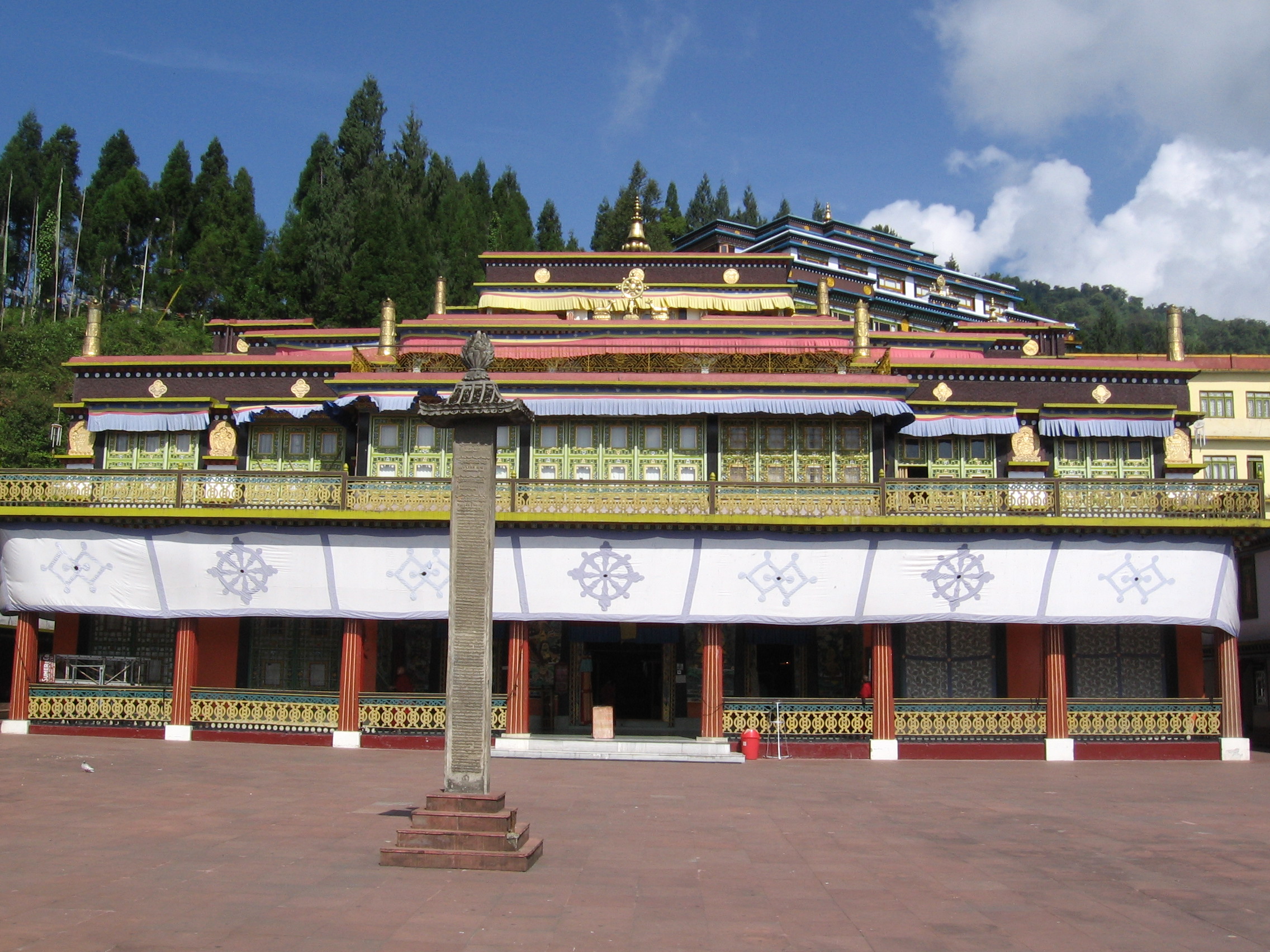
Rumtek
There may be the opportunity to also meet with Bhue Rinpoche. In addition to receiving further instruction, spending time in retreat, and pilgrimage, I look forward to discussing changchub.com (http://www.changchub.com) with Gyaltsab Rinpoche. Hopefully I will be able to secure an interview with His Eminence for the blog. Additionally, I’d like to see if I can add Akshobya practice to the list of practices that are offered through changchub.com. The practice of the Buddha Akshobya is one of the most well known means for purification of those who have passed away; it’s particularly effective in resolving the occurrence of anger at the point of death, and allows for a peaceful solid passing through the bardo. I had the wonderful opportunity to receive instruction on the practice from His Eminence in Bodh Gaya in 2007- and hope to see it added to the website.
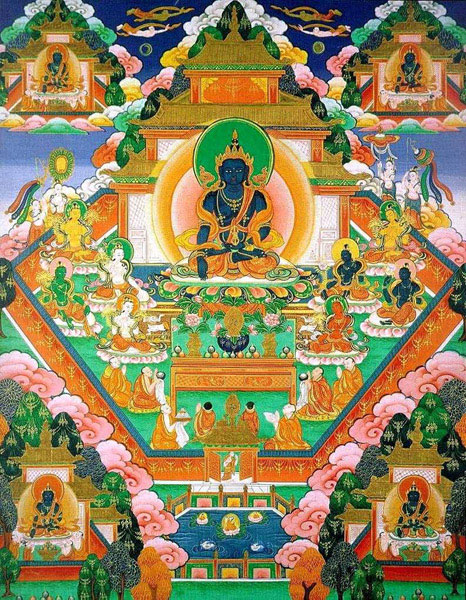
Akshobya
There will also be some time spent in Mirik, the small town that’s home to Bokar Rinpoche’s seat, Bokar Ngedon Chokhor Ling. I hope to spend some time practicing in the presence to the stupa that holds the remains of Bokar Rinpoche, as well as meeting with Khenpo Lodro Donyo Rinpoche- the abbot of Bokar Ngedon Chokhor Ling, and close dharma brother to the late Bokar Rinpoche. There may be the opportunity to interview Khenpo Rinpoche for the website as well.

Bokar Ngedon Chokhor Ling
During this six week period, I’ll also be thinking of a variety of ways to open up the blog a bit- about ways to include other voices and other perspectives. I friend of mine recently got in touch with me and suggested that we create a council of blog contributors. I’ll spend some time in rainy monsoon Sikkim considering how best to make that happen.
It will be nice to have the opportunity to engage in slowing down, taking time to quiet the mind, and deepen practice. It is such a good thing to break the habits of daily business and preoccupations to remind ourselves of everything else, of all of the “ordinary” things that we tend to over-look as we zoom from here to there like busy bees.
Until the beginning of August, I wish you all the best.
A prayer…
In the palace of the immaculate Buddhafield of Ankanista, Buddha Akshobya Vajrasattva, the most excellent, remain present until the very final limits, I supplicate. Please bestow the supreme siddhi of Mahamudra.
In the Eastern land of Sahor in the jeweled gompa, Buddha Akshobya Tilopa, ultimate yogin, I supplicate. Please bestow the supreme siddhi of Mahamudra.
In [Kahora] from the perfected gompa, Buddha Akshobya pandita Naropa, ultimate accomplishment, I supplicate. Please bestow the supreme siddhi of Mahamudra.
In the warm Lho, land of herbs, Buddha Akshobya Marpa Lhodrak, ultimate blessing, I supplicate. Please bestow the supreme siddhi of Mahamudra.
In the west where the wholesome king mount Kailash [resides], Buddha Akshobya yogin Milarepa, the ultimate tantra of meaning, I supplicate. Please bestow the supreme siddhi of Mahamudra.
In the eastern residence of the summit of mount Gampo, Buddha Akshobya venerable Gampopa, ultimate transmission of the teachings, I supplicate. Please bestow the supreme siddhi of Mahamudra.
In the sacred place of Tsurphu gompa, Buddha Akshobya glorious Dusum Khyenpa,the ultimate practice lineage, I supplicate. Please bestow the supreme siddhi of Mahamudra.
In the realm of supreme secret delight, Buddha Akshobya glorious Guyasamaja,ultimate illusory manifestation, I supplicate. Please bestow the supreme siddhi of Mahamudra.
In the bhaga of the supreme Vajra Queen, Buddha Akshobya glorious Chakrasamvara,ultimate Chakrasamvara, I supplicate. Please bestow the supreme siddhi of Mahamudra.
Retreatant in the assembly of [the secret abode of the dakinis], Buddha Akshobya Bhagavan Hevajra, ultimate creator of happiness [bliss], I supplicate. Please bestow the supreme siddhi of Mahamudra.
In the gathering of purified completely blazing bliss, Buddha Akshobya Mahakala, with his consort and retinue gathered, ultimate guardian of the teachings, I supplicate. Please bestow the supreme siddhi of Mahamudra.
Having been supplicated, please transmit your blessings. Please totally remove all obscurity everywhere. To great liberation may I tread the highest path. Through this path of insight, may I immediately achieve Buddhahood!
Patrul Rinpoche on the uncertainty of death…
Patrul Rinpoche (1808-1887) was a great Tibetan meditation master of the Nyingma Lineage. While preserving that particular lineage of Buddhism in Tibet, and spreading the transmission lineage of the Longchen Nyingthig, Patrul Rinpoche was essentially a Rime (non-sectarian) master. Spending most of his time in retreat, he came to experience the essence of the dharma. What follows are his thoughts on the uncertainty of the circumstances of death- they are still quite compelling today. I’ve take this passage from Words of My Perfect Teacher, by Dza Patrul Rinpoche, translated by the Padmakara Translation Group.
The Uncertainty of the Circumstances of Death
Once born, ever human in the world is sure to die. But now, why, when and where we are going to die cannot be predicted. None of us can say for sure that our death will come about at a particular time or place, in a certain way, or as a result of this or that cause.
There are a few things in this world that favor life and many that threaten it, as the master Aryadeva points out:
Causes of death are numerous;
Causes of life are few,
And even they may become causes of death.
Fire, water, poisons, precipices, savages, wild beasts- all manner of mortal dangers abound, but only very few things can prolong life. Even food, clothing and other things usually considered life sustaining can at time turn into causes of death. Many fatalities occur as a result of eating- the food might be contaminated; or although normally wholesome it might be toxic in combination with other foods; or it might be the wrong food for a particular individual. Especially, nowadays, most people crave meat and consume flesh and blood without a second thought, completely oblivious to all the diseases caused by old meat or harmful spirits. Unhealthy diets and lifestyles can also give rise to tumors, disorders of phlegm, dropsy and other diseases, causing innumerable deaths. Similarly, the quest for riches, fame, and other glories incites people to fight battles, to brave wild beasts, to cross rivers recklessly and to risk countless other situations that may bring about their demise.
Furthermore, the moment when any of those numerous different causes of death might intervene is entirely unpredictable. Some die in their mothers’ womb, some at birth, others before they learn to crawl. Some die young; others die old and decrepit. Some die before they can get medicine or help. Others linger on, glued to their beds by years of disease, watching the living with the eyes of the dead; by the time they die, they are just skeletons wrapped in skin. Many people die suddenly or by accident, while eating, talking or working. Some even take their own lives.
Surrounded by so many causes of death, your life has little chance of enduring as a candle-flame in the wind. There is no guarantee that death will not suddenly strike right now, and that tomorrow you will not be reborn as an animal with horns on its head or tusks in its mouth. You should be quite sure that when you are going to die is unpredictable and that there is no knowing where you will be born next.

Patrul Rinpoche
Maitripa on mahamudra
Today I’d like to share an essential instruction of mahamudra by the great Indian mahasiddha Maitripa. Maitripa was a student of the mahasiddha Shavaripa, an early master of the Mahamudra lineage, and originator a mahakala transmission lineage based upon his visionary experiences in a cave on a mountain just north east of Bodh Gaya. This site is also the location of Śītavana charnel ground, also known as Cool Grove charnel ground. It was commonly believed that Cool Grove was a place frequented by ghosts, a place where strange things happened, and where wild animals would come and eat the remains of people who were brought here after death. Śītavana is listed as one of the eight great charnel grounds. It was a place for profound meditation, but also a place of danger.

Maitripa
Maitripa was one of the central teachers of Marpa Lotsawa, the great Tibetan translator who brought the early Kagyu lineage instructions from India to Tibet. Maitripa’s mahamudra instruction was unique and goes back to the great siddha Saraha, who is credited with being the source of the Mahamudra lineage. It is believed that Maitripa spent a good deal of time in the foothills of the eastern Himalayas, near the town of Mirik, in West Bengal.
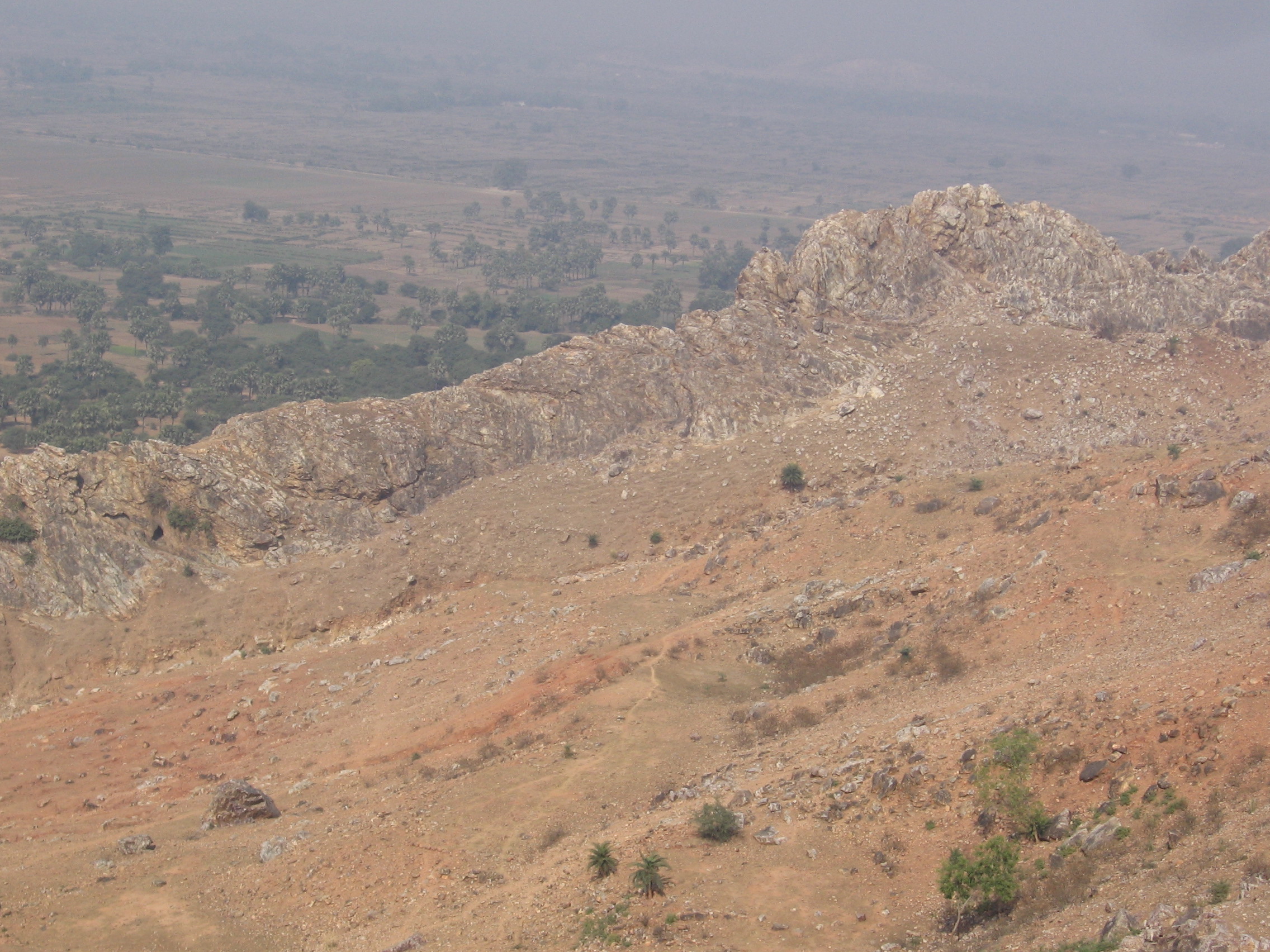
Śītavana
Maitripa’s Essential Mahamudra Verses
To innermost bliss, I pay homage!
Were I to explain Mahamudra, I would say—
All phenomena? Your own mind!
If you look outside for meaning, you’ll get confused.
Phenomena are like a dream, empty of true nature,
And mind is merely the flux of awareness,
No self nature: just energy flow.
No true nature: just like the sky.
All phenomena are alike, sky-like.
That’s Mahamudra, as we call it.
It doesn’t have an identity to show;
For that reason, the nature of mind
Is itself the very state of Mahamudra
(Which is not made up, and does not change).
If you realize this basic reality
You recognize all that comes up, all that goes on,
as Mahamudra,
The all-pervading dharma-body.
Rest in the true nature, free of fabrication.
Meditate without searching for dharma-body—
It is devoid of thought.
If your mind searches, your meditation will be confused.
Because it’s like space, or like a magical show,
There is neither meditation or non-meditation,
How could you be separate or inseparable?
That’s how a yogi sees it!
Then, aware of all good and bad stuff as the basic reality,
You become liberated.
Neurotic emotions are great awareness,
They’re to a yogi as trees are to a fire—FUEL!
What are notions of going or staying?
Or, for that matter, “meditating” in solitude?
If you don’t get this,
You free yourself only on the surface.
But if you do get it, what can ever fetter you?
Abide in an undistracted state.
Trying to adjust body and mind won’t produce meditation.
Trying to apply techniques won’t produce meditation either.
See, nothing is ultimately established.
Know what appears to have no intrinsic nature.
Appearances perceived: reality’s realm, self-liberated.
Thought that perceives: spacious awareness, self-liberated.
Non-duality, sameness [of perceiver and perceived]: the dharma-body.
Like a wide stream flowing non-stop,
Whatever the phase, it has meaning
And is forever the awakened state—
Great bliss without samsaric reference.
All phenomena are empty of intrinsic nature
And the mind that clings to emptiness dissolves in its own ground.
Freedom from conceptual activity
Is the path of all the Buddhas.
I’ve put together these lines
That they may last for aeons to come.
By this virtue, may all beings without exception
Abide in the great state of Mahamudra.
Colophon
This was Maitripa’s Essential Mahamudra Instruction (in Tibetan: Phyag rgya chen po
tshig bsdus pa), received from Maitripa himself and translated by the Tibetan translator
Marpa Chökyi Lodrö.
© Nicole Riggs 1999. Reproduction welcome
if not for profit and with full acknowledgement.
Bodhidharma says…
I suppose that as a gathering, this ganachakra has been a little himalaya-heavy. I’d like to include other voices. Essence-dharma cuts deep and clean no matter what tradition it comes from, and I often find that the difference in presentation of a different lineage hits me in a way other than what I have become habituated to- that’s a good thing.
Since I’ve been walking the foot path of training in contemplative care through the New York Zen Center for Contemplative Care I thought that I would turn to Bodhidharma’s Bloodstream Sermon. The direct and clear presentation of the Zen tradition is very refreshing. Bodhidharma is credited with bringing Chan/Zen Buddhism to China. Little is known of the details of his early life, but it is believed that he came from India where he left his life as a prince to become a monk and receive dharma transmission. Bodhidharma is counted as the 28th Patriarch of a lineage line that goes back directly to Buddha Shakyamuni himself. What is presented below is from The Zen Teaching of Bodhidharma, translated by Red Pine.
Bodhidharma says:
…The mind’s capacity is limitless, and its manifestations are inexhaustible. Seeing forms with your eyes, hearing sounds with your ears, smelling odors with your nose, tasting flavors with your tongue, every movement or state is all your mind. At every moment, where language can’t go, that’s your mind.
The sutras say, “A tathagata’s forms are endless. And so is his awareness.” The endless variety of forms is due to the mind. Its ability to distinguish things, whatever their movement or state, is the mind’s awareness. But the mind has no form and its awareness no limit. Hence it’s said, “A tathagata’s forms are endless. And so is his awareness.”
A material body of the four elements is trouble. A material body is subject to birth and death. But the real body exists without existing; because a tathagata’s real body never changes. The sutras say, “People should realize that the buddha-nature is something that they have always had.” Kashyapa only realized his own nature.
Our nature is the mind. And the mind is our nature. This nature is the same as the mind of all buddhas. Buddhas of the past and future only transmit this mind. Beyond this mind there’s no buddha anywhere. But deluded people don’t realize that their own mind is the buddha. They keep searching outside. They never stop invoking buddhas or worshiping buddhas and wondering Where is the Buddha? Don’t indulge in such illusions. Just know your mind. Beyond your mind there’s no other buddha. The sutras say, “Everything that has a form is an illusion.” They also say, “Wherever you are, there’s a buddha.” Your mind is the Buddha. Don’t use a buddha to worship a buddha…


![[Valid RSS]](valid-rss-rogers.png "Validate my RSS feed")
 Ganachakra