


On the importance of Prayer
A friend and classmate in my chaplaincy training program recently alerted our class to a newly conducted study led by Dr. Herbert Benson of Harvard University on the efficacy of prayer for people who are ill. Dr. Benson is no stranger to the world of prayer and meditation, in fact he has built an entire career around studying the physiological effects of meditation and prayer. His findings have generally supported the belief that beyond the spiritual benefits of meditation, the meditator experiences a whole host of benefits ranging from a decrease in stress levels, lower blood pressure, and a general slowing of the body’s metabolism.

In the past Dr. Benson studied a variety of Tibetan monks, including the meditation master Bokar Rinpoche, while they meditated. Dr. Benson focused upon meditators who were practicing Tummo, a vajrayana completion stage yogic meditation that fuses a form of pranayama (breathing exercises) with visualizations of the body’s internal energy matrix. He relates in a documentary based upon his findings, that he could not believe what he discovered: breath and heart rates decreased dramatically, and measured brain activity appeared completely unlike that of a person in waking state. Recent interest in exploring the relationship between meditation and neuroscience by the scientific community, especially in collaboration with H.H. the Dalai Lama and H. H. the 17th Karmapa will undoubtedly clarify the benefits of meditation, and thereby help many people who may become interested in including meditation within their daily lives.
Here is a link to a Harvard Gazette article on the subject:
www.news.harvard.edu/gazette/2002/04.18/09-tummo.html.
Additionally, I would like to share a link to a short video clip of Dr. Herbert Benson’s research: http://www.youtube.com/watch?v=WajTafbG7II.

The efficacy of prayer seems much harder to measure than that of meditation. The results of the study of meditation upon the physiology an individual meditator seem clear; they are easy to quantify, and allow for useful comparison of data recorded in studying a variety of meditators. The study of prayer in this way seems immensely difficult by comparison. Here is the link to the article that my friend emailed us last week:
Many salient points are raised by this study, and perhaps the most important one revolves around how such studies are structured. Prayer is a mysterious subject and it seems that it will take a number of attempts to be able to skillfully measure it’s effects. I do tend to agree with Dr. Richard Sloan’s warning in the New York Times article linked above that we must be careful not to destroy what prayer is about by deconstructing religion to “basic elements that can be easily quantified”. It would be ideal if future studies could honor the place and importance of science as well that of religion and sensitively examine where and how they overlap.
The vajrayana perspective on prayer is fairly clear: prayer is vital. Generally, ritual is included within prayer- often they are interwoven. The performance of prayer in this multi-dimensional way helps to form an active identification with the historical transmission lineage (from the Buddha directly to you), and allows you to rest in your basic-state as a particular buddha in body, speech, mind, as well as in essence. All of these coalesce around acting to benefit others (based upon our pledge to liberate all sentient beings). So important is this type of activity that most recensions of the Hevajra Tantra and Chakrsamvara Tantra, as well as most other root tantras, have chapters dedicated to engaging in the actions of Pacifying, Enriching, and Subduing. These kinds of actions can be best described as psycho-spritual activities to alleviate suffering, promote peace, and plant the seeds of liberation for others; prayer in this context, I would suggest, is quite important. Within the framework of Tantric Buddhism there is an active application of visualization, prayer, ritual and mantra recitation that help the individual to loosen up their conception of the ordinary identification of oneself as an independent being living in opposition to the external world with which they interact, so that one can glimpse the rich wealth of their buddha-nature which is deeply interconnected with the world around oneself. The tools: meditation, prayer and ritual help to clarify the recognition of our basic-state. In this context, prayer is a means to center oneself, to remain intimate with one’s teacher, a particular buddha or protector, or as a means to rest in the mind’s essential nature. It is also an offering; an act of generosity and kindness. Prayer also focuses the mind, making it a support of meditation, it can function as a means of clarifying doubt, as well as a means to receive inspiration. I am sure that this is not unique to vajrayana, or even Buddhism, but lies at the core of prayer regardless of one’s faith.

From the perspective of chaplaincy, specifically around the application of pastoral care in which prayer is requested, the exact physical result of prayer may not be the central goal as much as what the prayer does for the individual requesting it. The relationship between the person conducting the prayer and the person receiving it is a sacred and intimate relationship. Prayer may be directed towards aspects of the self that have little to do with the individual’s physical condition. Prayer can help relieve fear, a sense of separation from others, or help reinforce the inner ground that provides greater support for dealing with one’s particular situation. These factors, and a great many others may indeed lead towards an ability to heal more effectively, but it might have less to do with the actual prayer and more to do with the inner process that prayer energizes, relaxes, empowers, or clarifies. Perhaps it is this inner process that contributes to recovery from illness. Prayer and the use of ritual for a person who is actively dying may also help promote a greater sense of connection and meaning to a life that is transitioning into the experience of death- this can be profoundly important. Ultimately, prayer may not be best approached from the perspective of what it can do with regards to only physical responses, for surely prayer is mysterious, and some of the beauty involved in prayer is how it can return deeper meaning to various moments in an individual’s journey through life, creating a point of orientation that is more imaginal, timeless, and transcendent.

Buddhism, Islam, and appearance
This post is intended to address the disturbing reactions to the Islamic cultural center that is proposed to be built near the world trade center site. The anger and “islamaphobia” that has arisen as a result of the proposal to build the center acts as a direct challenge to the ideals that America as a nation ideally represents. That some New Yorkers are participating in the protests and exhibitions of intolerance seems provincial and pedestrian given the fact that they live in what is an international city, home to people from countries all over the globe, who in turn represent and practice a wide variety of the world’s faiths. Needless to say, the intensity of these reactions seem to be based upon fear of difference and or fear of the unknown.
Despite my own personal feelings on this issue, I thought that this is the perfect time to share a picture I took at an exhibition of Indian Sufi art titled Light of the Sufis: The Mystical Arts of Islam that was held at the Brooklyn Museum of Art from June to September of 2009.

The painting depicts three sufi mendicants and one Buddhist yogin (practicing what I would assume is a Vajrayana completion-stage yoga based upon his asana as well as the use of the meditation belt). Even though the exhibition gave very little information regarding the subject of the painting, the moment I saw the portly yogin I was convinced that an interfaith meeting of some sort was underway.
I brought this image with me to India to show H.E. Gyaltsab Rinpoche as he has a passionate interest in history, especially regarding the overlap between Buddhism and Islam. By most accounts Vajrayana (tantric Buddhism) was born somewhere in or around the Swat Valley in northern Pakistan. Other portions of Pakistan, Afghanistan, and northern Central Asia figure largely in the development and dissemination of tantric Buddhism. Many great buddhist teachers spent time in this region- generally refered to as Uddiyana. Such illustrious figures include the Mahasiddhas Tilopa and Kambala, and more recently Orgyen Rinchen Pal (1230-1309 CE) who brought to Tibet a unique system of meditation based upon the Kalachakra Tantra. It is also said that Padmasambhava (Guru Rinpoche) was said to be born somewhere within the Swat valley- the same valley that over the past year has seen terrible devastation in relation to the war in Afghanistan.

Bodhisattva image from Afghanistan
In response to the photo of the painting that I brought, H.E. Gyaltsab Rinpoche told me the story of a Buddhist teacher who was described in a historical treatise by Gendun Chophel. There was once a yogin (Rinpoche never gave the name) who wandered through Afghanistan and some of what is now Iran, and after some time started to teach. According to Rinpoche, this very realized teacher interchanged Buddhist philosophical terms such as Dharmakaya and nature-of-mind with Allah when he taught as a means to appeal to his audience. The sensitivity and depth of his teachings were eventually recognized by an elder Sufi teacher who came to name this Buddhist as his successor. When the elder teacher passed away, this Buddhist teacher took over teaching the sufi congregation and when he in turn passed away was eventually recognized as a great Muslim saint. It seems that the attachment to Buddhist dharma or Islamic dharma wasn’t an issue for this great and now unfortunately relatively forgotten teacher; the play of appearance was a means to express something beyond any particular cultural reference.
I am reminded of the story of Taranatha and one of his teachers named Buddhaguptanatha. Buddhaguptanatha (1514-1610? CE) was an Indian Buddhist yogin who also held and practiced several Hindu yogic traditions. Taranatha apparently discovered this fact while Buddhaguptanatha was in the midst of bestowing a series of empowerments that he himself had received from his guru, Shantigupta. Taranatha was particularly challenged by the idea that his teacher also practiced Hinduism. Sensing his student’s sectarian reaction Buddhaguptanatha became upset and abruptly left Tibet leaving the series of empowerments incomplete. It is humbling that even for a teacher as great as Taranatha, the notion of “pure” Buddhism being mixed with Hinduism was a challenge- that on some level his own sense of distinction got the better of him. It seems that as Buddhists we must be willing to let go of the “Buddhism” in the Dharma- relaxing into appearance as it comes. However, maybe this isn’t something that just Buddhists should try to do- what if we just let appearances arise and not be too concerned with their comparative characteristics?

From the standpoint of meditation I am particularly fascinated by how we naturally fall back into habits based upon the conception of time and definitions. There is a certain convenience to viewing the world in terms of borders, of ideas as separate and in contrast to one another, and of faiths as distinct and at odds with one another. However, when we really look, especially at ourselves and the way we interact with things around us, the sense of separation isn’t as distinct. When we allow ourselves to slip out of the me/mine self/other dynamic, things blend together in a way where perhaps all the distinctions become unnecessary and overly unimportant- or at the very least, less distinct. Appearance just is, and need not be elaborated upon.
Now might be a good time to examine just how and why we react so strongly against the things that disturb us; the things that cause fear are often not fully seen for what they truly are.
His Eminence Gyaltsab Rinpoche on Placing the Mind at the time of Death
Greetings! In keeping with the last post, I would like to continue along in a manner that accords with the way my recent trip to the Darjeeling and Sikkim areas unfolded. From the seat of the excellent Kyabje Bokar Rinpoche in Mirik, I journeyed to Palchen Choeling Monastic Institute, the seat of His Eminence Gyaltsab Rinpoche, in Ralang, Sikkim.

Nestled between the wonderful mountains of Tibet to the north, Nepal to the west, and Bhutan to the east, the site of the monastery is magnificent, inspiring and embued with peaceful beauty. To the south of the monastery is the retreat center, the largest in Sikkim, home to seventy-five retreatants engaged in the Karma Kagyu three-year retreat focusing on the Six yogas of Naropa. Behind the retreat center is a mountain upon which was the hermitage of a lama named Drubthob Karpo, known for his ability to fly. Nearby are the monasteries of Tashiding (built in the 16th century) and Pemayangtse, and many sites visted by Guru Rinpoche.
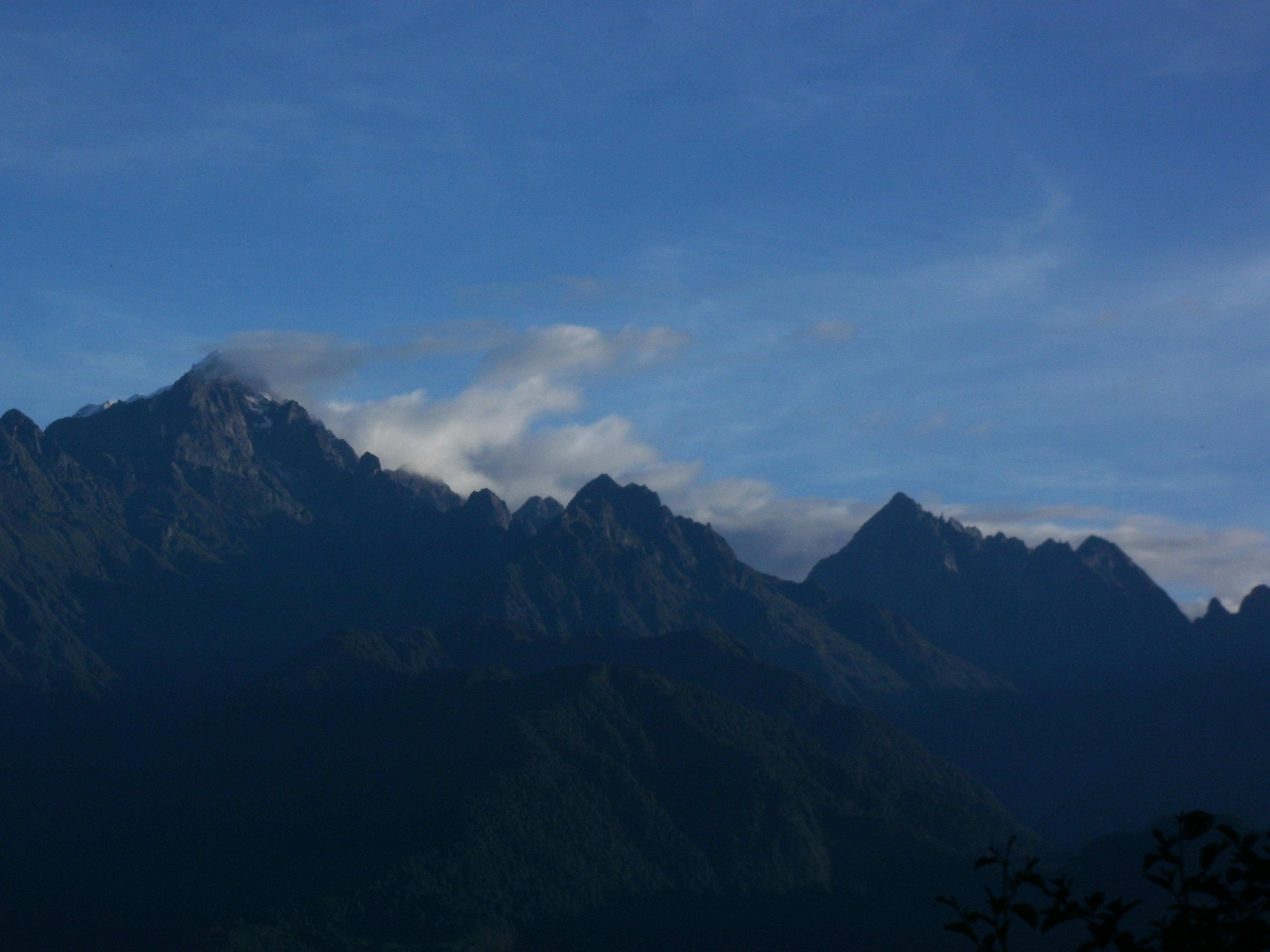
I had come to Ralang for an annual period of retreat and to continue to receive a little bit of instruction from His Eminence. He had just returned from Gyuto where he had spent the previous month or so with His Holiness the 17th Karmapa. Fortunately, a few days after my arrival Rinpoche told me that he would be bestowing the complete series of empowerments for the traditional three-year retreat to a group of monks from Mirik and Phodong; he said that I could sit in with the monks and recieve the empowerments as well. This seemed particularly auspicious to me as I would be with monks from Bokar Rinpoche’s monastery (my extended dharma family) and Phodong (a small rural gompa founded during the lifetime of the ninth Karmapa by the Chogyal of Sikkim who then offered it to the ninth Karmapa). Phodong gompa was a favorite of Ani Zangmo, Pathing Rinpoche and Bhue Rinpoche, and through them Phodong came to occupy a special place in my heart. I couldn’t think of any better company to have for such an endeavor.
Towards the end of my month-long stay at Palchen Choeling Monastic Institute I had the good fortune to ask Rinpoche about placing the mind at the point of death, as well as issues surrounding lay people offering prayer and ritual for others. I’ve included Rinpoche’s teaching regarding the placement of the mind at the point of death towards the end of this post following two descriptions of the Gyaltsab Rinpoche incarnation lineage.
As for the issue of lay people conducting prayers and for rituals for others, Rinpoche reiterated the position held by Khenpo Lodro Donyo Rinpoche, specifically that it is fine for lay people to engage in such activities, and that one should do whatever practices they know and or are qualified to practice. To be frank, this question was generally met with incredulous glances- it seems a little strange to ask “is it okay if I do something with the intention of benefitting another being?”. In any case, Rinpoche was both supportive and interested, as well as quite curious as to what the response was like to changchub.com.
So, here’s some history of His Eminence the 12th Goshri Gyaltsab Rinpoche…

The reincarnation lineage of the Goshri Gyaltsab Tulkus:
The website for Karma Triyana Dharmachakra, the North American seat of His Holiness the 17th Karmapa (http://www.kagyu.org/) describes the reincarnation lineage of the Gyaltsab Rinpoches as follows:
The twelfth Gyaltsab Rinpoche was born in Central Tibet in Nyimo, near Lhasa. From generation to generation his family was well-known for giving rise to highly developed yogis who achieved their attainments through the recitation of mantras and through Tantric practices. Gyaltsab Rinpoche was one such offspring who was actually recognized by His Holiness the Sixteenth Karmapa before he was born.
In 1959, Gyaltsab Rinpoche made the journey to Sikkim with His Holiness. He remained for a while with His Holiness’ settlement group in the old Karma Kagyu monastery, which had been built at Rumtek during the time of the ninth Karmapa. In the early 1960’s, Rinpoche received several very important initiations from His Holiness.
After these initiations, his father felt that his child should receive a modern education in English, so he took him to the town of Gangtok to study. However, with his extraordinary vision of what would be truly beneficial, the young Rinpoche chose to study Dharma in His Holiness’ monastery instead of remaining at the school. Just after midnight one night he left his residence in Gangtok and walked the ten miles to Rumtek alone. At sunrise he arrived at the new Rumtek monastery. When he first appeared, all the monks who saw him were surprised at his courage, and most respectfully received him in the main temple, where His Holiness welcomed him. Despite the conflict of ideas between his father and the monks about his education, he began to study the Mahayana and Vajrayana teachings of the lineage with three other high Rinpoches.
In Rumtek these four Rinpoches studied basic ritual rites and texts with private tutors. They also studied Mahayana philosophy through investigating numerous commentaries by early well-known Tibetan teachers and scholars, and teachings by masters of Indian Buddhism whose texts had been translated into the language of Tibet many centuries ago.
In previous lifetimes all four of these Rinpoches have been great teachers and lineage holders. In each of their lifetimes, one complete and unique example had been set up, beginning from a childhood learning reading and writing and going through the whole process of study, with a youth spent in discipline leading to a fully ripened human being.
Since the time of Shakyamuni Buddha, we are taught that we each must become a truly complete human being. For us as human beings the truth is that we develop the fruit of both good and evil by virtue of our own view, practice, and habitual reactions. This fruit of our own actions on both the physical and mental levels can be either positive or negative. As long as we are ordinary human beings we must deal with the truth of that experience.
Great teachers like Gyaltsab Rinpoche show a perfect example to human beings and especially to those who can relate to the idea that one is responsible for oneself and for others as well, and that no one else is responsible for how we spend our lives, whether we build for ourselves experiences of happiness or suffering. They show us that the difference between an enlightened and an ordinary human being is not one of wealth, title or position, but only one of seeing the present reality of mind experienced at this moment.

The history of the lineage of Gyaltsab Rinpoches:
The Gyaltsab Rinpoches have always been the Vajra Regents of the Karmapas and caretakers of the Karmapa’s monasteries.
Gyaltsab Rinpoche, through his long line of incarnations, has been known for being an expert in meditation.
Goshir Gyaltsab Rinpoche is the emanation of the Bodhisattva Vajrapani. In the past, Rinpoche incarnated as Ananda, the disciple of the Buddha Shakyamuni who had perfect memory and was responsible for reciting all of the sutras (teachings) of the Buddha before the assembly. Therefore Ananda was responsible for keeping all the words of the Buddha perfectly intact.
Gyaltsab Rinpoche also incarnated as one of the main ministers of the Dharma King Songtsen Gampo of Tibet. He was also Palju Wangchuk, one of the twenty-five principle disciples of Guru Padmasambhava. During Milarepa’s lifetime, Rinpoche appeared as Repa-zhiwa U.
The 1st Gyaltsab Rinpoche Paljor Dondrub (1427-1489) received the glorious title Goshir from the Emperor of China. He took birth in Nyemo Yakteng. His Eminence, who was cared since childhood by the Karmapa, was appointed as the Karmapa’s secretary and regent at fourteen years old. He received the complete transmission of the lineage from the Karmapa, Jampal Zangpo, and the 3rd Shamar Rinpoche. He became the main teacher to the next Karmapa.
The 2nd Gyaltsab Rinpoche Tashi Namgyal (1490 – 1518) received the Red Crown which liberates on sight from the Karmapa. This Red Crown indicates the inseparability of the Karmapa and Gyaltsab Rinpoche, and also indicates that their enlightened minds are equal in nature. Rinpoche recognized the 8th Karmapa and was responsible for his education.
The 3rd Gyaltsab Rinpoche Drakpo Paljor (1519-1549) took birth south of Lhasa and was appointed as the Karmapa’s main regent.
The 4th Gyaltsab Rinpoche Dragpa Dundrub (1550-1617) was also born near Lhasa and received the transmission of the lineage from the Karmapa and the 5th Shamarpa. He was renown for his commentaries and attracted hundreds of disciples.
The 5th Gyaltsab Rinpoche Dragpa Choyang (1618-1658) was enthroned by the 6th Shamar Rinpoche. He spent the majority of his life in meditation. He was also very close to His Holiness the 5th Dalai Lama, as they were strongly connected spiritual friends. Before the 10th Gyalwa Karmapa fled Tibet due to the Mongol invasion, the Karmapa handed over the mantel of the lineage to Gyaltsab Rinpoche.
The 6th Gyaltsab Rinpoche Norbu Zangpo (1660-1698) was enthroned by the 10th Karmapa, after taking birth in Eastern Tibet. He meditated very deeply and wrote numerous commentaries.
The 7th Gyaltsab Rinpoche Konchog Ozer (1699-1765) took birth near Lhasa and was enthroned by the 12th Karmapa. He became one of the main root gurus of the 13th Karmapa, and transmitted to the Gyalwa Karmapa the lineage.
The 8th Gyaltsab Rinpoche Chophal Zangpo (1766-1817) had the 13th Gyalwa Karmapa and the 8th Situ Rinpoche as his main teachers. He became a renown master of meditation and accomplish high states of realization.
The 9th Gyaltsab Rinpoche Yeshe Zangpo (1821-1876) and the 10th Gyaltsab Rinpoche Tenpe Nyima (1877 – 1901) closely guarded the precious transmissions of the Kagyu lineage: receiving them and passing them onto the other lineage masters. Both spent their lives in deep meditation.
The 11th Gyaltsab Rinpoche Dragpa Gyatso (1902-1949) was recognized by the 15th Gyalwa Karmapa and transmitted the lineage.
The 16th Karmapa Rangjung Rigpe Dorje recognized the present and 12th Gyaltsab Rinpoche while He was still in his mother’s womb. His parents were from Nyimo, near Lhasa. Soon after his recognition in 1959, His Eminence fled into exile with the 16th Gyalwa Karmapa.
The Gyalwa Karmapa carried Rinpoche on his back while traveling across the Himalayas into exile. He soon settled at Rumtek Monastery in Sikkim and received the necessary transmissions.
His Eminence learned the dharma with the other heart sons of the Karmapa such as Jamgon Kongtrul Rinpoche and Tai Situ Rinpoche. Like most of his incarnations, he spends his life in meditation and taking care of the seat of the Karmapa. He currently in Sikkim and is the Regent there representing the lineage. He oversees the activities and functions of Rumtek and at his own monasteries, such as Ralang, in Sikkim.
In 1992, Gyaltsabpa and Tai Situpa enthroned the 17th Gyalwa Karmapa in Tibet. The Karmapa has since fled to India and Gyaltsab Rinpoche will help prepare for His Holiness the Karmapa’s return to Rumtek.
Like Situ Rinpoche, Gyaltsab Rinpoche is one of the main teachers of HH the 17th Gyalwa Karmapa and already has bestowed transmissions (from the Rinchen Terdzo, among others) to His Holiness.

As mentioned earlier, I had the opportunity to ask His Eminence about how we should place our minds at the time of death. It seemed to me that this would be a good topic to be able to transmit on Ganachakra as it is both personally relevant (we will all eventually die, and we generally do not know when that will occur), and a very worthy teaching to transmit to others. From the standpoint of chaplaincy, I feel that this instruction is very useful. As is true with most profound meditation instructions, this instruction is beautifully simple, and quite short, but upon reflection on the meaning implied in Rinpoche’s instruction, it captures the natural ease with which resolution at the point of death has the ability to transform the tonality of one’s entire life.
With that said, it is with great pleasure and enthusiasm that I share with you Rinpoche’s thoughts on what one can do as they are dying, or faced with their impending death; how can one place the mind in the face of such an experience?
His Eminence Gyaltsab Rinpoche on Placing the Mind at the time of Death
When one is dying, or about to die, and, they are Buddhist, it is best to practice whatever practices they know. It is important in this manner to reinforce a dharmic outlook- to experience dharma as best as one can.
If one is not Buddhist, then it is of immense benefit to contemplate loving kindness or compassion. In doing this, one opens themselves up to the direct experience of others. In developing a compassionate outlook at the point of death it is possible to transform the habitual tendencies of self-centered outlook that creates the causes of suffering, into the potential for great spiritual gain. In fact one can eliminate great amounts of negative karma through such meditation or contemplation.
There is a story from the life of the Buddha, in which the Buddha was standing by the side of a river. In this river was a great alligator- this alligator when he looked up towards the Buddha, was transfixed by the radiant appearance of the Buddha’s face and kept staring at it. For a very long time, the alligator kept looking at the Buddha’s face, amazed at how peaceful he appeared. After some time the alligator died- but as a result of the peaceful calm feelings it experienced as a result of staring at the Buddha’s face for such a long time, the alligator was born in one of the heaven realms as a god, with all of the faculties and conditions to practice the dharma.
In this way, the moment of death is quite a powerful and meaningful period where one can make quite a difference in the quality of their habitual perceptions up to that time.
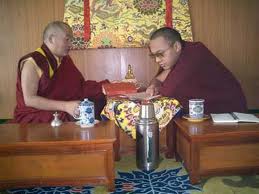
A prayer…
In the palace of the immaculate Buddhafield of Ankanista, Buddha Akshobya Vajrasattva, the most excellent, remain present until the very final limits, I supplicate. Please bestow the supreme siddhi of Mahamudra.
In the Eastern land of Sahor in the jeweled gompa, Buddha Akshobya Tilopa, ultimate yogin, I supplicate. Please bestow the supreme siddhi of Mahamudra.
In [Kahora] from the perfected gompa, Buddha Akshobya pandita Naropa, ultimate accomplishment, I supplicate. Please bestow the supreme siddhi of Mahamudra.
In the warm Lho, land of herbs, Buddha Akshobya Marpa Lhodrak, ultimate blessing, I supplicate. Please bestow the supreme siddhi of Mahamudra.
In the west where the wholesome king mount Kailash [resides], Buddha Akshobya yogin Milarepa, the ultimate tantra of meaning, I supplicate. Please bestow the supreme siddhi of Mahamudra.
In the eastern residence of the summit of mount Gampo, Buddha Akshobya venerable Gampopa, ultimate transmission of the teachings, I supplicate. Please bestow the supreme siddhi of Mahamudra.
In the sacred place of Tsurphu gompa, Buddha Akshobya glorious Dusum Khyenpa,the ultimate practice lineage, I supplicate. Please bestow the supreme siddhi of Mahamudra.
In the realm of supreme secret delight, Buddha Akshobya glorious Guyasamaja,ultimate illusory manifestation, I supplicate. Please bestow the supreme siddhi of Mahamudra.
In the bhaga of the supreme Vajra Queen, Buddha Akshobya glorious Chakrasamvara,ultimate Chakrasamvara, I supplicate. Please bestow the supreme siddhi of Mahamudra.
Retreatant in the assembly of [the secret abode of the dakinis], Buddha Akshobya Bhagavan Hevajra, ultimate creator of happiness [bliss], I supplicate. Please bestow the supreme siddhi of Mahamudra.
In the gathering of purified completely blazing bliss, Buddha Akshobya Mahakala, with his consort and retinue gathered, ultimate guardian of the teachings, I supplicate. Please bestow the supreme siddhi of Mahamudra.
Having been supplicated, please transmit your blessings. Please totally remove all obscurity everywhere. To great liberation may I tread the highest path. Through this path of insight, may I immediately achieve Buddhahood!
Bodhidharma says…
I suppose that as a gathering, this ganachakra has been a little himalaya-heavy. I’d like to include other voices. Essence-dharma cuts deep and clean no matter what tradition it comes from, and I often find that the difference in presentation of a different lineage hits me in a way other than what I have become habituated to- that’s a good thing.
Since I’ve been walking the foot path of training in contemplative care through the New York Zen Center for Contemplative Care I thought that I would turn to Bodhidharma’s Bloodstream Sermon. The direct and clear presentation of the Zen tradition is very refreshing. Bodhidharma is credited with bringing Chan/Zen Buddhism to China. Little is known of the details of his early life, but it is believed that he came from India where he left his life as a prince to become a monk and receive dharma transmission. Bodhidharma is counted as the 28th Patriarch of a lineage line that goes back directly to Buddha Shakyamuni himself. What is presented below is from The Zen Teaching of Bodhidharma, translated by Red Pine.
Bodhidharma says:
…The mind’s capacity is limitless, and its manifestations are inexhaustible. Seeing forms with your eyes, hearing sounds with your ears, smelling odors with your nose, tasting flavors with your tongue, every movement or state is all your mind. At every moment, where language can’t go, that’s your mind.
The sutras say, “A tathagata’s forms are endless. And so is his awareness.” The endless variety of forms is due to the mind. Its ability to distinguish things, whatever their movement or state, is the mind’s awareness. But the mind has no form and its awareness no limit. Hence it’s said, “A tathagata’s forms are endless. And so is his awareness.”
A material body of the four elements is trouble. A material body is subject to birth and death. But the real body exists without existing; because a tathagata’s real body never changes. The sutras say, “People should realize that the buddha-nature is something that they have always had.” Kashyapa only realized his own nature.
Our nature is the mind. And the mind is our nature. This nature is the same as the mind of all buddhas. Buddhas of the past and future only transmit this mind. Beyond this mind there’s no buddha anywhere. But deluded people don’t realize that their own mind is the buddha. They keep searching outside. They never stop invoking buddhas or worshiping buddhas and wondering Where is the Buddha? Don’t indulge in such illusions. Just know your mind. Beyond your mind there’s no other buddha. The sutras say, “Everything that has a form is an illusion.” They also say, “Wherever you are, there’s a buddha.” Your mind is the Buddha. Don’t use a buddha to worship a buddha…

Karmapa in my kitchen
I had the wonderful experience to attend a teaching by His Holiness the Karmapa in my kitchen earlier today. No, I’m not crazy!
A series of live webcast teachings by His Holiness are now accessible online though the following link: http://www.karmapa-teachings.org/live-webcast.
Right now His Holiness is teaching from Gampopa’s Precious Garland of the Supreme Path. Gampopa, one of Jetsun Milarepa’s students, is credited with blending the ear-whispered instructions that Milarepa received from Marpa Lotsawa, who brought them from India, with the Kadam monastic tradition. These innovations led to the monastic institutionalization of the early Kagyu lineage, thus preserving the lineage teachings. Thanks to Gampopa this lineage continues to this very day.
The Precious Garland of the Supreme Path is a direct and pithy text that lays out everything that a traveler on the Buddhist path might need to know- its simplicity is remarkable and clearly a result of Gampopa’s meditative experience.
If you have the chance, check out the link above. It’s exciting to see where these webcasts will go…
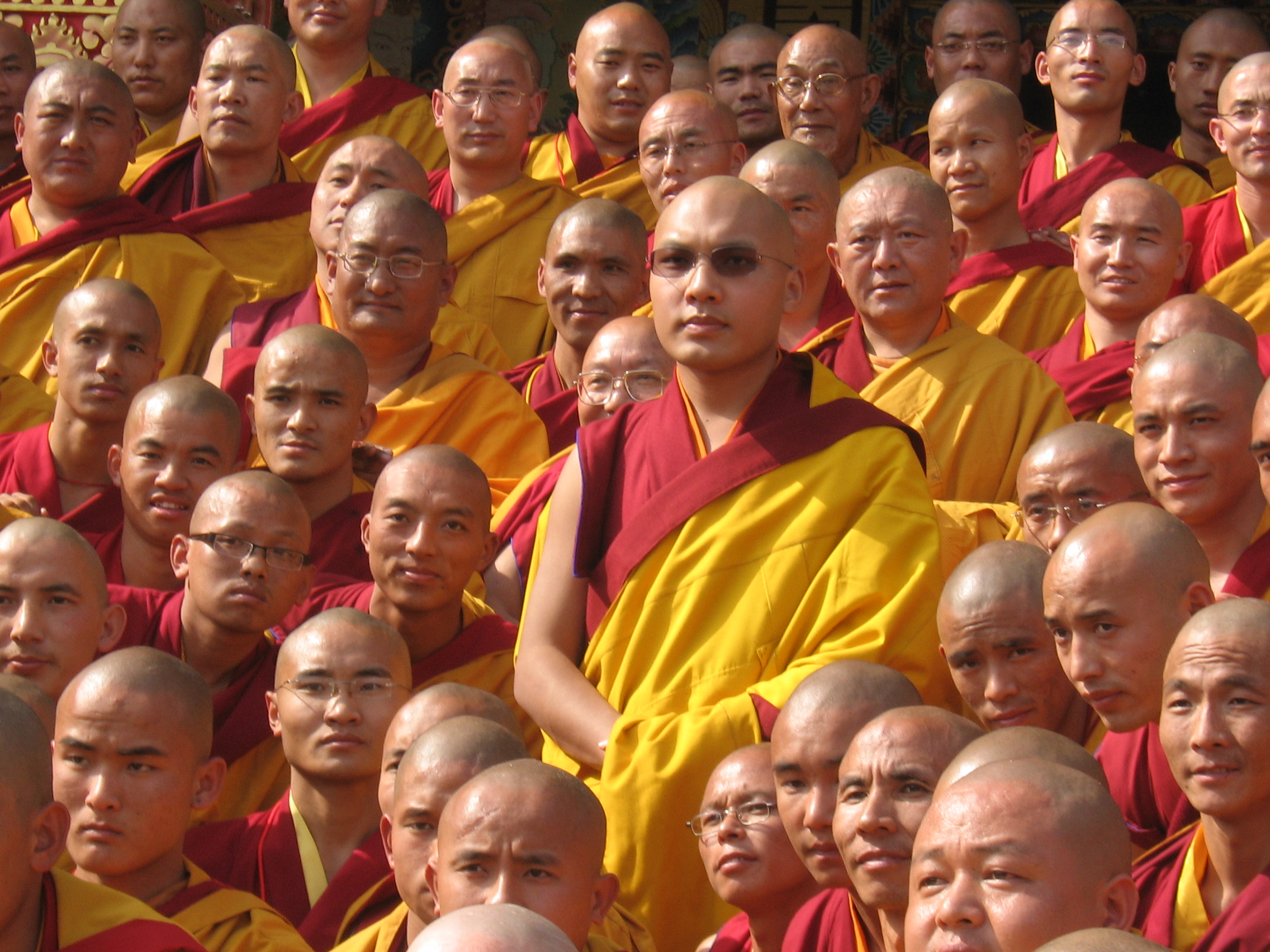
His Holiness Karmapa
Kye Ho!!!…
I am very pleased and excited to announce the arrival of the Ganachakra Blog and www.changchub.com!
Ganachakra is a traditional ritual-feast gathering held as an offering towards a particular Buddha, or in some cases, a dharma lineage holder. In the context of this blog, it is a gathering of like minded people dedicated to exploring Buddhism in its practice, as well as death, dying, and related topics. With that said, I welcome you to this ganachakra.
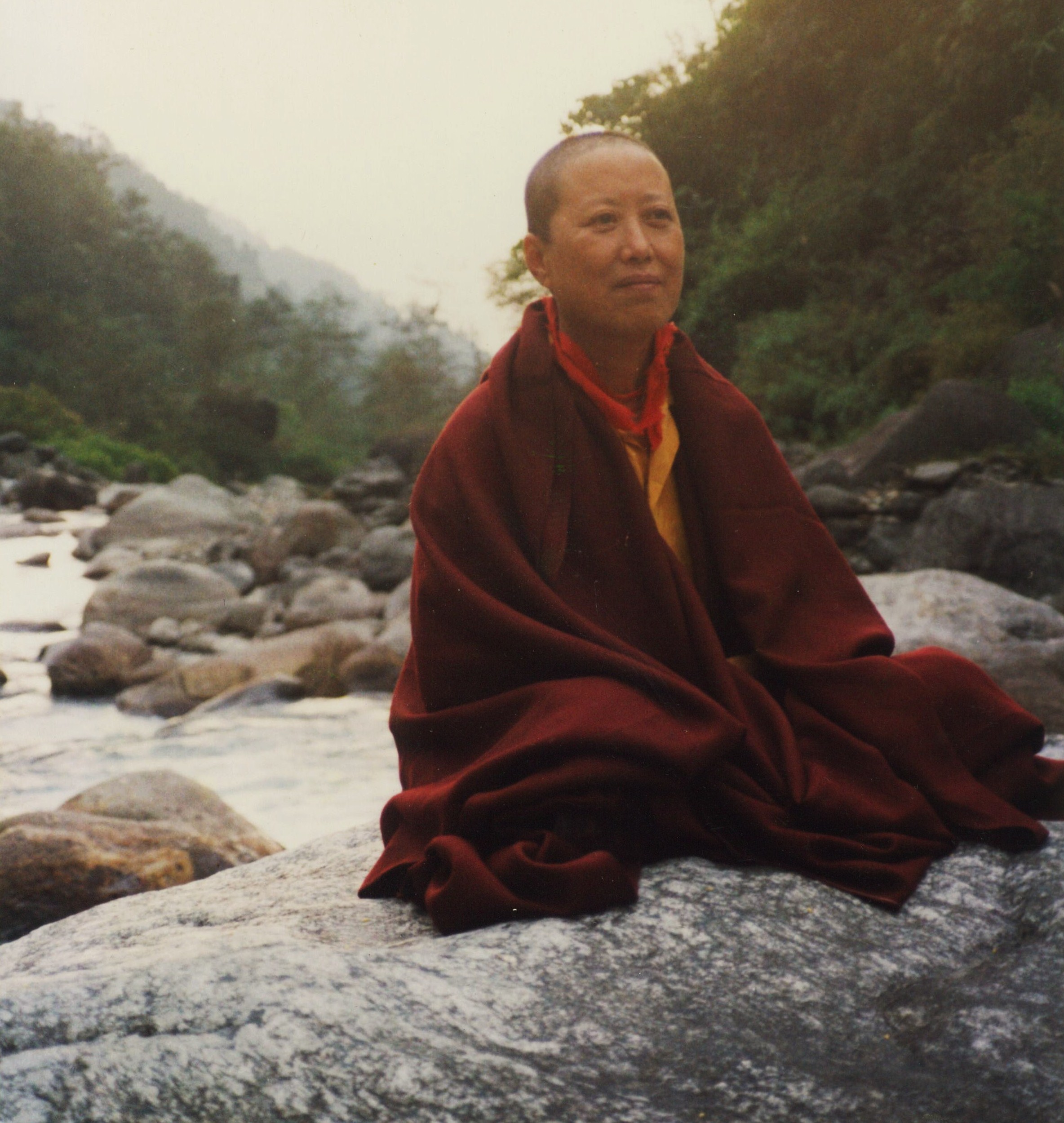
Ani Dechen Zangmo
The inspiration behind changchub.com and this blog is rooted in the activities of an amazing lama from Sikkim, named Pathing Rinpoche. I initially met Rinpoche in 1997 when I was returning to India with my dharma brother Erik Bloom to study with our root lama the venerable Ani Dechen Zangmo, an inspiring and unique Sikkimese Tibetan Buddhist nun. At the time, Ani Zangmo was dying from complications of having had tuberculosis earlier in life and Pathing Rinpoche had been called in to offer prayers and to do ritual practice (puja) for her. During that painful period of time I came to meet Pathing Rinpoche and became his student.
Over the year that we were in India (spent mainly between Sikkim and the Darjeeling area), I was fortunate enough to spend some time in retreat with Pathing Rinpoche at his retreat site on the borders of Bhutan and Tibet. I also experienced the passing of Ani Dechen Zangmo, learning from her what living in the face of death means; and how we are constantly doing this even though we often, and with great convenience, choose to not notice this. Finally, and very fortunately, I had the opportunity to become a student of Kyabje Bokar Rinpoche, retreat master for the Karma Kagyu lineage, and lineage holder of the Shangpa Kagyu lineage.

Bokar Rinpoche
During that trip, and over many fairly long periods of practice and study in India under the kind and warm guidance of Bokar Rinpoche in India, I came to know Pathing Rinpoche more intimately.
He had lived an extraordinary life, which I will share with you from notes taken over the ten years that we knew one another. When I first met Rinpoche he told me that he no longer knew how old he was, but knew that he was in his eighties. He was incredibly mischievous, loved to joke around, but could also cut deeply with his penetrating questions, and could vacillate between being funny and quite serious; all in the same breath.
Rinpoche came to Sikkim from Tibet some time during the 1930’s and settled in Barapathing, hence his name: Pathing Rinpoche. His original title is Phul Chung Rinpoche. He was born close to Shigatse, Tibet. When he was born his amniotic sack was intact; afraid that this was a bad omen, his parents left him to die. He was left outside for long enough for crows to come and pick at the amniotic sack, thus freeing him, and a cousin ran to his defense and ended up caring for him. As a young child while the Panchen Lama and his entourage were passing through Shigatse, Panchen Rinpoche stopped and remarked on what a special child he was and instructed his cousin to take good care of him.
Pathing Rinpoche became a student of Jetsun Shukseb Lochen Zangmo (1865-1953), an incarnation of Machik Labdron (the founder of chod practice), and lineage holder of the Longchen Nyingthig transmission. He spent a great deal of time with her, receiving her instructions, and putting them into practice.

Shukseb Lochen Chonyi Zangmo
Rinpoche came to be recognized as the 19th incarnation of the mahasiddha Kukkuripa (a teacher of Marpa Lotsawa), an emanation of the terton Chogyur Dechen Lingpa, and exemplar of a perfect kadam monk (fulfilling the requirements of the vinaya). Pathing Rinpoche spent over forty years in retreat, wandering here and there, with no cares as to his safety, eventually settling in Sikkim. His retreat cabin is located about one hundred yards from a cave used by Guru Rinpoche on his way to Tibet, which contains two springs, both of which represent the blessed bodily fluids of the female Buddha Vajrayogini.
Rinpoche was unique in so many ways, but the thing that stood out very clearly was his activity. He spent most of the latter portion of his life travelling from home to home doing ritual practice and performing prayer service for anyone who needed it. He would often stay in any given home for no more than two days, tirelessly pushing on to the next person or family that requested his care. Sometimes he stayed for longer if the need was expressed. Wherever he went, his energy and dedication to quelling the sffering of others was truly admirable. Notoriously hard to locate, once he arrived at someone’s home he focused all of his care and attention to those who requested his presence, soothing the fears and uncertainties of all with his application of prayer, ritual and instruction, his stories, and his humor.

Pathing Rinpoche with Jigme Thinley
The day before he passed away (he died on March 4th 2007), he was more concerned about my dharma brother and I, giving us tsampa, blessings, and jinlab (blessed substances)- appearing to be unconcerned with the deterioration of his physical frame- and the intense pain brought on by his stomach cancer.
Pathing Rinpoche represents the swift and gentle compassion of a wonderful chaplain, ritual and meditation master, and great Buddhist teacher. It is in the spirit of his memory and that of Ani Dechen Zangmo- a yogini of natural ease, and Kyabje Dorjechang Bokar Rinpoche- the essence of patient ocean-like- compassion that I would like to dedicate the activities of changchub.com and the ganachakra blog.
I would like to take a moment to thank some of the people who helped me in creating this project. First off, I owe a great deal of gratitude to my present teacher His Eminence Goshri Gyaltsab Rinpoche for his encouragement in pursuing the chaplaincy training that I have recently begun and for his ambrosial instructions. My dharma siblings Erik Bloom and Dekyla Chungyalpa (Ani Zangmo’s daughter) have been so kind and supportive, thank you. I wish to also thank the venerable Ani Karma Lekshe Tsomo, whose enthusiastic support and suggestions in the creation of changchub.com, was extremely helpful, thank you. The instructors at NYZCC ( http://zencare.org/) have helped open my eyes to what contemplative care really means, thank you for your support over the past year, specifically Koshin Paley Ellison, thank you. Finally, none of this could have been made without the skill of my sister, Andrea von Bujdoss of superfreshdesign.com (http://superfreshdesign.com/) who used her exquisite knowledge of visual dharma in translating my ideas into something that others can see, thank you.
May it be virtuous! May all beings’ suffering be pacified! May we gather here at the ganachakra- or ritual feast- of those who are living in the face of death!

Pathing Rinpoche


![[Valid RSS]](valid-rss-rogers.png "Validate my RSS feed")
 Ganachakra