


Mother Sentient beings

When my first teacher, and spiritual mother, Ani Dechen Zangmo, taught the text for the prostrations and refuge part of the Karma Kagyu ngondro (Four Foundations practice) she spent a great deal of time talking about the different ways in which beings have been our mothers in the past.
In the most classical aspect of this practice, we make our prostrations to the wonderful field of refuge: our lineage forefathers and foremothers. In this way we seek to enter and become part of a lineage. We join our lineage through repeatedly receiving the blessings of the lineage; in fact, we are instructed to help lead all sentient beings in the meritorious activity of supplicating and joining our specific lineage with us. Why do we do this? It is said that all beings have at one point in time been our mothers, having cared for us with selfless beauty and having made endless sacrifices, protected us, nurtured us, and also supported and enriched us. Through time immemorial, through the various combinations and permutations of the manifestations of karma, all beings have been, at any given point in time, our mothers. Indeed every person we meet has done this for us. Every animal. Every friend. Every enemy. Every being, seen and unseen, has done this for us- and in this way we are all inextricably linked. What better way to repay these countless mother-beings than to act as a raft to lead them to the banks of spiritual realization?

And so, as is the case within the Kagyu lineage, when we visualize the field of refuge and as we make each prostration while reciting the refuge prayer, we doing so with each being who has been our mother. We keep their desire for well-being and happiness in our heart. In this way, in a manner similar to Indra’s Net, it becomes impossible to locate a source or an end with regard to our connection with others.
Where is the border between myself and another? Where are our points of overlap?
Indeed, in taking a moment to check in and notice this we can very naturally, perhaps effortlessly, find ourselves left with a deep feeling of connection and an awareness ornamented with the jewels of empathetic concern.
Suddenly the well-being and quality-of-experience of others becomes a natural concern.

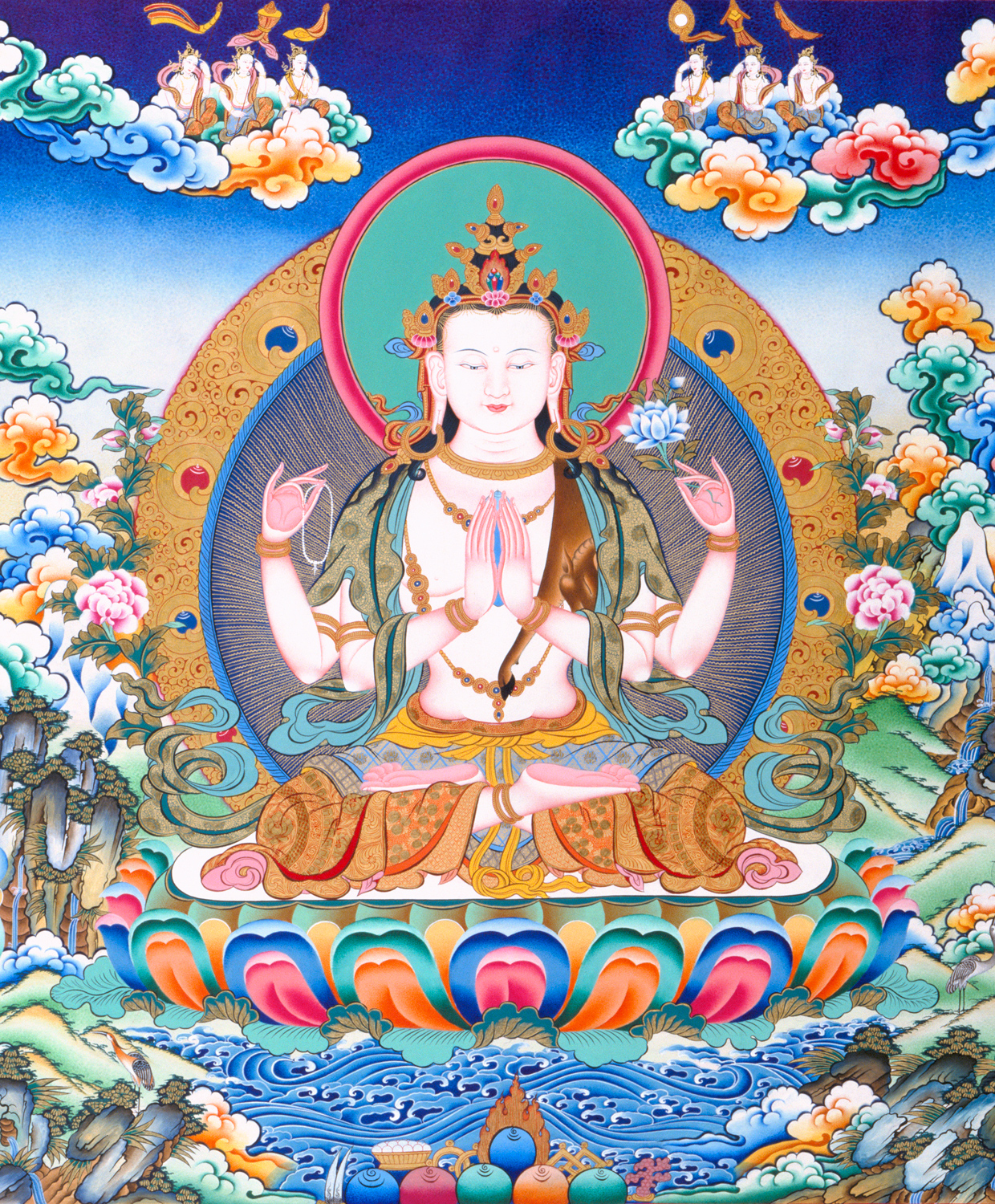
That we are all interdependent is also driven home in the practice of Chenrezig or Avalokiteshvara, the Bodhisattva of Compassion. There is a portion of this practice in which one imagines oneself moving throughout the six realms of existence (illustrated above). In the practice we engage in helping to alleviate the suffering of beings in all six realms.
Within this practice, and in many others we make the vow to do this; to benefit all beings who have been our mothers as an expression of gratitude and gentle concern for all those who suffer and who have provided us with the selfless love and support that only parents could. These beings who have loved us unconditionally, may be experiencing the anger and depression of the hot and cold hell realms, the dullness of the animal realms, the jealousy and infighting of demigod realms, or the perfect complacency of the gods’ realm.
How can we be there for them, how can we cool the anger, warm the depression, enlighten the dullness, sooth the jealousy and enliven and express the immediacy of the present moment to perfect eternalism?
In another sense, perhaps in a way that differs from the classical presentation of how all beings have been our mothers at one point in time, all beings are our mothers in another way: they give birth to our identities; the way we present and imagine ourselves to be.
It seems we cannot exist in a relative way without existing in relation to others. The acceptance of our wonderful qualities and our faults, the very perception and even projection upon us of what we appear to be, is a birthing of an identity. The quality of our being in a horizontal sense, as it pertains to our diverse qualities, is defined and experienced through others, through the way that they experience us. We are given context and we are given meaning. What we do with that and how we react to it is up to us.
While we like to think that we are the architects of our appearance, and in many ways we are the often unintentional archtect, it may be that we are only ever known through the experience of others. Perhaps this way of looking at the manner in which we have created our identities, the way that we are animated by, and get carried away with our experience of self, a fleeting momentary illusion, can be best seen reflected in the eyes of another.
I find that whether I am at the hospital acting the role of a chaplain, on the subway on my way to the hospital, or going about my daily activities as a parent or partner to another, I am always humbled when I have the chance to notice how I am engaged in an interpenetrating relationship with others. What an amazing thing to just meet and reflect the pure appearance of another, the fleeting transience, and the deep connection that we all share; and what a difficult thing to do. I find it especially humbling when I catch myself caught in the midst of reacting and judging, of comparing and compartmentalizing the spontaneity of occurence. But when I can rest in naturally meeting others, the sheer simplicity and profundity of that experience remindeds me of how extraneous our elaborations of dharma can become.
Chod, internal wastelands and the Gowanus Canal

At the end of my post on performing Chod at Greenwood Cemetery (which you can read here), I wondered about doing Chod at the Gowanus Canal; the recently designated superfund site that divides Carrol Gardens from Park Slope in Brooklyn. This toxic body of water is an artery of death and decay that is both close to my home as well as my heart. As a legendary repository of dead bodies (the detritus of organized crime), flood waste from higher elevations in Brooklyn, and just about every kind of heavy manufacture imaginable, the Gowanus canal seems a ghost-like symbol of where we put things that we want to forget.

Before I packed my bags with the things needed for the practice, I spent some time contemplating the Gowanus as a symbol. It is a body of water, a canal specifically, connected to the larger harbor by Buttermilk channel. The water in the canal stagnates as a result of a broken ventilating pump system at the far end of the canal. It is a remnant of the larger heavy industry that once existed in this part of Brooklyn and received all of the shipments of brownstone from up the Hudson that made most of Park Slope’s beautiful brownstones. The canal also became a dumping-ground; it is not uncommon to find all manner of things floating in the water that at times resembles muddy anti-freeze. It is a miraculous canal as well, several summers ago I came to notice that dozens of red jelly fish made the canal their home.
As I began the sadhana (ritual text) I felt that I wanted to offer myself to the inner-demon who most represents the Gowanus Canal. In fact, I specifically tried to make this session an offering to the local gods associated with this area. I imagine that the god-demon of this particular place is one of the lords of places that are ignored; places where we leave, or even dump things that we no longer want, places of stagnation, where oxygen is literally consumed by the waste that we store; of things unwanted yet unable to be fully let go of, a ghostly world of secrets. For me, the god-demon of the Gowanus Canal is the lord of inner-wastelands.
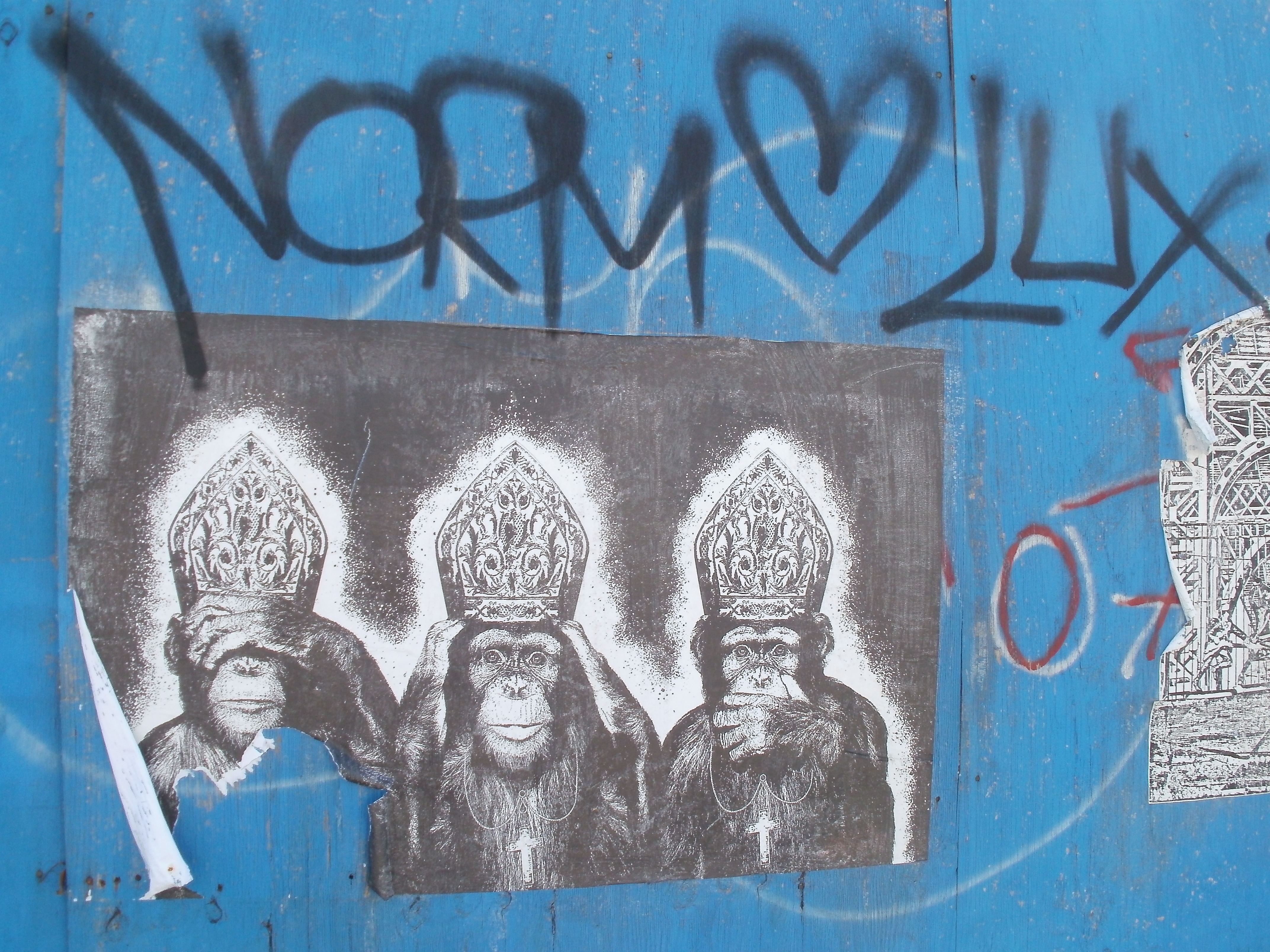
The wonderful thing about Chod is the way in which we can access, face, and pacify all of our internal demons. It is very powerful, if that is, you choose to try to really look for these painful and frightening demons. It is also possible to do the practice while not particularly looking that hard; and then while you may make nice sounds with your bell and damaru, not much else happens.
The term “demon” is mostly taken to represent an internal neurosis or emotional focal point that distracts and provides an ability to obsess in a way that makes direct experience of the mind very difficult. These demons, while self-creations, can feel so real that they tend to paralyze and create huge amounts of suffering, indeed they can be considered the agents of samsara. They exert great power upon us in the form of fear, jealousy, hatred, pride, and in this case, secret internal toxicity.
Machik Lobdron, the female 12th century Tibetan founder of the Chod lineage, created a practice based in prajnaparamita literature as well as within tantric Buddhism. Part of this practice involves offering a mandala offering of one’s body:
The trunk and head serve as Mt. Meru in the center, the four limbs serve as the four continents, the sun and moon are the right and left eyes, the ground is our freshly flayed skin, and the fingers and toes are arranged as a great mighty chain of iron mountains that encircle the whole mandala.
The more realistic the visualization the better- we are after all butchering this prized body of ours, ornamented with the pearls of ego fixation, self-nature, and pride. But after the reluctance, and after the discomfort, what is there? What remains? In offering freely to the assembly of god-demons who terrify us most so that they may benefit, so that they may turn their minds to the dharma and become buddhas in their own right there is a chance to experience our original nature. This is a way of experiencing prajnaparamita.

So how do we touch the inner demon of stagnation? Where is the place within ourselves where we dump things that we don’t want, the place that holds our secrets, our inner wasteland? This place exists. It is in all of us. Like a black pearl made from an initial irritant that has grown many protective layers meant to distract and soothe the oyster that is it’s container. How can we bring this to light? These fears are in reality great strengths- they are pearls…
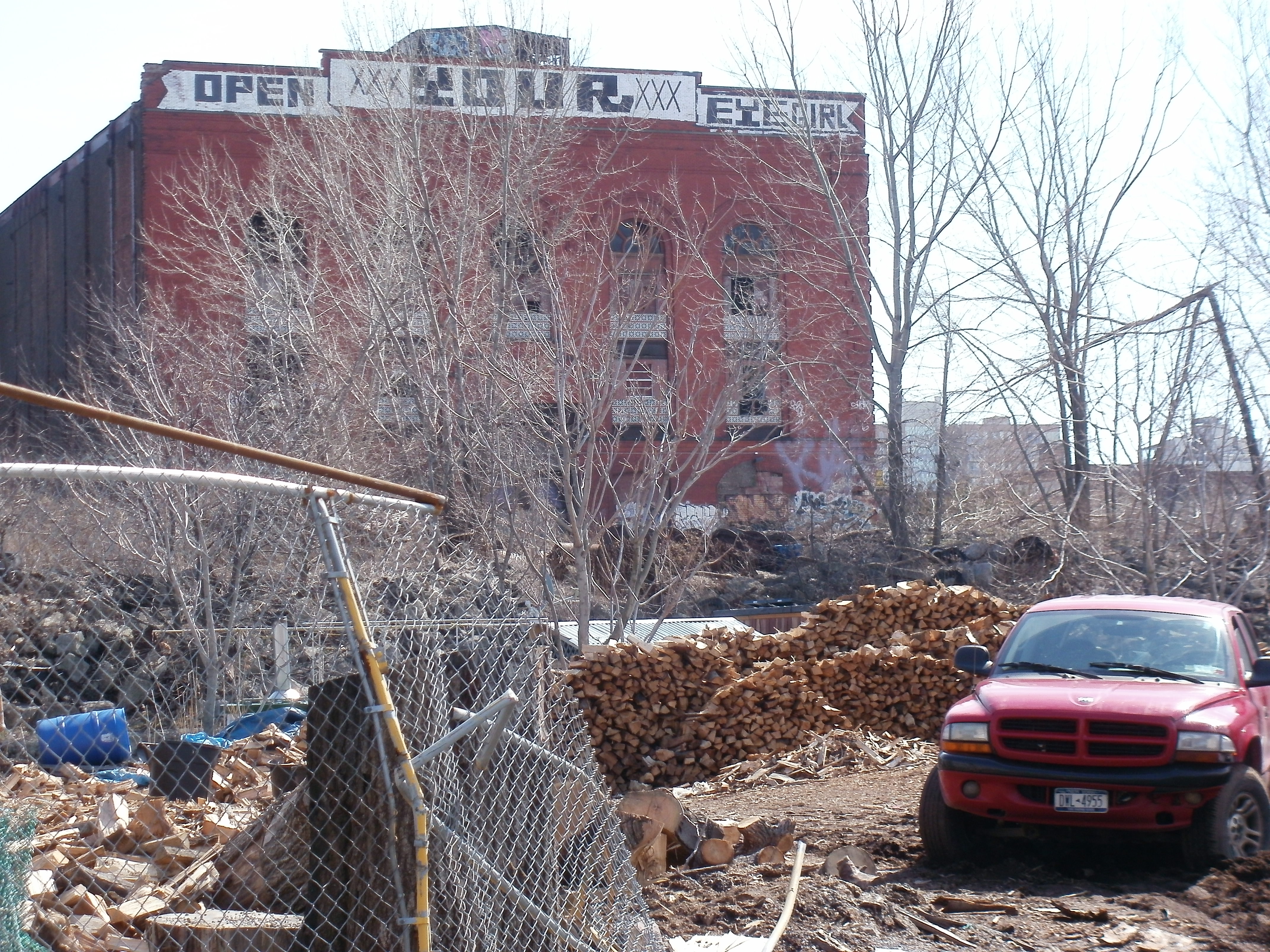
So here I found myself, in a modern charnel ground surrounded by condom wrappers, dead rats, crushed beer cans, and other things left behind. While at first glance it may appear different from the charnel grounds of old, where bodies were burnt or left to decay, places frequented by wild animals, a place that elicits fear, but upon looking a little closer, this place is no different. It is a place where illicit things are done, where illicit things have been done- it is a dangerous place. It is a place of fear. The canal is off the radar. Once a place of great beauty it is now easily overlooked, as if we don’t want to have any personal relationship with it.
Perhaps the Gowanas Canal is one of the eight great charnel grounds of India reflected in our daily lives here. In the New York area I am certain that it is. In my post on sacred geography (here is a link), I mentioned the historical importance of internal and external geography as it relates to the practice of Buddhist tantra. It seems that the Gowanus Canal occupies a place internally that can offer real growth and healing. What does it feel like to make an offering to, and thereby appreciate the parts of us that we have very willingly forgotten, the parts of us that are stagnant?

As I performed the chod sadhana, made sang offerings (smoke offerings) to the beings that live in the canal and all the beings that the canal represents, and while I hung prayer flags, I found myself recalling all that I have tried to hide, the parts of me that lay stagnant internal dumping grounds; my own inner pollution. I also recalled patients who I have met as a chaplain for whom these dynamics were in play, and prayed that we could all, every sentient being, bring honor and offerings to the inner demon that presides over this type of activity. May they be satisfied. May this offering pacify these demons. There is a line at the end of the sadhana which speaks to chaplaining these demons:
The roots of virtue from this practice of freely offering my body, the roots from caring for god-demons with my bodhicitta, and further however many roots of virtue that have been accumulated throughout the three times-all of this I dedicate for the benefit of living beings in the three realms, malevolent god-demons, and others.
With this kind of caring in mind, our own inner chaplaincy, may we know our inner demons and plant the seeds of buddhahood in our own inner wastelands so that they become purelands!
May any merit from this blog post be dedicated to all beings, especially those who are suffering in Japan after the recent earthquake and tsunami.
Gewo.

on how we can be close to the karmapa: what it means to be kagyu

The recent events surrounding His Holiness Orgyen Trinley Dorje have been extremely painful to watch. I realize that I am not the only person who has strong feelings about the present situation. Right now it feels important to bring these feelings inward and let those who are much more skillful and experienced with the complexities of these issues remain at the forefront. Perhaps directing all of the emotions that arise from the present situation towards practice, and using this present moment to reflect upon the Kagyu lineage can be a powerful tool for connection and empowerment. Rather than add to the frenzy of internet activity through discussing what has been going on, I would like to respectfully let the Office of His Holiness the 17th Gyalwang Karmapa with its advisors lead the way, they are wise, capable and have my complete confidence.

So let’s go deeper. What does it mean to be Kagyupa?
Practice. Devotion. These qualities are certainly not solely owned by the Kagyu lineage, or even vajrayana buddhism for that matter, but they are the special signature of this precious ear-whispered lineage.
What does that mean?
The relationship that the great Pandit Naropa had with his radical, skillful and essential guru Tilopa was one of great intimacy and tenderness. It was a relationship of sharing, where a master tested and took great care in exhausting the neuroses and misapprehensions of his student, who through his own dedication and drive, applied the special instructions and worked hard to guard and tend to the experience of enlightenment. Master and student lived side by side so that any ordinary experience could be used as a tool for revealing the dharma. In creating the a relationship of close intimacy Tilopa challenged Naropa, he knew what buttons to push, he chided Naropa’s intellectualism, and ultimately empowered him to experience buddhahood.
Marpa the indomitable angry Tibetan farmer- stuborn and hard-headed- decided to leave Drogmi Lotsawa to find and experience dharma on his own, for himself. Undergoing a series of journeys through out Nepal and India he eventually found his guru, Naropa. Marpa had to bear the brunt of being Tibetan in 11th century India, not an easy task Tibetans were generally regarded as rough and not that intelligent by their Nepali and Indian contemporaries. Indeed, the mahasiddha Sri Santibhadra (aka Kukkuripa) to whom Marpa was directed to initially receive the transmission of the Mahamaya Tantra asked why he should give the empowerment of the Mahamaya Tantra and subsequent explanations to a “stupid flat nosed Tibetan?” That must have really pushed the buttons of this precocious, driven seeker who was known for having a short fuse! The relationship between Naro and Marpa, like that of Tilopa and Naropa, was also intimate and close- Marpa spent years actualizing the paths that were offered to him from his primary guru, Naropa. Marpa also maintained close relationships with the mahasiddhas Maitripa, Kukkuripa, as well as Saraha (in the dream-state). Marpa brought the instructions of these great masters back to Tibet and firmly placed the victory banner of the kagyu ear-whispered lineage upon the Tibetan Plateau.

Milarepa, the repentant magician suffered great loss early on in his life. Imagine the loss of everything you know as one of your parents die, imagine that all you have every owned, or all that has ever been promised to you has been taken by family that you trusted. Imagine the shame and guilt, the remorse and regret that Milarepa must have felt growing up- imagine those feelings distilling into the deep focus to harm others. Marpa, the farmer lama, with his liberating presence, took the time to be there for Milarepa as a teacher in the best way possible. He had the skill to know that forcing Milarepa to perform nearly impossible tasks of physical labor to ripen his karma, to help push the reset button, and to reveal wholeness where previously there was just suffering, was appropriate. After all, Milarepa had been to a teacher before Marpa who was much looser in his teaching style which didn’t fit with Milarepa’s attitude. As a result not much occurred between Milarepa and this other teacher. Marpa, ever the farmer, planted the seeds of dharma within Mila’s being and carefully, tenderly raked, weeded and fed these seeds until the grew into a rich crop.
Rechungpa and Gampopa, the left and right hands of Mila Laughing Vajra, expressed the wisdom, instruction and blessings of their father-like lama. Gampopa did this through codifying and merging the ear-whispered lineage of experience with his experience as a Kadampa monk thus providing a monastic base for the Kagyu lineage; his famous Jewel Ornament of Liberation is a classic lamrim (stages of the path) presentation of the dharma. Rechungpa, a repa or cotten-clad yogi, continued more within the activity tradition of Marpa Lotsawa, returning to India to procure the empowerments and instruction for the practice of the Formless Dakini, a lineage that is still maintained within the Drikung Kagyu lineage. Both Rechungpa and Jey Gampopa were cared for by Milarepa- they had very close and different relationships with Milarepa. The devotion and sadness that Rechungpa expressed upon learning of Milarepa’s death is a beautiful reminder of the internal connection that they had. It also feels important to note that the last thing that Milarepa shared with Gampopa was showing him his calloused buttocks- a final testament that practice is essential, that the experience of liberation is supported by practice.

The Kagyu lineage, and all of its branches, is often refered to as a practice lineage. And indeed, if one took a look at the lives of the lineage holders, one can see that great care has always been applied to the maintainance of the purity of the lineage, as well as experiencing or tasting its essential essence. When we look at the lineage of the Karmapas, Tai Situpas, the Gyaltsabpas, the lineage of Jamgon Kongtrul Rinpoche, Traleg Rinpoche, Thrangu Rinpoche, Tenga Rinpoche, Sangye Nyepa Rinpoche, Trungpa Rinpoche, Kalu Rinpoche, Bokar Rinpoche, Mingyur Rinpoche, Chokgyur Lingpa, Karma Chagme Rinpoche, Khamtrul Rinpoche, and many other great Rinpoches, and unknown practitioners, it is amazing how alive and energetic the Kagyu lineage is.
I sometimes feel that people believe that being Buddhist involves shunning the world and keeping ourself calm and without emotion. In the hospital I am often asked by patients how I have the strength to not feel or to remove myself from the world. I don’t have that strength, I’m not even sure if that is a strength, and even if I did, I wouldn’t want to remove myself from the world. There are worlds upon worlds within us, physical isolation or separateness alone doesn’t change that. The freedom we seek is found in embracing what is right infront of us. Buddhism is in the midst of being translated to the western idiom. It has firmly taken root in many respects, however I feel that a significant point of focus may need to be how we as Buddhists (perhaps more so for vajrayana Buddhists, although maybe not) can maintain sacred-outlook as well as a realistic understanding of the world around ourselves. How can we connect to the visionary nature of our lineages, create real connection, feel that we are part of them, recieve the blessings of their transmission history without having an overly utopian notion of how everything constellates with the world that we live in?
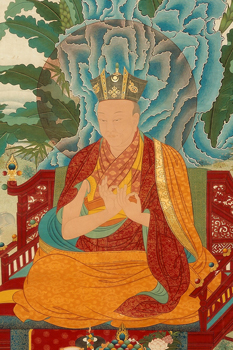
A few years ago I read a translation of a text by Raga Asay, the first Karma Chagme Rinpoche in which a story was related about Raga Asay who after recieving instruction from the 10th Karmapa Choying Dorje, prefered to live far away from Tsurphu. When asked by a friend why he would choose to live far away and not be able to attend public events (empowerments, reading transmissions, teachings, etc.) Raga Asay replied,” when I am in retreat the lama on the top of his head is near and I always feel his blessings. When I am at Tsurphu my mind is plagued by insecurity, jealousy and gossip.” Karma Chagme found the balance; his balance, a confidence in his relationship with His Holiness as well as with the larger lineage. At the same time Karma Chagme seems to be suggesting “people are people are people”- we gossip, brag, and in all our enthusiasm during special religious functions often inadvertantly act unskillfully.
In terms of the present situation, it is easy to pick up on and focus on the politics, the gossip, and the intrigue and forget that this is all appearance. By all means we should support His Holiness, but as his children perhaps we should bring what arises within us to the path. This is what Gampopa refers to when he lists the ways to deal with obstacles to practice, we can try to abandon obstacles, or we can transform them, or we can rest within them as they arise. Gampopa suggests that transforming obstacles is good, but that resting in them may be better- it is a way to bring direct experience of the present moment to our practice. In facing our fears, our insecurities, our rage, our frustration, and being able to be aware of this as none other than the play of our mind, we are able to be clear and free.
When His Holiness came to Mirik to consecrate and install the kudung stupa of Kyabje Bokar Rinpoche, His Holiness told the large group of Kyabje Bokar Rinpoche’s students that our greatest offering to Bokar Rinpoche is our practice. That to put into practice his instructions, and to aspire to completely master master them, we are connecting in a profound manner to Kaybje Bokar Rinpoche. This sounds like timely advice for the present moment, but also something to keep in mind at all moments. While we can not always serve our lama in an everyday setting, we can serve our lama by holding dear and practicing the instructions that she or he offers us.
The office of His Holiness recently offered a statement of thanks to everyone who has supported His Holiness and his labrang and suggested that we offer our practice towards the removal of all obstacles towards the problems that His Holiness has faced. You can read it here. This is wonderful! I cannot think of a better way to maintain a connection with such an amazing teacher. In practicing for him, we are generously offering our time, our effort, our spirituality as well as our connection with the lineage from which the instructions that we follow flowed from. This is an offering beyond time and space; an essence offering which when fused with the intention of benefiting His Holiness and his labrang- doubtless, this is a powerful way of maintaining connection, it’s a way through which we can feel the heartbeat of Tilo, Naro, Marpa, Mila within our very being.
Although all practitioners have a lineage,
If one has the Dakini lineage, one has everything.
Although all practitioners have a grandfather,
If one has Tilo, one has everything.
Although practitioners have a lama,
If one has Naro, one has everything.
Although practitioners have teachings,
If one has the hearing lineage, one has everything.
All attain the Buddha through meditation,
But if one attains Buddhahood without meditation,
There is definite enlightenment.
There is no amazing achievement without practice,
But there is amazing achievement without practice.
By searching, all will find enlightenment,
But to find without searching is the greatest find.
-Marpa

ordinary everyday teachers

The other day I posted about the importance of the spiritual teacher in a general kind of way. The three texts that I drew from, by the Third Karmapa, Rangjung Dorje, Milarepa, and Gampopa respectively, all highlight different approaches to how we benefit from out teachers. These are our ‘ecstatic’ or extraordinary teachers. What I would like to focus on today are the ordinary teachers, our everyday teachers.
Recently I met a patient in the hospital where I’m doing my clinical chaplaincy training. He had undergone extensive surgery several months ago to remove cancerous tissue that was spreading throughout his abdomen. He had also received radiation to help destroy any last bit of the cancer. He was young, only forty years old, and had only recently had the chance to experience life outside of the hospital. His cancer had gone into remission, he went home for the holidays and spent them with friends and family. All of the sudden, quite recently, he had begun to feel pain in his abdomen and went to his doctor to have it checked out. His doctor suggested that he come into the hospital for some tests. This is where I met him. He was laying in bed, his mother sitting by his side expectantly. As we started talking he described all of the tests that had just been done on a variety of his organs all of which presented the possibility of cancer. He was thin and animated despite being hooked up to a morphine drip to control his pain. As our conversation continued he started to cry and describe how angry he was with god about his present situation. As we spoke I asked him how not knowing, how the uncertainty of his present situation made him feel, and this lead to his anger with god or whatever force put him in his present situation. I asked him if he could share with me all the ways in which he was pissed off, to which he offered a lengthy, articulate and powerful list of feelings that lead to his anger. One of the feelings that he described involved his relative youth and what the reason for his being on earth actually was. He was afraid that he would never truly help others, that his desire to be a positive force for change in the world would be cut short by his illness. I was struck by his openness and the kindness with which he shared his fears, his pains, and also his joys, his hopes as well as his dreams. I felt so included by him in his life and in his story that I told him that I found him to be a graceful, compassionate and caring teacher- someone who I will never forget, who has touched me with gentle simplicity. I also mentioned that his mother may feel similarly, at which she started to cry as she said, “Yes, yes, he is wonderful.”
This patient has become a profound teacher for me. Part of his impact may have come from his circumstances, his illness and vulnerability, as well as his clarity and honesty with which he could share his feelings with me; but I tend to feel that we connected. His heart was open towards me, and mine towards him: we entered into relationship. It was meaningful for both of us. Towards the end of our meeting we seemed connected and full, we gave to, and supported one another.

There are an estimated 6,897,395,150 people on Earth, and the person who I just described above is just one of them. How amazing it is that we feel transformed in connecting with just one person, and yet there are so many others that we don’t or can’t open up to. I find this very humbling. Perhaps this is what an open heart truly is.
I am reminded of a portion of a text on mahamudra that was composed by Kyabje Bokar Rinpoche; it was his distillation of a much larger text by the ninth Karmapa, Wangchuk Dorje, entitled the Ocean of Certainty. In his text (Opening the Door to Certainty) Bokar Rinpoche describes the different types of lamas, or teachers. These are, the lama as a human being belonging to a lineage, the lama as awakened word, the lama as appearance, and the lama as ultimate nature. The lama of appearance is described as appearance as teacher; that all that we see, hear, touch taste, and smell, all of our thoughts are all our teachers. How do we react to them? What do they cause to arise in us? There is a beautiful simplicity in appearance as teacher; it is loose and freeing; it allows us to go out and interact with the world around us; it allows us to enter into relationship with everything around us. This is wonderfully special. We are constantly surrounded by countless ordinary, everyday teachers, all of whom offer us the possibility of connection and growth.
on the importance of the teacher
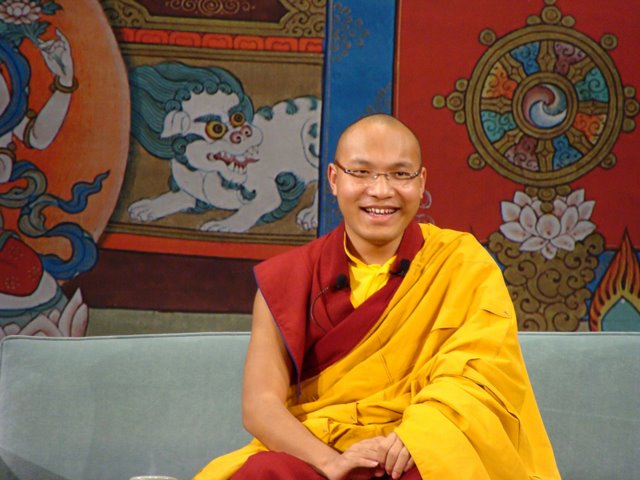
I recently spent time considering the importance of my teachers and how fortunate I feel to have received just a portion of the stream of their experience through instruction. The importance of the teacher, whether we call him or her lama or guru, is central- for where would we be without their guidance, their compassion, and their wisdom? Through the openness that we allow ourselves to have with our teachers, a connection of transmission occurs through which we can experience our own fullness and Buddha potential, just as they themselves have done.
I’ve found three passages that help illustrate this point:
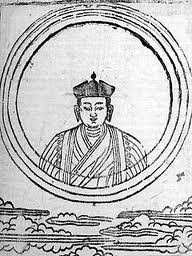
This first one is entitled Hail to Manjushri, it was written by the third Karmapa Rangjung Dorje (1284-1339).
Hail to Manjushri!
All phenomena are like illusions,
though absent they appear to exist;
wise indeed are those who cognize them
within the ever-present unborn.
If you perceive the glorious guru
as a supremely enlightened being,
indivisible from your own mind,
you will receive blessings and strength.
If you, without ceasing, propel the flow
of channels, wind energies, and vital drops-
the nexus of interdependent factors-
the stains of self-love will be swiftly cleansed.
The manifold states of nonconception-
clarity and bliss- I place on the path
of nonapprehension, like patterns in water,
then the true mode of being will be definitely seen.[i]

This next song is from the larger section of the collected songs of Milarepa (1052-1135). Milarepa, one of the greatest yogins tha Tibet saw was the heart student of Marpa Lotsawa. Milarepa’s endurance in his practice, and the joy with which he taught is truly remarkable. This song is a portion of the larger song-story called The Song of a Yogi’s Joy:
The Guru, the disciple, and the secret teachings;
Endurance, perseverance, and the faith;
Wisdom, compassion, and the human form;
All these are ever guides upon the Path.
Solitude with no commotion and disturbance
Is the guide protecting meditation.
The accomplished Guru, the Jetsun,
Is the guide dispelling ignorance and darkness.
Faith without sorrow and weariness
Is the guide which leads you safely to happiness.
The sensations of the five organs
Are the guides which lead you to freedom from “contact.”
The verbal teachings of the Lineage Gurus
Are the guides which illustrate the Three Bodies of the Buddha.
The protectors, the Three Precious Ones,
Are the guides with no faults or mistakes.
Led by these six guides,
One will reach the happy plane of Yoga-
Abiding in the realm of Non-differentiation
In which all views and sophisms are no more.
Remaining in the realm of self-knowledge and self-liberation
Is indeed happy and joyful;
Abiding in the valley where no men dwell,
With confidence and knowledge, one lives in his own way.
With a thundering voice,
He sings the happy song of Yoga.
Falling in the Ten Directions is the rain of fame;
Brought to blooming are the flowers and leaves of Compassion.
The enterprise of Bodhi encompasses the Universe;
The pure fruit of the Bodhi-Heart thus attains perfection.[ii]

The third passage is from Gampopa (1070-1153), one of the two main students of Milarepa, and the first to combine the ear-whispered teachings of Milarepa with the Kadampa monastic tradition, thus institutionalizing the Kagyu lineage as a generally monastic lineage. This passage comes from Gampopa’s Precious Garland of the Supreme Path, a wonderful instruction manual of practical advice from this special master. What follows is his description of the first thing that one should rely on as we tread the path, from the third portion of the text entitled, Ten Things Upon Which To Rely:
The first thing on which we must rely is a holy guru who possesses both realization and compassion. The lama must possess realization because a teacher who has no realization or actual experience is like a painting of water, which cannot quench our thirst, or a painting of fire, which cannot warm us. As well, a lama must possess compassion. If the lama merely has realization but has no compassion, he or she cannot teach and will not help sentient beings develop virtuous qualities and relinquish defects. Thus the first thing ton which we must rely is a lama who possesses both realization and compassion.[iii]

I hope that these passages contribute to a sense of connection and warmth with our teachers, and I hope that this connection helps foster inspiration. May this inspiration translate into diligent practice, and through this practice may we fully realize the essence of our teachers’ instructions. May we develop the same stainless conduct as our teachers! May we too raise the victory banner in the citadel of enlightenment!
May the activities of his Holiness the 17th Karmapa flourish and may all obstacles naturally dissolve into emptiness. May his life be long, and may the compassionate wisdom of his example be known to all beings!
[i] Jinpa, Thubten and Elsner, Jas, trans. Songs of Spiritual Experience. Shambala Publications, 2000. Pg. 157.
[ii] Chang, Garma CC.trans. The HUndered Thousand Songs of Milarepa. Shambala Publications,1999. Pg. 80-81.
[iii] Khenpo Karthar Rinpoche. The Instructions of Gampopa. Snow Lion, 1996. Pg. 22.
on pacifying, enriching, magnetizing and subjugating…

I recently attended a long weekend retreat on the Five Remembrances held by the New York Zen Center for Contemplative Care. It was wonderful to have time at the Garrison Institute to reflect upon these five essential points:
I am of the nature to experience old age, I cannot escape old age.
I am of the nature to experience illness, I cannot escape illness.
I am of the nature to experience death, I cannot escape death.
I am of the nature to experience loss of all that is dear to me, I cannot escape loss.
I am the owner of my actions. They are the ground of my being, whatever actions I perform, for good or ill, I will become their heir.
The Five Remembrances come from the Upajjhatthana Sutra which could be translated as The Sutra of Subjects of Contemplation. You can hear the teaching of the Five remembrances as found in the Upajjhatthana Sutta read by Kamala Masters here, or read a portion of the sutta translated by Thanissaro Bhikkhu here.

The Buddha’s discourse on the Five Remembrances resembles the realization that young Prince Siddhartha had concerning his recognition that we are all subject to birth, sickness, old age, death, and all of the forms of suffering associated with each phase of our existence. In the reading of the sutta by Kamala Masters, the Buddha points out that the first four Remembrances serve us well to return our focus onto the primacy of impermanence; doing so is a remedy towards arrogance, over-confidence, and conceit.
I will become sick. I will become old. I will experience loss. I will die. There is nothing that I can do to change this. When that happens, as this whole existence plays out, my only companion who remains with me throughout is the collection of my actions.
The Fifth Remembrance, which relates to our actions, the quality of our actions, or karma, colors the experience of each facet of our being. It can be the root of our liberation, or the hard kernel from which our suffering manifests. I’d like to take a moment to explore the Fifth remembrance, our actions, in a general sense and then look a little more specifically at action from the Vajrayana buddhist perspective, especially as it relates to actions of pacifying, enriching, magnetizing and subjugating.

Action, movement, friction, trajectories, potential energies. These can easily refer to different forces and dynamics involved within the study of physics, which at close glance looks like a wonderful symbolic structure parallel to aspects of Buddhism, and yet as qualities they easily also connect to our behavior. Our behavior is composed of reactions or responses to the events around us, how we see the play of phenomena unfold before our very eyes. The quality of our perspective acts to determine the flavor of our actions, and the quality of our actions affects the continuum of our perspective. The more self-involved our perspective is, the more our actions involve the preservation and protection of self interests. The more we act to preserve and protect self-interests, the more easily we may think that others or events may be hindering our self-interests. Likewise, a more expansive perspective affords us the ability to act in a more expansive way. When we act with a larger concern for others’ well being, our ability to see the interrelatedness of self and other allows more clarity and more peace.
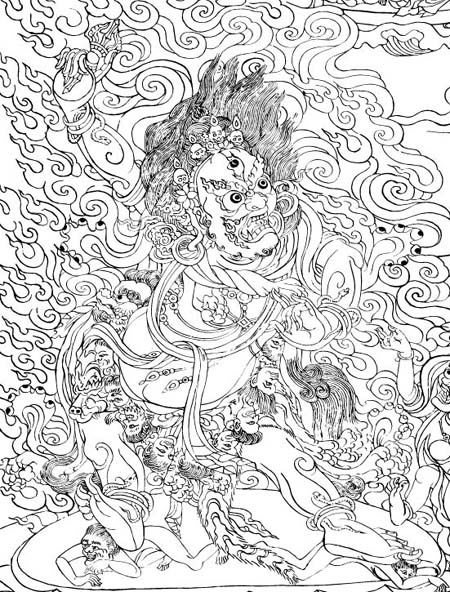
As we pass through this life, a conditioned existence that has been flavored by past events, the habits of reacting to the display of phenomena around us (our daily lives) often become stronger and more ridgid. The phrase goes: Actions speak louder than words. This seems right, but it’s amazing how we use thousands of words to hide or cover up and beautify our actions. Such elaborate verbal adornments so that we can feel okay about how we are right now.
The above image is that of Senge Dradrok, or Lion’s Roar, one of the eight manifestations of Guru Rinpoche. Guru Rinpoche took this form in Bodh Gaya when he came to debate and challenge a group of five hundred non-Buddhist teachers who were trying to disprove the Buddha’s teachings. Guru Rinpoche won the debate and “liberated” all of them with a bolt of lightening- most of the village where the non-buddhists were staying was destroyed, those who survived became converts to Buddhism. This type of story is not so unique. The life story of the Mahasiddha Virupa and many others contain descriptions of such events- they are powerful descriptions of activities that certainly appear to run counter to the typical notion of what buddhist behavior is thought to be. This energy of wrathful subjugation, while not generally an everyday occurrence has it’s place- this hot humid searing energy is needed from time to time to remove impediments towards our spiritual growth.
How can we touch the quality of Senge Dradrok within ourselves? What does it feel like to be him, or Mahakala, Vajrakilya, or Palden Lhamo? What is the focus of these energies? How can we completely liberate the hundreds on non-dharmic impulses within us like Senge Dradrok?
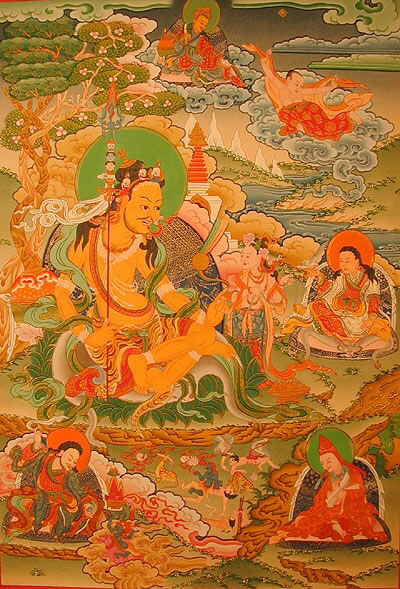
In another form, that of Nyima Ozer, or Radiant Sun, Guru Rinpoche displayed himself as Saraha, Dombi Heruka, Virupa, and Krishnacharya, some of the most well-known Indian proponents of tantric Buddhism. While in this form Guru Rinpoche spent time in the eight great charnel grounds and taught Secret Mantra (tantric Buddhism) to the dakinis, while binding outer gods as protectors of his secret teachings. This is an act of magnetizing, drawing towards him the dakinis and protectors of his treasured teachings, spreading the dharma in the form of may important masters. In the form of a tantric master his intensity and use of whatever arises as a teaching tool captures the great energy deeply-seated within through which magnetizing activity becomes manifest. It seems that essential to the quality of magnetizing is the general awareness of skillful means; knowing just when to act in a way to be of the most benefit in any given situation.

Yet another activity form of Guru Rinpoche appears as Pema Gyalpo, or Lotus King. In the form of Pema Gyalpo, Guru Rinpoche taught the inhabitants Oddiyana the Dharma as he manifested as the chief spiritual advisor for the King of Oddiyana. His selfless dedication and compassionate timely teaching activity enriched all who came into contact with Pema Gyalpo such that they became awareness-holders in their own right. This enriching activity has untold benefits; the effects of the nurturing support that Pema Gyalpo displayed through his teaching activity caused an incredible expansion of the Dharma in Oddiyana.

This final image is of Guru Rinpoche as himself, who among most Himalayan Buddhists is considered the second Buddha in the sense that he is credited with bringing Buddhism to Tibet. While he wasn’t technically the first, he was the first to introduce tantric Buddhism in a way that took hold, and is credited with helping to construct the first Buddhist monastery in Tibet. A dynamic teacher, Guru Rinpoche embodied all of the qualities of his eight manifestations and countless others. Through the expression of his life Guru Rinpoche was able to display pacification, enriching, magnetizing, and subjugation both in Oddiyana, India, Bhutan, Tibet, and even now.
Within tantric Buddhist literature we often find references to the importance of adopting the behavioral modalities of pacifying, enriching, magnetizing, and subjugating as illustrated by the eight manifestations of Guru Rinpoche. These activities were seen as extremely important as they pertain to embodying the qualities of a variety of tantric buddhas as well as the essence of Buddhahood in all emotions. Furthermore, they are utilitarian activities, they support and enrich and massage us as we travel the path of enlightenment. References to these activities can be found in the translations of various tantric texts by a variety of outstanding Buddhist scholars such as David Snellgrove, David B. Gray, Christian K. Wedemeyer, and Vesna A. Wallace to name a few. One can also rely upon the namthars (liberation stories) of many Indian and Himalayan Buddhist Siddhas to feel the range of possible human action on both inner and outer levels of being. Finally, our practice sadhanas contain a wealth of wisdom and guidance- the words in sadhanas are not arbitrary- and they often capture with great clarity the essence of dharma being.
We are aging. We will experience illness. We will die. We will experience loss. Our actions are our ground and we are the owners of our actions. That this is the case is undeniable. We cannot change the first five certainties, but we can change our actions. Our actions, and the related ability to perceive, directly determine how we relate qualitatively towards aging, illness, death, and impermanence. Let’s apply the depth and range of possibilities as exemplified by Guru Rinpoche and other Buddhist Siddhas- lets refine, strengthen, expand, and deepen our relationships with ourselves, with the world around us and with our experience of mind. We are completely capable of manifesting in this way- it doesn’t matter if we wish to embody Tilopa, Virupa, Tsongkhapa, Taranatha, Machik Labron, or Garab Dorje, we are all capable of touching their essential being. No one can do this for us. At the end, as we lay dying, who can really blame for our shortcomings?
Sacred geography: external, internal and in-between
 As part of my CPE (Clinical Pastoral Education) training with the New York Zen Center for Contemplative Care we have been exploring aspects of Jungian psychology especially as it relates to symbols and images. We recently finished a great week of classroom experience which included a conversation with Morgan Stebbins, the Director of Training of the Jungian Psychoanalytic Association, a faculty member of the C.G. Jung Foundation of New York, and a long time student of Buddhism. Stebbins’ presentation on Symbol and Image was dynamic and quite moving- he embodies a depth and conviction that I find compelling. In addition to this, Stebbin’s visit to our class came at a point when I’ve been playing around with writing a blog post about sacred geography. Very timely indeed.
“What does sacred geography have to do with me?” one might ask. I would answer, “Everything”.
Within the framework of Buddhism geography and therefore pilgrimage, has come to be something of an important phenomena. Certainly this is not anything unique to Buddhism; we have a tendency to want to return to places that are significant for us. Sometimes there is spiritual significance, sometimes it is societal, and most often it is interpersonal. An example of these would be making the Hajj if you were Muslim, perhaps visiting Washington D.C., or taking your children there so that they could appreciate the way that our nation governs itself, and perhaps the place where one’s parents were born, or where they died. Geography allows us to honor the meaning that we value in our lives. We live within time and space, and within the latitude and longitude that time and space afford us, we intentionally (and even unintentionally) plot the course of our lives and identities within their dynamics. How many times has a particular season or even date reminded us of an event that occurred in the past around the same time? My root teacher passed away on Christmas eve over a decade ago, and I am always reminded of that great loss whenever Christmas approaches. On the other hand, the Fall months feel like a time of rich growth for me- they always have, and for some reason these months continue to prove to be significant for me. These are two examples of how I plot meaning within my experience of time.
In most faiths pilgrimage has become something that one engages to touch the past; it is a means to feel the link of those who have come before us and charge the present moment with their power. It can be the Wailing Wall, St. Peters, the Kabba, Bodh Gaya, a sacred mountain, river, the ocean, a tree and it can also be imagined- something symbolic, a living pulsating image such as a mandala.
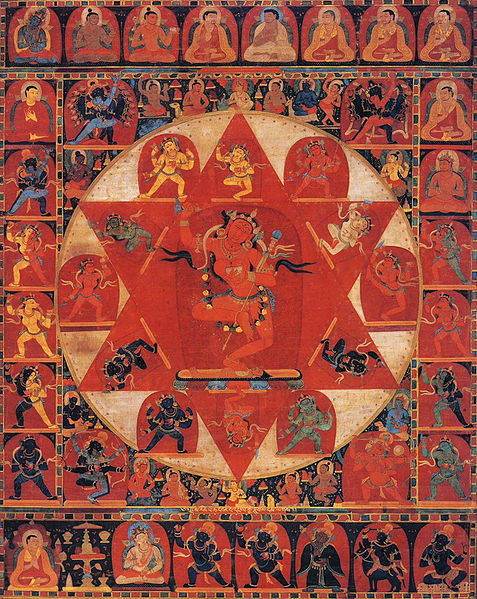
According to the Mahaparinirvana Sutra, the Buddha predicted that students of the path would visit the place of his birth, his enlightenment, where he first taught, and where he would die. He stressed that this may be something that one does if they want to, if it brings meaning, inspiration, and context to their path. It was a suggestion, not a directive, and ultimately a very insightful reading of how we relate to time and space.
Within Vajrayana, or tantric Buddhism, pilgrimage appears in a more visionary manner. In addition to the four major sites associated with the Buddha’s life, various pithas, or ‘seats’ (places of power and meaning associated with the dissemination of Buddhist tantra) became included into various lists of sacred places. For example, there are twenty-four pithas throughout the Indian sub-continent that are associated with the places where the Buddha revealed himself as Chakrasamvara and taught the cycle of Chakrasamvara and related practices. The pithas, while relating to actual places, also correspond to places within our bodies that have an internal energetic significance. The exact location of these pithas vary from tradition to tradition, but there is a relative constancy of the mirroring of external and internal meaning in relation to these sites. In some ways, and according to some teachers, pilgrimage can be done without ever leaving where you are as all of the major pithas exist within the matrix of our energetic body. This approach is touched upon by the Buddhist Mahasiddha Saraha who in once sang:
This is the River Yamuna,
This is the River Ganga,
Varanasi and Prayaga,
This is the moon and the sun.
Some speak of realization having traveled and seen all lands,
The major and minor places of pilgrimage.
Yet even in dreams I have no vision [of these].
There is no other boundary region like the body;
I, virtuous, have seen this for good and with certainty.
Stay in the mountain hermitage and practice self-restraint.[i]
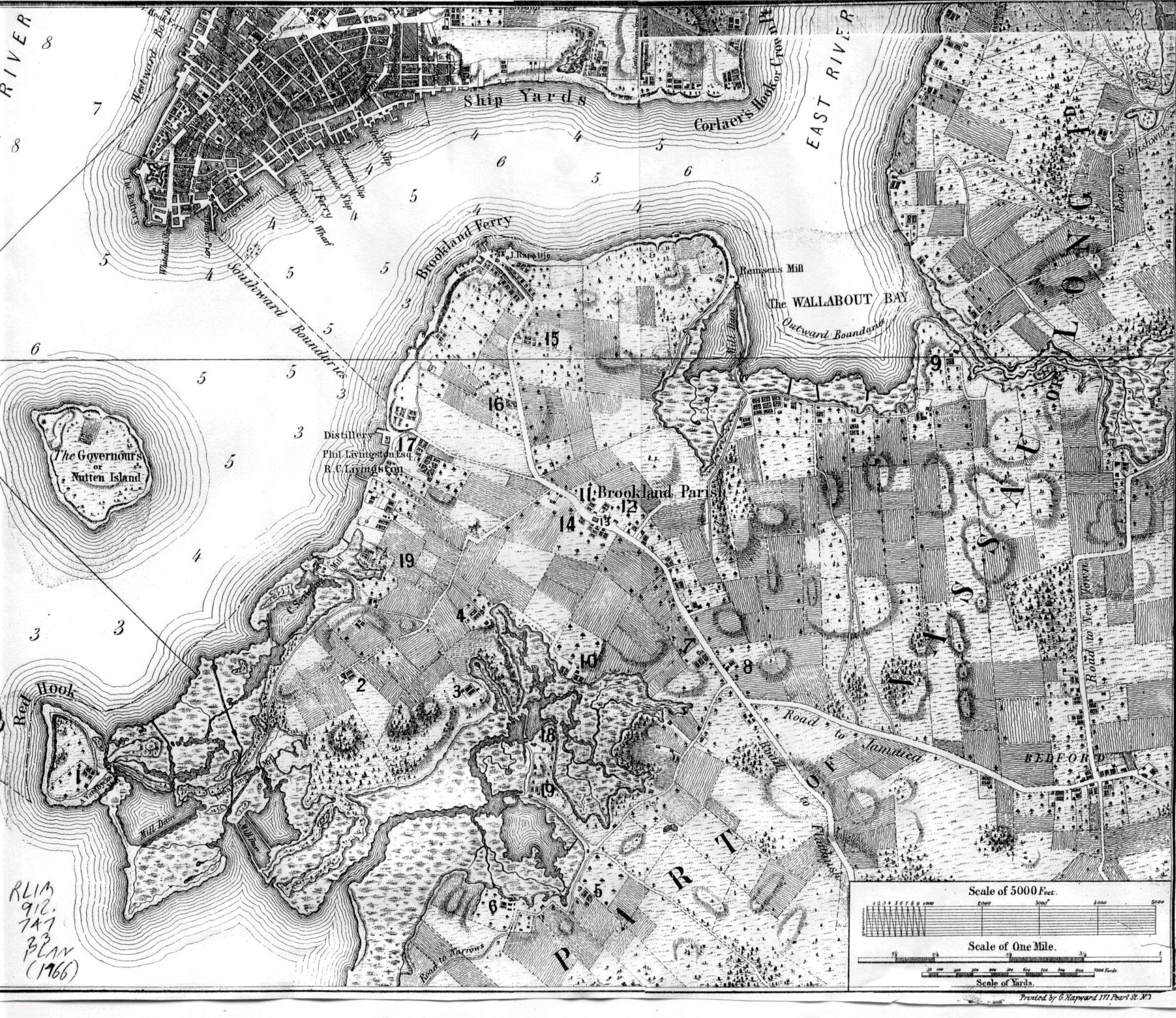
In his book Sacred Ground, Ngawang Zangpo has addressed in a very detailed manner the thoughts of Jamgon Kongtrul Lodro Thaye on the importance of sacred geography. Jamgon Kongtrul Lodro Thaye lived in Tibet from 1813 to 1899. He was a famous meditation master of the Kagyu, the Nyingma and Sakya Lineages. Through his wide and open attitude Kongtrul helped define and spread the Rime, or non-sectarian view of the dharma, in response to a general atmosphere of sectarianism amongst all schools of Buddhism in Tibet at the time. He was a compiler of termas (revealed treasure teachings) and was a terton (treasure discoverer) in his own right. A real renaissance man, Kongtrul not only helped shape and preserve the Kagyu lineage, but all forms of Dharma in Tibet.
Jamgon Kongtrul Lodro Thaye identified a variety of places in Tibet as reflections of the twenty-four pithas in India. This change in perspective had the effect of being quite dynamic in that it placed Tibetans directly in the center of their own world of sacred geography. Of course some brave souls still made the journey to the twenty-four pithas in India, but many visited the sites that Kongtrul and his dharma friends Chokgyur Dechen Lingpa and Jamyang Kheyntse Wongpo felt were equivalent. For some, this type of translation/re-orientation was too much; indeed the great Sakya patriarch Sakya Pandita took issue with the possibility that several pithas could be located in Tibet.
Sacred Ground is an excellent book for exploring the thoughts and teachings of Jamgon Kongtrul Lodro Thaye on the subject of pilgrimage and inner spiritual geography. Ngawang Zangpo translates Kongtrul Rinpoche’s Pilgrimage Guide to Tsadra Rinchen Drak [or Pilgrimage Guide to Jewel Cliff that resembles Charitra (the union of everything)]- an amazing text that treats in great depth the nature of that particular pilgrimage location as well as it’s inner and secret significances as it relates to various energetic centers found throughout the body. Zangpo includes a chart listing the manner in which the pithas correspond to the body according to the Chakrasamvara tantra, an appendix that includes three fascinating texts one by Kongtrul and Khyentse Wongpo, one by Chokgyur Lingpa, and a compiled list of sacred sites in Tibet by Ngawang Zangpo. Of particular interest is a reference to a note found in Mattheiu Ricard’s translation of The Life of Shabkar:
It must be remembered that sacred geography does not follow the same criteria as ordinary geography. Kyabje Dilgo Khyentse Rinpoche (1910-91), for instance, said that within any single valley one can identify the entire set of the twenty-four sacred places. Kyabje Dudjom Rinpoche (1903-87) also said that sacred places, such as Uddiyana, can shrink and even disappear when conditions are no longer conducive to spiritual practice. The twenty-four sacred places are also present in the innate vajrabody of each being. (p.442, n.1)

A similarly fascinating book on this subject is the collection of essays edited by Toni Huber entitled Sacred Spaces and Powerful Places in Tibetan Culture. These essays offer a rich exploration of issues surrounding pilgrimage sites, sacred geography and geomancy. Of particular interest is the essay by David Templeman entitled Internal and External Geography in Spiritual Biography in which he explores the relationship that the mahasiddha Krishnacharya with the twenty-four pithas, especially that of Devikotta. Templeman considers the importance of these sites as internal locii and suggests that while pilgrimage to these sites was indeed important, there is little evidence to support that many siddhas visited all of them. In fact, Templeman suggests that some sites more than others are of particular significance and have been over time, while others are dangerous, home to subtle harmful beings (wild flesh eating dakinis) that need to be appropriately tamed before one can occupy that particular location. In the case of the mahasiddha Krishnacharya, his untimely end occurred at the site of Devikotta, as this site had a reputation for incredible unpredictable volatility that was well known throughout India at the time.
I tend to wonder where this place of volatility, with beings that need to be subjugated, resides within me. A three paneled chart provided by Templeman in his article listing the twenty-four pithas according to the Chakrasamvara Tantra, the teacher Jonang Taranatha and the Sakya master Kunga Drolchok, indicates that Devikotta -this very powerful site- is located within my energetic body around both of my eyes. I wonder where it’s mirror locations are?
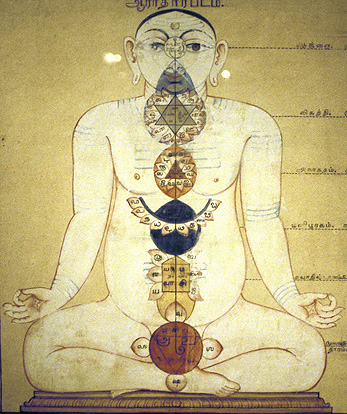
What I find most compelling about these books, and this subject in general is that it has a lot to do with how we relate to the world around us, how we import meaning to this world, and what we allow of ourselves in being in relation to time and space. The essays in Huber’s book and the work by Jamgon Kongtrul Lodro Thaye describe both the Tibetan cultural, as well as the general vajrayana approach to sacred geography- these two are not by all means identical as Huber points out in his essay. Huber suggests that Tibetan culture influenced vajrayana making it distinct from the Tantric Buddhism that developed in India which then spread to Tibet. While the distinction is subtle, it speaks to how meaning is translated. It is arguable that there can never be a one-for-one translation of a text from one language to another, and perhaps, a one-to-one translation of a religion is similarly unlikely. That said, without straying into the soft edges of hermeneutics, I would like to wonder out loud, “How does Buddhist sacred geography translate to Buddhism in the ‘West’?” I think that a great response to such a question is, “That’s a silly question, Buddhist sacred geography is as present in the west as it is in Tibet or India”. I’d also add that we should map it, live within it in a more open way, and make it ours.
If Jalandhara is a site that corresponds to the crown of my head, Oddiyana a site that corresponds to my right ear, and Devikotta my two eyes, all the while representing sacred places reflected upon the Indian Sub-continent and or the Tibetan Plateau, where would they be reflected upon the geography of the United States for example? Or more playfully perhaps, Brooklyn? It seems that some of this has to do with fully owning and bringing vajrayana home. In so doing, I would love to see how this type of re-orientation occurs. Can we do for ourselves what Jamgon Kongtrul Lodro Thaye did for Tibetans?
As Buddhism takes root here in the U.S. and continues to flourish I would love to see all of the twenty-four pithas of the India subcontinent reflected here. Perhaps as we learn to slow down and notice our relationship with our surroundings this will be more evident. I’m very curious to see how this aspect of vajrayana in particular translates to western culture; it seems like there is great potential.
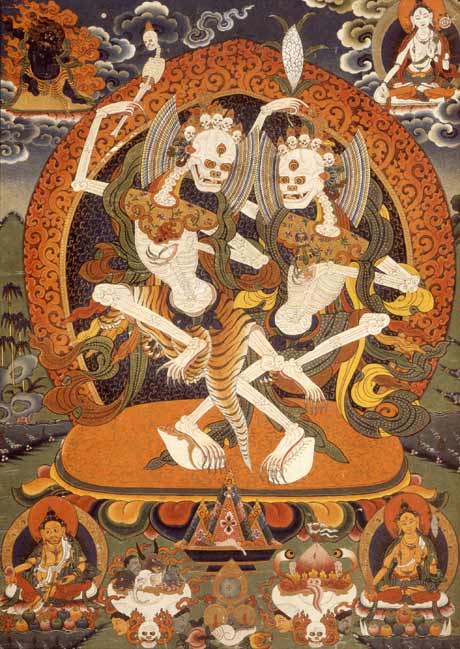
[i] Schaeffer, Kurtis R. Dreaming the Great Brahmin: Tibetan Traditions of the Buddhist Poet-Saint Saraha. Oxford University Press, 2005. Pg. 151.
A feast song by the 3rd Karmapa Rangjung Dorje
As the Kagyu monlam begins I would like to share a feast song, a ganachakra celebration, composed by the third Karmapa Rangjung Dorje.

With the monlam and all of its blessings in mind, I offer this song. May the Kagyu monlam benefit all beings, and may the activities of His Holiness the 17th Karmapa Orgyen Trinley Dorje be vast!
A Feast Song in Lhasa
I salute the guru Jewel.
In the ocean of true essence
arise multitudes of unreal concepts,
like varied patterns in the water.
Therefore I practice the following.
This heroic feast- the culmination of merit
for the profound mother tantra-
was taught to increase the merit of beings.
Thus do I understand its meaning:
Beings of the beginning stage
should visualize their body as a deity
at this stage of imaginative engagement.
Purify food and drink into nectar,
and offer the skandhas to the victorious sages.
This is called the great feast:
heros and heroines equal in number,
who have attained high realizations,
contemplate the essence of void and bliss
amid the abundance of food and drink.
Great is the assembly at the feast!
Since all heros have gathered,
it is called the joyous feast of heros.
The Master knows the way of mantra,
his mindstream is empowered,
he understands the essential precepts;
disciple-hosts of heroines and heros,
together engage in full absorption-
the stages of generation and completion-
immeasurable are the attainments of the feast.
Those who do not possess such virtues,
and wrongly take out of self-importance,
will encounter obstacles; this is foretold.
Though I have not seen the assembled heros,
I have sung the essence of the tantric scriptures;
for this is called the essential instruction.
Be inspired with wondrous admiration.
Join the celebration, partake fully in the feast!
(This poem was sung in Lhasa at the assembly gathered to celebrate a religious feast on the evening of the eighth day of the tenth month of the dragon year)[i]
[i] Taken from Songs of Spiritual Experience, trans. By Thupten Jinpa and Jas Elsner. Shambala, 2000.

his holiness the 16th karmapa on the nature of mind
In honor of the approaching 28th annual Kagyu monlam in Bodh Gaya I would like to share a pith instruction of His Holiness the 19th Karmapa Rangjung Rikpai Dorje. While every year is special, and every Kagyu monlam is truly a wonderous event, this year’s monlam coincides with the 900 year anniversary of the birth of the first Karmapa, Dusum Khyenpa. This is a moment to celebrate and praise the history of the Kamstang Kagyu Lineage and all of its wonderous lineage holders, siddhas, yogins and yoginis. Emaho! I am humbled to know that His Holiness the 17th Karmapa, Orgyen Drodul Trinley Dorje will be leading the prayers along with the leading lineage holders of the Kagyu lineage.
You can learn more about this year’s monlam, its schedule and special activities here.

His Holiness the 16th Karmapa on pointing out the nature of mind
Here, in the thick darkness of deluded ignorance,
There shines a vajra chain of awareness, self-arisen with whatever appears.
Within uncontrived vividness, unimpeded through the three times,
May we arrive at the capital of nondual, great bliss.
Think of me, think of me; guru dharmakaya think of me.
In the center of the budding flower in my heart
Glows the self-light of dharmakaya, free of transference and change,
that I have never been separate from.
This is the unfabricated wisdom of clarity-emptiness, the three kayas free of discursiveness.
This is the true heart, the essence, of the dharmakaya, equality.
Through relying on the display of the unfabricated, unceasing, unborn, self-radiance,
May we arrive at the far shore of samsara and nirvana- the great, spontaneous presence.
May we enter the forest of the three solitudes, the capital of the forebears of the practice lineage.
May we seize the fortress of golden rosary of the Kagyu.
O what pleasure, what joy my vajra siblings!
Let us make offerings to dharmakaya, the great equal taste.
Let us go to the great dharmadhatu, alpha purity free from fixation.
They have thoroughly pacified the ocean of millions of thoughts.
They do not move from the extreme-free ocean of basic space.
They posses the forms that perfect all the pure realms into one-
May the auspiciousness of the ocean of the protectors of being be present.
In the second month of the Wood Hare year (1976), [His Holiness] spoke these verses at Rumtek Monastery, the seat of the Karmapa, during the ground breaking ceremony for the construction of the Dharmachakra Center for Practice and Study.
purity, impurity and inner offerings

From the nature of emptiness wind and fire arise.
I remember very clearly the cold late November afternoon in Gangtok, Sikkim, fifteen years ago when I was taught Milarepa guru yoga. It was one of those incredible experience of being shown something for the first time: electrifying, new and magical. One of the things that instantly spoke to me about the practice was the imagery of the inner offering of the five meats and five nectars that appears in the beginning of the text. Indeed, in looking back at it I think that the inner offering in Milarepa practice (as well as in many other tantric Buddhist practices) has been something that has held great meaning for me. Part of it may be the fact that this prelude to Milarepa practice is a wonderfully clear metaphor for Mahamudra; one of the central forms of meditation passed down through the Kagyu Lineage. The inner offering presents a different form for approaching the mind’s essence from other meditations- chod involves cutting and offering, samatha/vipassana is quiet and still, some practices involve fiery wrath, others still, a warm familiar tenderness. Each of these emotive backgrounds illustrate a modality, an emotion, a style, or an outlet through which we may we express and experience ourselves within the context of awakened activity; the union of clarity of being and luminosity of mind. Within the context of the inner offering, the metaphor is that of boiling and melting (not unlike the athanor which refines the prima materia in Alchemy). This burning and melting is so powerful that a sublime blissful nectar is produced, a non-dual nectar that confers the blessing of the Buddha. This part of Milarepa guru yoga came to be, and remains, an exciting fun part of my practice, instilling a sense of dynamic power that seems to illustrate the potential “atomic” nature of Vajrayana.
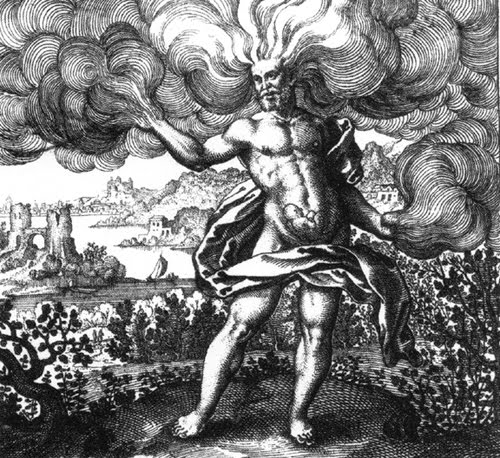
In a skull on a tripod of skulls GO KU DA HA NA become the five meats and BI MU MA RA SHU become the five nectars.
The inner offering is a product of medieval India (roughly between the 6th through 12th centuries), when both Tantric Buddhism and Tantric Hinduism were taking shape. This was a time of immense social upheaval throughout the Indian sub-continent. In both Hindu and Buddhist circles, groups of siddhas broke away from the orthodoxy of their respective majorities in order to develop, practice and teach tantric forms of Hinduism and Buddhism. One of the principal causes of such a move was a the adoption of an antinomian attitude towards the strictures of Indian society with its caste system, its brahmanic tendencies towards “purity”, and the establishment of Buddhist monasteries so large and wealthy that their leading teachers often lived very comfortable lives of scholastic celebrity. This shift was often exemplified by the lives of the 84 mahasiddhas, some of whom left their teaching positions at the famous monasteries of Nalanda, Somapuri, and Vikramashila to practice in jungles, others were kicked out for their outlandish behavior, while a few were kings or princes and princesses afraid to give up their wealth, and many were of low-caste status. Disregard for the religious and cultural status quo led to a shift towards the charnel grounds as gathering places, frightening “dirty” locations, where wild animals scavenged the remains of the recently dead. It was a time where meditation instruction was sung in vernacular so that the everyday person could be touched, not just those who were ordained or occupants of a higher social station. This time also marked a focal shift (as far as practice goes) towards cities where the concentrated hustle and bustle of everyday life revealed itself as a ripe field of opportunity, a place where one is faced to deal with a full range of emotions. For some it was also a shift into the seductive luxurious courts of both major and minor royalty. Human experience, in all of its forms was recognized as embryonic in nature allowing most anyone who exerted themselves in practice to become pregnant with realization. This became the birth right of all, not just those born into one caste, and certainly not just those who were literate or educated. Perhaps one could go so far as to say that this period was a time of spiritual anarchic-democratization.

One of the most interesting aspects of this time period was the apparent looseness of sectarian divisions between the then Saivite sub-sects that represented the forefront of Hindu tantra and the Buddhist equivalents who ushered in Chakrasamvara, Hevajra, Candamaharosana, Guhyasamaya and other early tantric deity practice. The shared iconography between Saivite Kapalika Hindu tantra and Buddhist tantra is clear evidence of some common direction and praxis orientations. Such symbolism makes use of skulls, flayed animal and human skins, invocations of the more wrathful nature of these deities, and sexual union with their consorts. Similarly, the dual identities of the siddhas Matsendryanath, Gorakanath, Jalandhara, and Kanhapa who are counted as four of the eighty-four Buddhist mahasiddhas as well as founders of the Hindu Nath lineages suggests that there was much more dialog between the more iconoclastic progenitors and practitioners of Hindu and Buddhist Tantra. These four siddhas are credited with the development of Hatha Yoga, which has many applications within Buddhism and Hinduism. David Templeman, in his fascinating paper Buddhaguptanatha and the Survival of the Late Siddha Tradition has suggested that the interaction between Buddhist and Hindu yogins was more common than most Tibetan scholars had assumed. This was a perplexing and fascinating subject for the erudite Tibetan scholar Taranatha, and according to Janet Gyatso, in her book Apparitions of the Self, the great Nyingma terton Jigme Lingpa was very curious about such points of contact. In some way it appears that the assumption of difference seems to be a convenient projected organizational tool used to try to clarify such a difficult topic of study. A way to try to define that which tries to defy definition. The Centre for Tantric Studies offers a forum for exploring the history and development of tantra in and around the Indian Sub-continent.
Much debate and uncertainty surrounds the issue of how tantra came into being, even more debate surrounds how we should approach understanding tantra. The works of scholars like Geoffrey Samuel, Roger Jackson, Ronald Davidson, David Gordon White, Elizabeth English and Christian Wedemeyer (to name a few) have helped to illustrate some of the more pertinent issues surrounding the subject of Buddhist tantra.
They are melted by wind and fire.
As a means of throwing open the gates of ultimate realization, the Pancamakara: madya (alcohol), mamsa (meat), matsya (fish), mudra (edible foods) and maithuna (sexual intercourse) were included in Hindu tantric rituals as a means to effect a eucharistic understanding of non-duality. In essence, by consuming that which is culturally regarded as impure in ritual context, one undermines the very notion of the purity/impurity dualism that keeps us trapped in feeling fragmented and lacking expansiveness. These particular objects, when handled and offered by practitioners of this more radical form of Hindu Tantra were held with the left hand, the hand reserved for handling impure substances. In adopting an enthusiasm and greater equanimity towards these violations of cultural mores regarding cleanliness (spiritually as well as otherwise) one was directly contradicting the rules of conventional Hinduism. It should be noted that the use of the left hand in offerings is also prevalent in one form or another in Buddhist Tantra. This dynamic was central to the Kapalika sect whose influence upon the corpus of Yogini Tantas was considerable. While few scholars can agree who influenced who, the most important thing is that these traditions arose.
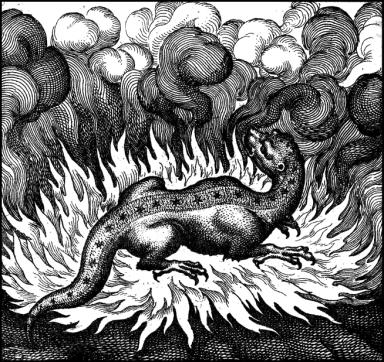
Light from the three seeds attracts wisdom nectar. Samaya and wisdom become inseparable and an ocean of nectar descends.
In Buddhist sadhanas the five meats and the five nectars share a certain equivalency to the Hindu Pancamakara. Rather than the transgressive five M’s (madya, mamsa, matsya, mudra and maithuna) we have the five meats: the flesh of cow, dog, horse, elephant and man, and the five nectars: semen, blood, flesh, urine, and feces. The five meats are representative of the five skandhas: form, feeling, discrimination, action, and consciousness. Likewise, the five elements: earth, water, fire, wind, correspond to the five nectars. Depending on the explanation lineage of the inner offering, these associations may vary, but generally the essence is the same. In this practice we join the five wisdoms with the five elements to produce a non-dual intoxicating ambrosia that has the capability of revealing the qualities of awakening and in that sense provides a powerful spring-board of potential realization. In other words we are joining our perceptions with the objects of our perceptions- entering into direct relationship with phenomena; uncontrived and expansive. We boil perceptions and the ability to perceive in a five dimensional way thereby naturally releasing our habitual confused samsaric reaction for a more aware equanimous relationship with the world around and within us. This is the very mechanism of samsara/nirvana! What’s more, as this mechanism unfolds, it reveals the don-dual vastness of Dharmakaya, a spring-board for sacred outlook. For a moment everything is okay, relaxed into ease.
These substances emanate from their specific syllables and are brought together to be mixed in a kapala (skull cap bowl), one then generates a flow of prana which strikes syllables for fire and wind underneath the kapala to make its contents boil and in a sense unify. This now ambrosial nectar (amrita) emits the syllables Om, Ah, Hung, dispersing the blessing of pure Buddha body, speech and mind. This simply radiates. It is used to bless torma offerings and nectar used in offerings, or in a more general way tsok offerings as well as the general environment.
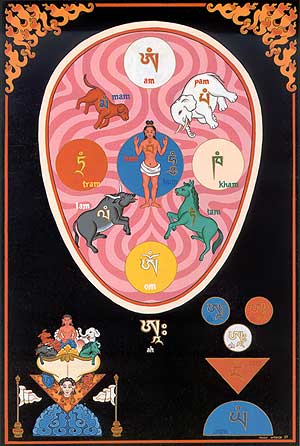
Om Ah Hung Ha Ho Hri Hung Hung Phe Phe So Ha.
There is another side to this as well; it seems an importantly powerful thing to keep in mind at some level that the five meats and five nectars were intended to be transgressive repulsive substances. Shocking and caste destroying, they arose directly out of the charnel ground culture that figures so largely in Buddhist Tantra. There is power in our response to disgust, to fear, guilt, lust and all those emotions that lurk around the edges of our movement through the world; we all have our own relationships to purity and impurity, and they are a lot more complicated than we like to assume. Guilt, fear, self-righteousness, abandonment, woe, depression, anger, disgust- an army of emotions- are related to how and why we connect to/react to purity and impurity- we carry these reactions with us wherever we go as we label the things around us as clean and or unclean, desirable and undesirable.
A few years ago I was speaking with the abbot of a Buddhist monastery in India about the historical development of tantric applications of using impure substances. In his reply he said that things are so much more different today in trying to connect with these practices. It’s hard to see rotting corpses, scary wild animals feasting on human remains, lepers, one can’t go down to a charnel ground these days to do a puja around bodies in various states of decay. With the use of toilet paper, some of the stigma of the use of the left hand in India is less powerful, and in western countries there never really was the same kind of stigma in this regard. This he suggested that this is one of the reasons why we use/rely upon visualizations- they can be quite powerful.
However, I wonder where these places of fear are- we all have them- perhaps they are more individualized, or abstracted. Homelessness, illness, mental illness, terrorism, and death, perhaps these are some of the newer “untouchables” of our times. It is important to locate them for ourselves, touch the fear or terror that they bring, and then offer them up- the essence of fear and terror is mind, and mind’s essence is primordially pure. If we can take these sources of impurity and throw them in a pot and cook them with wind and fire, energy and exhaustive passion, they can be seen for what they are, not much different from the purity and wholesomeness that we so easily cling to. What then is the difference? And why to we always run from one towards the other?


![[Valid RSS]](valid-rss-rogers.png "Validate my RSS feed")
 Ganachakra

