


purity, impurity and inner offerings

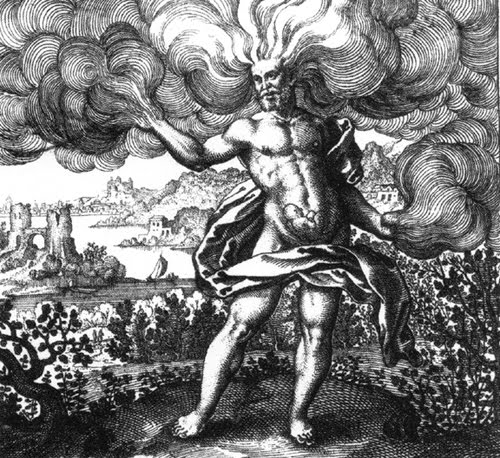
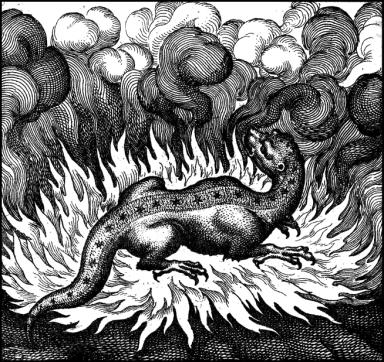
From the nature of emptiness wind and fire arise.
I remember very clearly the cold late November afternoon in Gangtok, Sikkim, fifteen years ago when I was taught Milarepa guru yoga. It was one of those incredible experience of being shown something for the first time: electrifying, new and magical. One of the things that instantly spoke to me about the practice was the imagery of the inner offering of the five meats and five nectars that appears in the beginning of the text. Indeed, in looking back at it I think that the inner offering in Milarepa practice (as well as in many other tantric Buddhist practices) has been something that has held great meaning for me. Part of it may be the fact that this prelude to Milarepa practice is a wonderfully clear metaphor for Mahamudra; one of the central forms of meditation passed down through the Kagyu Lineage. The inner offering presents a different form for approaching the mind’s essence from other meditations- chod involves cutting and offering, samatha/vipassana is quiet and still, some practices involve fiery wrath, others still, a warm familiar tenderness. Each of these emotive backgrounds illustrate a modality, an emotion, a style, or an outlet through which we may we express and experience ourselves within the context of awakened activity; the union of clarity of being and luminosity of mind. Within the context of the inner offering, the metaphor is that of boiling and melting (not unlike the athanor which refines the prima materia in Alchemy). This burning and melting is so powerful that a sublime blissful nectar is produced, a non-dual nectar that confers the blessing of the Buddha. This part of Milarepa guru yoga came to be, and remains, an exciting fun part of my practice, instilling a sense of dynamic power that seems to illustrate the potential “atomic” nature of Vajrayana.
In a skull on a tripod of skulls GO KU DA HA NA become the five meats and BI MU MA RA SHU become the five nectars.
The inner offering is a product of medieval India (roughly between the 6th through 12th centuries), when both Tantric Buddhism and Tantric Hinduism were taking shape. This was a time of immense social upheaval throughout the Indian sub-continent. In both Hindu and Buddhist circles, groups of siddhas broke away from the orthodoxy of their respective majorities in order to develop, practice and teach tantric forms of Hinduism and Buddhism. One of the principal causes of such a move was a the adoption of an antinomian attitude towards the strictures of Indian society with its caste system, its brahmanic tendencies towards “purity”, and the establishment of Buddhist monasteries so large and wealthy that their leading teachers often lived very comfortable lives of scholastic celebrity. This shift was often exemplified by the lives of the 84 mahasiddhas, some of whom left their teaching positions at the famous monasteries of Nalanda, Somapuri, and Vikramashila to practice in jungles, others were kicked out for their outlandish behavior, while a few were kings or princes and princesses afraid to give up their wealth, and many were of low-caste status. Disregard for the religious and cultural status quo led to a shift towards the charnel grounds as gathering places, frightening “dirty” locations, where wild animals scavenged the remains of the recently dead. It was a time where meditation instruction was sung in vernacular so that the everyday person could be touched, not just those who were ordained or occupants of a higher social station. This time also marked a focal shift (as far as practice goes) towards cities where the concentrated hustle and bustle of everyday life revealed itself as a ripe field of opportunity, a place where one is faced to deal with a full range of emotions. For some it was also a shift into the seductive luxurious courts of both major and minor royalty. Human experience, in all of its forms was recognized as embryonic in nature allowing most anyone who exerted themselves in practice to become pregnant with realization. This became the birth right of all, not just those born into one caste, and certainly not just those who were literate or educated. Perhaps one could go so far as to say that this period was a time of spiritual anarchic-democratization.

One of the most interesting aspects of this time period was the apparent looseness of sectarian divisions between the then Saivite sub-sects that represented the forefront of Hindu tantra and the Buddhist equivalents who ushered in Chakrasamvara, Hevajra, Candamaharosana, Guhyasamaya and other early tantric deity practice. The shared iconography between Saivite Kapalika Hindu tantra and Buddhist tantra is clear evidence of some common direction and praxis orientations. Such symbolism makes use of skulls, flayed animal and human skins, invocations of the more wrathful nature of these deities, and sexual union with their consorts. Similarly, the dual identities of the siddhas Matsendryanath, Gorakanath, Jalandhara, and Kanhapa who are counted as four of the eighty-four Buddhist mahasiddhas as well as founders of the Hindu Nath lineages suggests that there was much more dialog between the more iconoclastic progenitors and practitioners of Hindu and Buddhist Tantra. These four siddhas are credited with the development of Hatha Yoga, which has many applications within Buddhism and Hinduism. David Templeman, in his fascinating paper Buddhaguptanatha and the Survival of the Late Siddha Tradition has suggested that the interaction between Buddhist and Hindu yogins was more common than most Tibetan scholars had assumed. This was a perplexing and fascinating subject for the erudite Tibetan scholar Taranatha, and according to Janet Gyatso, in her book Apparitions of the Self, the great Nyingma terton Jigme Lingpa was very curious about such points of contact. In some way it appears that the assumption of difference seems to be a convenient projected organizational tool used to try to clarify such a difficult topic of study. A way to try to define that which tries to defy definition. The Centre for Tantric Studies offers a forum for exploring the history and development of tantra in and around the Indian Sub-continent.
Much debate and uncertainty surrounds the issue of how tantra came into being, even more debate surrounds how we should approach understanding tantra. The works of scholars like Geoffrey Samuel, Roger Jackson, Ronald Davidson, David Gordon White, Elizabeth English and Christian Wedemeyer (to name a few) have helped to illustrate some of the more pertinent issues surrounding the subject of Buddhist tantra.
They are melted by wind and fire.
As a means of throwing open the gates of ultimate realization, the Pancamakara: madya (alcohol), mamsa (meat), matsya (fish), mudra (edible foods) and maithuna (sexual intercourse) were included in Hindu tantric rituals as a means to effect a eucharistic understanding of non-duality. In essence, by consuming that which is culturally regarded as impure in ritual context, one undermines the very notion of the purity/impurity dualism that keeps us trapped in feeling fragmented and lacking expansiveness. These particular objects, when handled and offered by practitioners of this more radical form of Hindu Tantra were held with the left hand, the hand reserved for handling impure substances. In adopting an enthusiasm and greater equanimity towards these violations of cultural mores regarding cleanliness (spiritually as well as otherwise) one was directly contradicting the rules of conventional Hinduism. It should be noted that the use of the left hand in offerings is also prevalent in one form or another in Buddhist Tantra. This dynamic was central to the Kapalika sect whose influence upon the corpus of Yogini Tantas was considerable. While few scholars can agree who influenced who, the most important thing is that these traditions arose.
Light from the three seeds attracts wisdom nectar. Samaya and wisdom become inseparable and an ocean of nectar descends.
In Buddhist sadhanas the five meats and the five nectars share a certain equivalency to the Hindu Pancamakara. Rather than the transgressive five M’s (madya, mamsa, matsya, mudra and maithuna) we have the five meats: the flesh of cow, dog, horse, elephant and man, and the five nectars: semen, blood, flesh, urine, and feces. The five meats are representative of the five skandhas: form, feeling, discrimination, action, and consciousness. Likewise, the five elements: earth, water, fire, wind, correspond to the five nectars. Depending on the explanation lineage of the inner offering, these associations may vary, but generally the essence is the same. In this practice we join the five wisdoms with the five elements to produce a non-dual intoxicating ambrosia that has the capability of revealing the qualities of awakening and in that sense provides a powerful spring-board of potential realization. In other words we are joining our perceptions with the objects of our perceptions- entering into direct relationship with phenomena; uncontrived and expansive. We boil perceptions and the ability to perceive in a five dimensional way thereby naturally releasing our habitual confused samsaric reaction for a more aware equanimous relationship with the world around and within us. This is the very mechanism of samsara/nirvana! What’s more, as this mechanism unfolds, it reveals the don-dual vastness of Dharmakaya, a spring-board for sacred outlook. For a moment everything is okay, relaxed into ease.
These substances emanate from their specific syllables and are brought together to be mixed in a kapala (skull cap bowl), one then generates a flow of prana which strikes syllables for fire and wind underneath the kapala to make its contents boil and in a sense unify. This now ambrosial nectar (amrita) emits the syllables Om, Ah, Hung, dispersing the blessing of pure Buddha body, speech and mind. This simply radiates. It is used to bless torma offerings and nectar used in offerings, or in a more general way tsok offerings as well as the general environment.
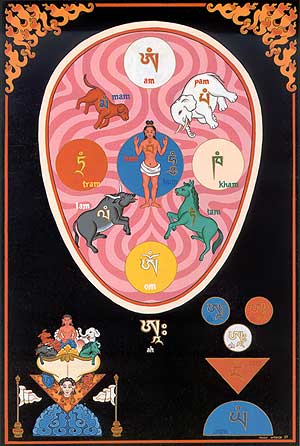
Om Ah Hung Ha Ho Hri Hung Hung Phe Phe So Ha.
There is another side to this as well; it seems an importantly powerful thing to keep in mind at some level that the five meats and five nectars were intended to be transgressive repulsive substances. Shocking and caste destroying, they arose directly out of the charnel ground culture that figures so largely in Buddhist Tantra. There is power in our response to disgust, to fear, guilt, lust and all those emotions that lurk around the edges of our movement through the world; we all have our own relationships to purity and impurity, and they are a lot more complicated than we like to assume. Guilt, fear, self-righteousness, abandonment, woe, depression, anger, disgust- an army of emotions- are related to how and why we connect to/react to purity and impurity- we carry these reactions with us wherever we go as we label the things around us as clean and or unclean, desirable and undesirable.
A few years ago I was speaking with the abbot of a Buddhist monastery in India about the historical development of tantric applications of using impure substances. In his reply he said that things are so much more different today in trying to connect with these practices. It’s hard to see rotting corpses, scary wild animals feasting on human remains, lepers, one can’t go down to a charnel ground these days to do a puja around bodies in various states of decay. With the use of toilet paper, some of the stigma of the use of the left hand in India is less powerful, and in western countries there never really was the same kind of stigma in this regard. This he suggested that this is one of the reasons why we use/rely upon visualizations- they can be quite powerful.
However, I wonder where these places of fear are- we all have them- perhaps they are more individualized, or abstracted. Homelessness, illness, mental illness, terrorism, and death, perhaps these are some of the newer “untouchables” of our times. It is important to locate them for ourselves, touch the fear or terror that they bring, and then offer them up- the essence of fear and terror is mind, and mind’s essence is primordially pure. If we can take these sources of impurity and throw them in a pot and cook them with wind and fire, energy and exhaustive passion, they can be seen for what they are, not much different from the purity and wholesomeness that we so easily cling to. What then is the difference? And why to we always run from one towards the other?

New York Zen Center for Contemplative Care on TV!
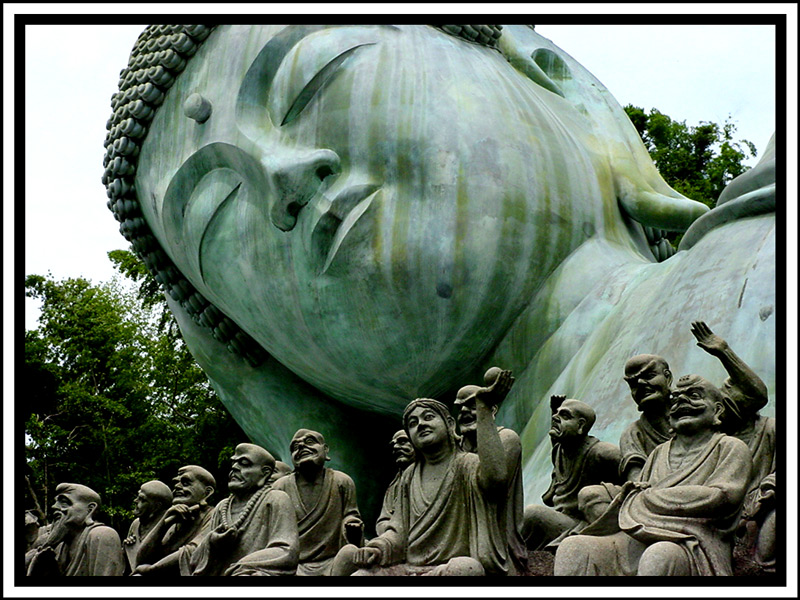
This weekend a segment of the television show Religion and News Ethics Weekly will broadcast a taste of the New York Zen Center for Contemplative Care chaplaincy training program on PBS which you can also watch here. NYZCCC is a rich and rigorous CPE training program that is truly unique. I am constantly challenged by the depth of the curriculum as well as that of the instructors, Koshin Paley Ellison, Robert Chodo Campbell, and Trudi Jinpu Hirsch. Currently I am half way through my first of two units of CPE through NYZCCC’s year long extended unit program, was a participant in their Foundations in Contemplative Care program last year, and look forward to more training with them in the future. I can’t say enough wonderful things about the program and how wonderfully rare it is.
I invite you too to explore NYZCCC here…
Milarepa on the nature of mind
This is a particularly intimate and moving song of instruction by Milarepa for his student Gampopa. The imagery of a parent concerned for his child contributes to the sense of closeness between the teacher and student in this song, it also shows how subtle some of the maras (perceptual delusions) that we experience along the way can be. Milarepa as the tender father helps to point out some of the pitfalls that obscure the natural luminosity of the mind’s essential nature.
Following along with the parenting metaphor for a moment, I am reminded of a teacher who once reminded a friend and I that once one begins to meditate, no matter how much time spent in meditation, or its frequency, we should act as if we are pregnant; or we should know that we are pregnant with the innumerable qualities and benefits of Buddhahood. How long the gestation period will be is hard to know, but one day we will give birth to the clear and stainless realization of our mind. All it takes is to begin a meditation practice and examine what effects it has on our perception and our relative well-being; once we are pregnant with this potential awakening, we should guard ourselves against that which complicates and distracts our meditation practice. The tone that Milarepa sets in this song is gentle and supportive; how can we be this way with ourselves in our practice?

A Song of Instruction to Gampopa
By Milarepa
Son, when simplicity dawns in the mind,
Do not follow after conventional terms.
There’s a danger you’ll get trapped in the eight Dharma’s circle.
Rest in a state free of pride.
Do you understand this, Teacher from Central Tibet?
Do you understand this, Takpo Lhajey?
When self-liberation dawns from within,
Do not engage in the reasonings of logic.
There’s a danger you’ll just waste your energy.
Son, rest free of thoughts.
Do you understand this, Teacher from Central Tibet?
Do you understand this, Takpo Lhajey?
When you realize your own mind is emptiness,
Do not engage in the reasoning “beyond one or many”.
There is a danger that you’ll fall into a nihilistic emptiness.
Do you understand this, Teacher from Central Tibet?
Do you understand this, Takpo Lhajey?
When immersed in Mahamudra meditaion,
Do not exert yourself in virtuous acts of body and speech.
There’s a danger the wisdom of nonthought will disappear.
Son, rest uncontrived and loose.
Do you understand this, Teacher from Central Tibet?
Do you understand this, Takpo Lhajey?
When the signs foretold by the scriptures arise,
Do not boast with joy or cling to them.
There’s a danger you’ll get the prophecy of maras instead.
Rest free of clinging.
Do you understand this, Teacher from Central Tibet?
Do you understand this, Takpo Lhajey?
When you gain resolution regarding your mind,
Do not yearn for the higher cognitive powers.
There’s a danger you’ll be carried away by the mara of pretentiousness.
Son, rest free of fear and hope.
Do you understand this, Teacher from Central Tibet?
Do you understand this, Takpo Lhajey?[i]
[i] Songs and Instructions of the Karmapas. Nalandabodhi Publications. 2006. Pg. 25-26.
Pointing out the Self with the Iron Hook of Mind
In the first post for Ganachakra I wrote a partial introduction to the late Kyabje Pathing Rinpoche. I would like to return to Pathing Rinpoche, to share a teaching song he composed and shared with my dharma brother Erik Bloom and I.

If I had to be stranded on a deserted isle with one set of instructions, just one teaching, I would choose this one. The title alone sets the tone, it is strong and direct. Pathing Rinpoche is clear in his description of the view, the path (of cultivating the view), and the fruition (of familiarizing oneself with the view; how to blend it with your being). The tantric imagery is rich and beautiful. This is a truly precious a wonderful teaching. If you have a moment, take a second to clear your mind, settle down, and have a read. I’d love to hear what you feel after reading it.

Instructions on Pointing Out the Faults of Self with the Iron Hook of Mind
In general, everything in the universe, outer, inner and secret, I offer to satisfy and benefit the six classes of beings.
The whole field of accumulation, the three Jewels as well as the three kayas, the entire universe I offer to the inner and secret deities, may they be satisfied.
To the Male and female yogis and yoginis I offer vajra food and vajra water, may they be satisfied.
Primordial Awareness, the mandala of pure amrita, I offer so that those in the lower realms may be satisfied.
The body mandala deities who are the union of bliss and emptiness, who are primordial awareness, may they be satisfied.
Everyone, in an outer and inner sense, is a dakini; to them I offer this melodious song, may they be satisfied.
As a last resort to stop all filthy activities I offer this torma, may the six protectors and local deities be satisfied.
In this context sing this vajra song if you like.
Just as the many male and female deities, dress in the disguise of a heruka. When prostrating do so in accordance with our noble tradition.
First, make a humble request as follows:
Ho!
Please consider me. Three times.
The lord of empowerments, Samantabhadra’s great mandala of perfection is good and noble.
As stated in The Pearl Necklace, the ocean of the supreme assembly, both outer and inner, come and join together in an excellent manner to make the offering complete.
Visualize that the offering assembly enters and confer empowerment into the mandala. One should exert oneself in singing this song. Thus I ask you to pay attention to the reality of the inconceivable power of the ocean-like display of this vajra song.
Karma and aspiration, dependent origination and the like appears as it does.
In this way, make offerings to the assembly when renouncing that is which to be abandoned.
Wholly let go of finding amusement in creating conflict.
Revile material things and so on, reproach that which is rough and coarse.
Just like Guru Rinpoche, the Lord of Uddiyana, one should arise with the power akin to a wolf when coming to the ganachakra.
Endowed with the three authentic perceptions, the female goddesses of the ganachakra should be visualized as nectar. If you do not realize this you will be reborn as a preta.
In this regard, endowed with the three authentic perceptions, think of the Lama as Heruka and the Buddhas with their consorts.
Think of the Vajra siblings, fellow practioners, as male and female deities.
Recognize the blessings of the Ganachakra.
Do not be separated from the three circumstances.
May we never be separate from the yidam; our ordinary body.
May we never be separate the mantra of speech.
May we never be separate from realizing the nature of mind.
May we be free from the three doubts.
May we be free from any doubt regarding the tantric textswhich are the enlightened speech of the Lama.
May we be free from any doubt as to whether ganachakra is clean or unclean.
May we be free from any doubt concerning secret conduct.
The three things that are not to be done.
One should abandon carelessness of conduct.
One should not allow aversion (hatred, anger) and envy consume the mind.
Conceptual thought (discursiveness) is not appropriate.
It is improper for Bhikshus to take meat and beer with fear, or based upon discursiveness.
It is improper to continually engage in Brahmanic pure expression out of conceptual thought.
It is improper to engage in actions and conduct which is upon worries of good or bad.
These are the three unwholesome actions not to accumulate.
For one who follows the path introduced by the Lama, do not accumulate unwholesome actions.
The path of the spiritual instructions is profound, do not accumulate unwholesome actions.
Do not accumulate unwholesome towards vajra brothers and sisters or phenomena in general!
These are the three things not to give freely.
Do not give secret blessed substances to others.
Do not give away the oral instructions.
Do not perform offerings when not suitable.
These are the three secrets.
Secretly, one should make offerings when the feast assembly gathers.
Secretly, one should manifest great numbers of deities.
Secretly, perform activities and deeds that lead towards liberation, this is the essence.
These are the three things not to practice!
Do not call upon the Lama without respect and devotion.
Do not call upon the feast gathering in an “ordinary” way.
Do not apply unwholesome forces [actions and thoughts] towards vajra sisters and brothers.
Thus, in knowing what to adopt and what to abandon, the magnificent blessings of this ganachakra will flood rotten karma everywhere and siddhis will arise.
Recognize this!
Sing this feast song if you like; through it you will realize the essence of dependent origination, karma, and so on. May you receive inspiration from this vajra song.
In the sky of emptiness this sun dawns,
Appearing, but not remaining, it will proceed to cross over.
Similarly, according to books, precious human rebirth has happened in this lifetime, not an “ordinary” birth.
As soon as one is reborn, one does not remain, death arrives.
Over a long period of time one remains, not accounting for one’s actions.
One should approach the path with zeal and diligence while sowing the seeds of Dharma.
Keep Meditating!
In the marketplace people go this way and that, continually abiding in daily hustle and bustle.
At all times separate yourself from the company of others.
Create an example similar to past masters.
At all times do not remain separate from the master.
Right now, accompany the master.
Discuss the profound Dharma so that you may resolve for yourself its excellence.
Just as the honey bee gathers the sweet essence of flowers without regard for the honey gathered
by others, it is just so regarding material goods in the present lifetime.
Do not desire the accumulation of wealth gathered by others; attachments to the desire realm should not be great.
Whatever you have in terms of wealth, let it go!
Commonplace work and responsibilities, what?!
Due to sporadic effort one will miss the fruits of the autumn harvest.
Similarly, through sporadic effort and enthusiasm towards the practice of meditation over the length of a whole lifetime, one will not experience awakening.
Do not engage in practice which is either too tight or too loose.
Constantly, day and night, generate enthusiastic diligence, keep meditating!
Achieve the freedoms and advantages that this human birth can bring here and now!
In this and in later lives, accomplish the aspiration towards liberation.
In your free time guard that the frame of one’s mind does not let it become thin and weak.
Harmonize your mind with its experiences through the practice of meditation so that they dissolve together.
Through this ganachakra of liberated conditions, may we receive the esoteric revelation of this song of spiritual experience now in this very lifetime.
Here, at this ganachakra pervading the entire sky, may all sentient beings conquer the undying Dharmakaya citadel.
Gewo!
Written by the authentic Phul Chung Tulku, Known as Pathing Rinpoche, incarnation of the Mahasiddha Kukkuripa.
Translated by his student Karma Tenzin Changchub Thinley (Repa Dorje Odzer) in the western pure land of Brooklyn, with the gracious guidance from the venerable Khenpo Lodro Donyo. All errors are mine. Sarva Mangalam!

Naro Khachoma, Naropa’s Space Lady
Recently I was contacted by a member of Tsem Tulku Rinpoche’s sangha who asked if I could write a blog post about Tsem Tulku Rinpoche’s activities and recent birthday. In familiarizing myself with his activities, I was really happy to see that within the larger website for his organization, Kechara, there are a number of specific blog posts about the Gelug approach to Vajrayogini: Naro Khachoma.
I invite you to take a look: http://blog.tsemtulku.com/tsem-tulku-rinpoche/category/vajra-yogini
This form of Vajrayogini was given directly to the Mahasiddha Naropa by Vajrayogini herself. Naropa passed the practice of Naro Khachoma to the two Nepali Pamthingpa brothers (Vagisvarakirti and Bodhibhadra) who after spending years studying and practicing with Naropa, brought the teachings back to Nepal. According to Glenn H. Mullin the Pamthingpa brothers spent years in retreat in their hermitage in Parping, a very important site to Vajrayogini practice. Below is a picture of the main Vajrayogini temple in Parping that I visited in 2008.

Eventually the Pamtingpa brothers eventually ended up teaching Melgyo Lotsawa Lotro Drakpa, an early Sakya translator/practitioner and teacher of the great Sakya teacher Kunga Nyinpo. In this way Naro Khachoma practice was included within the Sakya lineage, and later worked its way into the Gelugpa lineage. Naro Khachoma, or Naropa’s Space Lady, is still a very highly regarded practice within these two lineages; a practice that is profoundly powerful in its effacacy of transmuting one’s experience of ordinary being into that of the blissful immediacy of Vajrayogini and her consort Heruka Chakrasmvara.
Perhaps Tsem Tulku Rinpoche could one day share his thoughts on death and the process of dying and aspects of bringing Vajrayogini to these events with us here…
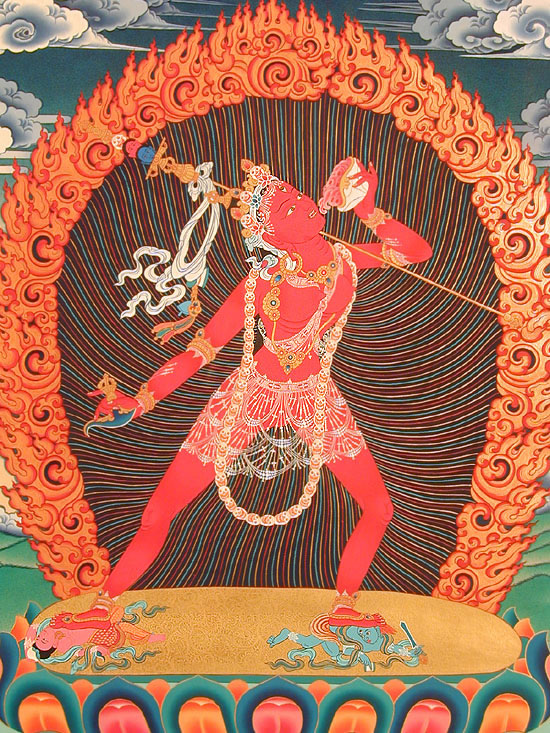
Praising Vajrayogini and the Dakinis
I prostrate of the glorious
Vajra Dakini, queen of the dakinis,
The savior of beings who has
The five wisdoms and the three bodies.
I prostrate to all of the many vajra dakinis
Who cut the bonds of conceptual thought
Even while doing various forms
Of worldly activity.
(Taken from Sermey Khensur Lobsang Tharchin Rinpoche’s Sublime Path to Kechara Paradise.
On the importance of Prayer
A friend and classmate in my chaplaincy training program recently alerted our class to a newly conducted study led by Dr. Herbert Benson of Harvard University on the efficacy of prayer for people who are ill. Dr. Benson is no stranger to the world of prayer and meditation, in fact he has built an entire career around studying the physiological effects of meditation and prayer. His findings have generally supported the belief that beyond the spiritual benefits of meditation, the meditator experiences a whole host of benefits ranging from a decrease in stress levels, lower blood pressure, and a general slowing of the body’s metabolism.

In the past Dr. Benson studied a variety of Tibetan monks, including the meditation master Bokar Rinpoche, while they meditated. Dr. Benson focused upon meditators who were practicing Tummo, a vajrayana completion stage yogic meditation that fuses a form of pranayama (breathing exercises) with visualizations of the body’s internal energy matrix. He relates in a documentary based upon his findings, that he could not believe what he discovered: breath and heart rates decreased dramatically, and measured brain activity appeared completely unlike that of a person in waking state. Recent interest in exploring the relationship between meditation and neuroscience by the scientific community, especially in collaboration with H.H. the Dalai Lama and H. H. the 17th Karmapa will undoubtedly clarify the benefits of meditation, and thereby help many people who may become interested in including meditation within their daily lives.
Here is a link to a Harvard Gazette article on the subject:
www.news.harvard.edu/gazette/2002/04.18/09-tummo.html.
Additionally, I would like to share a link to a short video clip of Dr. Herbert Benson’s research: http://www.youtube.com/watch?v=WajTafbG7II.

The efficacy of prayer seems much harder to measure than that of meditation. The results of the study of meditation upon the physiology an individual meditator seem clear; they are easy to quantify, and allow for useful comparison of data recorded in studying a variety of meditators. The study of prayer in this way seems immensely difficult by comparison. Here is the link to the article that my friend emailed us last week:
Many salient points are raised by this study, and perhaps the most important one revolves around how such studies are structured. Prayer is a mysterious subject and it seems that it will take a number of attempts to be able to skillfully measure it’s effects. I do tend to agree with Dr. Richard Sloan’s warning in the New York Times article linked above that we must be careful not to destroy what prayer is about by deconstructing religion to “basic elements that can be easily quantified”. It would be ideal if future studies could honor the place and importance of science as well that of religion and sensitively examine where and how they overlap.
The vajrayana perspective on prayer is fairly clear: prayer is vital. Generally, ritual is included within prayer- often they are interwoven. The performance of prayer in this multi-dimensional way helps to form an active identification with the historical transmission lineage (from the Buddha directly to you), and allows you to rest in your basic-state as a particular buddha in body, speech, mind, as well as in essence. All of these coalesce around acting to benefit others (based upon our pledge to liberate all sentient beings). So important is this type of activity that most recensions of the Hevajra Tantra and Chakrsamvara Tantra, as well as most other root tantras, have chapters dedicated to engaging in the actions of Pacifying, Enriching, and Subduing. These kinds of actions can be best described as psycho-spritual activities to alleviate suffering, promote peace, and plant the seeds of liberation for others; prayer in this context, I would suggest, is quite important. Within the framework of Tantric Buddhism there is an active application of visualization, prayer, ritual and mantra recitation that help the individual to loosen up their conception of the ordinary identification of oneself as an independent being living in opposition to the external world with which they interact, so that one can glimpse the rich wealth of their buddha-nature which is deeply interconnected with the world around oneself. The tools: meditation, prayer and ritual help to clarify the recognition of our basic-state. In this context, prayer is a means to center oneself, to remain intimate with one’s teacher, a particular buddha or protector, or as a means to rest in the mind’s essential nature. It is also an offering; an act of generosity and kindness. Prayer also focuses the mind, making it a support of meditation, it can function as a means of clarifying doubt, as well as a means to receive inspiration. I am sure that this is not unique to vajrayana, or even Buddhism, but lies at the core of prayer regardless of one’s faith.

From the perspective of chaplaincy, specifically around the application of pastoral care in which prayer is requested, the exact physical result of prayer may not be the central goal as much as what the prayer does for the individual requesting it. The relationship between the person conducting the prayer and the person receiving it is a sacred and intimate relationship. Prayer may be directed towards aspects of the self that have little to do with the individual’s physical condition. Prayer can help relieve fear, a sense of separation from others, or help reinforce the inner ground that provides greater support for dealing with one’s particular situation. These factors, and a great many others may indeed lead towards an ability to heal more effectively, but it might have less to do with the actual prayer and more to do with the inner process that prayer energizes, relaxes, empowers, or clarifies. Perhaps it is this inner process that contributes to recovery from illness. Prayer and the use of ritual for a person who is actively dying may also help promote a greater sense of connection and meaning to a life that is transitioning into the experience of death- this can be profoundly important. Ultimately, prayer may not be best approached from the perspective of what it can do with regards to only physical responses, for surely prayer is mysterious, and some of the beauty involved in prayer is how it can return deeper meaning to various moments in an individual’s journey through life, creating a point of orientation that is more imaginal, timeless, and transcendent.

Chod, Death and Green-Wood Cemetery
A couple of days ago I learned that in 1860 Green-Wood Cemetery in Brooklyn attracted 500,000 visitors, rivaling Niagara Falls as America’s greatest tourist destination. This monumental 478 acre cemetery is home to 560,000 graves including that of Leonard Bernstein, Jean-Michel Basquiat, Louis Comfort Tiffany, Boss Tweed and many other illustrious artists, politicians and inventors. It’s also an amazing place to practice Chod.

Over the years we have very effectively averted our eyes from death; we love to avoid the topic of death as well as that of illness and old age. Perhaps there is convenience in this as it allows ourselves to feel ever young and invincible. However a visit to Green-Wood (or any cemetery) helps to shake loose the taboo nature that death occupies, effectively reeling it in from the periphery of our experience of daily life. On a recent trip with my son and girlfriend we meandered through the beautiful grounds of Green-Wood observing the memorialized names of those who are no more. The comparatively young age at which many of Green-Wood’s residents passed away- at least a third of the grave we saw that day were those of young children or young women who died in child-birth, is particularly striking. As one would expect to find, there is a wide variety of ages and cultural back grounds represented, further demonstrating with basic simplicity the fact that death does not discriminate.
It is easy to gloss over the recognition of impermanence that the Buddha came to recognize so early in his spiritual quest. The realization that all beings are subject to birth, sickness, old-age and death serve as the core existential foundation-stone upon which the rest of Buddhism in all of its forms is based. Perhaps over time this can seem to feel a little stale, as just as in his day when the Buddha was still Prince Siddhartha, we are so adept at hiding sickness, old age and death from our immediate view; death and even illness for that matter has become somewhat abstracted, and aging is something that we are told by media to avoid as best as possible. Talk about suffering! Nevertheless, we are born, we will experience illness, most of us will experience old age, and all of us will experience death- there’s no real hiding this fact. However there is joy to be had, and this joy can be found when coming to terms that these profound events affect everyone, that we are all linked together by these similar existential events, and there is a certain beauty in knowing that not only are we not alone, but we are surrounded by countless other beings who share similar existential circumstances.

Earlier today I went to Green-Wood cemetery to practice Chod. I went because I had the day off and it felt like a personally meaningful means through which I could resolve a certain anxiety that I felt regarding my upcoming clinical placement at New York Presbyterian Cornell-Weill as a chaplain-intern. It’s a new beginning for me- one that I would like to approach in a thoughtful and centered manner. Chod is an amazing form of meditation that was developed by Machig Labdron, a female Tibetan Buddhist master who lived in twelfth century Tibet. As a child she was precocious, and grew up to become an accomplished yogini who, in formulating the meditation practice known as Chod, yoked prajnaparamita literature with elements of tantric Buddhism into a system of meditation that has the unique reputation as the only dharma that was formulated in Tibet and then spread southwards into India. As the inspiration behind the synthesis of Chod lays within both the Mahayana tradition (through the prajnaparamita sutra, or the perfection of wisdom sutra) and aspects of Vajrayana (tantric Buddhist practice, most notably the practice of Vajravarahi), it is a very well balanced and multifaceted practice. Indeed, Chod can be approached as a complete path.
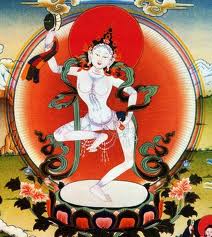
Traditionally Chod was practiced in charnel grounds and other fear inducing sites. Such sites were common in India and Tibet as many mountain passes, cross-roads, trees, and other sites were thought to be inhabited by malevolent spirit beings. Charnel grounds in particular were regarded as frightful not only because one commonly found bodies in various states of decay and decomposition, but because wild scavenging animals were easily found feasting on human remains. They are excellent places to face your fears. In fact, it is said that the Buddha had instructed many of his students to go to charnel grounds in order to contemplate impermanence amidst the decaying bodies of other humans.

Needless to say, such places aren’t really easy to find here in 21st century America- so, one has to be creative. Some of the beauty of Green-Wood lies in the fact that many of the grave markers are themselves quite old. Marble doesn’t hold up to elements as well as granite and other masonry material- it is soft and as it ages it slowly wastes away leaving eerie images behind. Some marble grave markers become hard to read thereby reinforcing the point that this is a place where people are left with very few to continue to witness the fact that they were ever there. Even the stone memorial markers are subject to impermanence.
One of the central features of Chod is the practice of visualizing that one chops oneself into pieces that then form an offering. We slice off our skin and chop up our body, remove the organs, cut out the eyes, perhaps smash the skull, and allow the marrow to slowly flow. In varying configurations we offer this mandala offering to all of the Buddhas, our lineage masters, dakinis and the wisdom protectors as well as to our own personal demons that represent our fears, our attachments, our insecurities, as well as to local gods, demons and spirits, as they too need care. In essence, we offer every aspect of the matrix of our being to all other beings that we can conceive of, what remains is liberated Buddha-essence: non-referential and timeless. It is a means of dramatically looking at where and what the “me” that we constantly tend to self identify with actually is. It’s also a means of facing the attachment that we all too naturally tend to develop towards our bodies, our personalities, and other ways in which we self-identify as independently existing entities.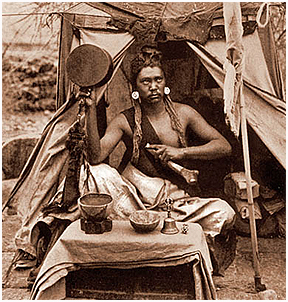
What was striking today after having made a certain ruckus in the cemetery with my chod drum, bell and thigh-bone horn as any good chodpa is willing to do, is that just sitting in a state of open reflection of the impermanence of life while at Green-Wood is particularly profound. It became evident that one need not only do Chod to necessarily feel the supportive reminder of how fragile and relatively short this life of ours may be. The contemplation of impermanence as well as the Four Noble Truths in a cemetery is a wonderful way to find freshness in the joyously simple truths-by-extension that flow effortlessly from such meditations. In fact, I was left with the feeling that we need more cemetery practice- more excitement. There are many places that tend to be avoided or simply glossed over that occupy great seats of power as places through which we can challenge and confront those things that are inconvenient.
It seems important to make the time to do such practices. It seems even more important to find powerful places to do such practices; it’s apparent to me that in the heart of Brooklyn such a powerful place exists- I look forward to finding other such sites. Gowanus canal?
Buddhism, Islam, and appearance
This post is intended to address the disturbing reactions to the Islamic cultural center that is proposed to be built near the world trade center site. The anger and “islamaphobia” that has arisen as a result of the proposal to build the center acts as a direct challenge to the ideals that America as a nation ideally represents. That some New Yorkers are participating in the protests and exhibitions of intolerance seems provincial and pedestrian given the fact that they live in what is an international city, home to people from countries all over the globe, who in turn represent and practice a wide variety of the world’s faiths. Needless to say, the intensity of these reactions seem to be based upon fear of difference and or fear of the unknown.
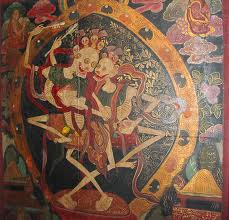
Despite my own personal feelings on this issue, I thought that this is the perfect time to share a picture I took at an exhibition of Indian Sufi art titled Light of the Sufis: The Mystical Arts of Islam that was held at the Brooklyn Museum of Art from June to September of 2009.

The painting depicts three sufi mendicants and one Buddhist yogin (practicing what I would assume is a Vajrayana completion-stage yoga based upon his asana as well as the use of the meditation belt). Even though the exhibition gave very little information regarding the subject of the painting, the moment I saw the portly yogin I was convinced that an interfaith meeting of some sort was underway.
I brought this image with me to India to show H.E. Gyaltsab Rinpoche as he has a passionate interest in history, especially regarding the overlap between Buddhism and Islam. By most accounts Vajrayana (tantric Buddhism) was born somewhere in or around the Swat Valley in northern Pakistan. Other portions of Pakistan, Afghanistan, and northern Central Asia figure largely in the development and dissemination of tantric Buddhism. Many great buddhist teachers spent time in this region- generally refered to as Uddiyana. Such illustrious figures include the Mahasiddhas Tilopa and Kambala, and more recently Orgyen Rinchen Pal (1230-1309 CE) who brought to Tibet a unique system of meditation based upon the Kalachakra Tantra. It is also said that Padmasambhava (Guru Rinpoche) was said to be born somewhere within the Swat valley- the same valley that over the past year has seen terrible devastation in relation to the war in Afghanistan.

Bodhisattva image from Afghanistan
In response to the photo of the painting that I brought, H.E. Gyaltsab Rinpoche told me the story of a Buddhist teacher who was described in a historical treatise by Gendun Chophel. There was once a yogin (Rinpoche never gave the name) who wandered through Afghanistan and some of what is now Iran, and after some time started to teach. According to Rinpoche, this very realized teacher interchanged Buddhist philosophical terms such as Dharmakaya and nature-of-mind with Allah when he taught as a means to appeal to his audience. The sensitivity and depth of his teachings were eventually recognized by an elder Sufi teacher who came to name this Buddhist as his successor. When the elder teacher passed away, this Buddhist teacher took over teaching the sufi congregation and when he in turn passed away was eventually recognized as a great Muslim saint. It seems that the attachment to Buddhist dharma or Islamic dharma wasn’t an issue for this great and now unfortunately relatively forgotten teacher; the play of appearance was a means to express something beyond any particular cultural reference.
I am reminded of the story of Taranatha and one of his teachers named Buddhaguptanatha. Buddhaguptanatha (1514-1610? CE) was an Indian Buddhist yogin who also held and practiced several Hindu yogic traditions. Taranatha apparently discovered this fact while Buddhaguptanatha was in the midst of bestowing a series of empowerments that he himself had received from his guru, Shantigupta. Taranatha was particularly challenged by the idea that his teacher also practiced Hinduism. Sensing his student’s sectarian reaction Buddhaguptanatha became upset and abruptly left Tibet leaving the series of empowerments incomplete. It is humbling that even for a teacher as great as Taranatha, the notion of “pure” Buddhism being mixed with Hinduism was a challenge- that on some level his own sense of distinction got the better of him. It seems that as Buddhists we must be willing to let go of the “Buddhism” in the Dharma- relaxing into appearance as it comes. However, maybe this isn’t something that just Buddhists should try to do- what if we just let appearances arise and not be too concerned with their comparative characteristics?

From the standpoint of meditation I am particularly fascinated by how we naturally fall back into habits based upon the conception of time and definitions. There is a certain convenience to viewing the world in terms of borders, of ideas as separate and in contrast to one another, and of faiths as distinct and at odds with one another. However, when we really look, especially at ourselves and the way we interact with things around us, the sense of separation isn’t as distinct. When we allow ourselves to slip out of the me/mine self/other dynamic, things blend together in a way where perhaps all the distinctions become unnecessary and overly unimportant- or at the very least, less distinct. Appearance just is, and need not be elaborated upon.
Now might be a good time to examine just how and why we react so strongly against the things that disturb us; the things that cause fear are often not fully seen for what they truly are.
Anniversary of Bokar Rinpoche’s parinirvana
Today is the six-year anniversary of the parinirvana of Kyabje Bokar Rinpoche. With that in mind I want to share a prayer for the return of Bokar Rinpoche by His Holiness the 14th Dalai Lama. May there be no hindrances in his swift return!!
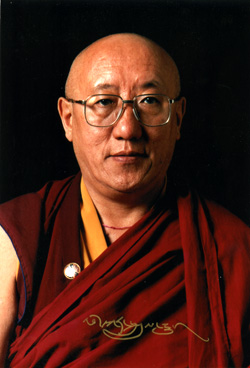
A Prayer for the Swift Return of Kyabje Bokar Rinpoche
by His Holiness the 14th Dalai Lama
From the empty, unimpeded play of dharmadhatu-awareness
The myriad objects of refuge abiding in oceans of pure realms
Perpetually radiate compassionate enlightened activity.
Grant your blessings that the intent of these aspirations is expediently fulfilled.
Treasury of the secret and profound teachings of the practice lineage,
Your wisdom having fully blossomed, with fearless confidence
You expound the essence of the dharma of definitive meaning.
Unrivaled supreme lama, please heed our call.
Upholder of the heart essence of the Victor’s teachings,
Benevolent nurturer of beings, we beseech you to continuously
Provide refuge to those endowed with faith and without protection.
Gazing upon us with compassion, may your incarnation swiftly appear!
By the potent waves of the authentic blessings of the peaceful and wrathful three roots,
Unencumbered by obstacles and unfavorable circumstances,
May the desired fruits of our intentions fully ripen and
May they continuously manifest in glorious abundance!
The illuminator of the practice lineage, Bokar Karma Ngedon Chokyi Lodro Rinpoche having quite suddenly entered the state of peace, his monastery and Khenpo Lodro Donyo with offerings have requested me to write a prayer for his swift return. Thus I, the Dalai Lama Tenzin Gyatso, a monk of Shakyamuni’s tradition, have written this on the 23rd day of the 7th month on the Wood Monkey year of the seventeenth cycle, September 7, 2004.
His Eminence Gyaltsab Rinpoche on Placing the Mind at the time of Death
Greetings! In keeping with the last post, I would like to continue along in a manner that accords with the way my recent trip to the Darjeeling and Sikkim areas unfolded. From the seat of the excellent Kyabje Bokar Rinpoche in Mirik, I journeyed to Palchen Choeling Monastic Institute, the seat of His Eminence Gyaltsab Rinpoche, in Ralang, Sikkim.

Nestled between the wonderful mountains of Tibet to the north, Nepal to the west, and Bhutan to the east, the site of the monastery is magnificent, inspiring and embued with peaceful beauty. To the south of the monastery is the retreat center, the largest in Sikkim, home to seventy-five retreatants engaged in the Karma Kagyu three-year retreat focusing on the Six yogas of Naropa. Behind the retreat center is a mountain upon which was the hermitage of a lama named Drubthob Karpo, known for his ability to fly. Nearby are the monasteries of Tashiding (built in the 16th century) and Pemayangtse, and many sites visted by Guru Rinpoche.
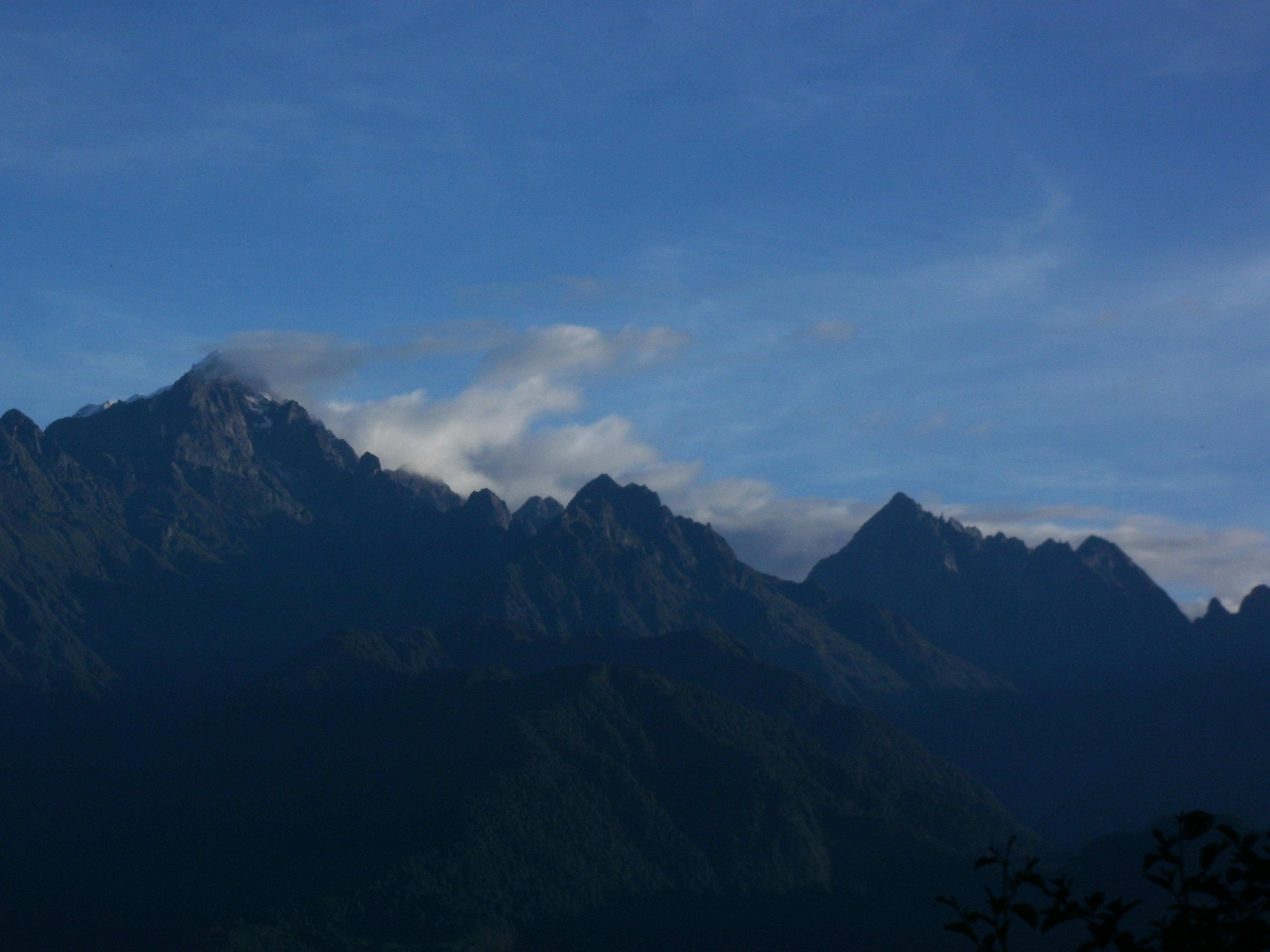
I had come to Ralang for an annual period of retreat and to continue to receive a little bit of instruction from His Eminence. He had just returned from Gyuto where he had spent the previous month or so with His Holiness the 17th Karmapa. Fortunately, a few days after my arrival Rinpoche told me that he would be bestowing the complete series of empowerments for the traditional three-year retreat to a group of monks from Mirik and Phodong; he said that I could sit in with the monks and recieve the empowerments as well. This seemed particularly auspicious to me as I would be with monks from Bokar Rinpoche’s monastery (my extended dharma family) and Phodong (a small rural gompa founded during the lifetime of the ninth Karmapa by the Chogyal of Sikkim who then offered it to the ninth Karmapa). Phodong gompa was a favorite of Ani Zangmo, Pathing Rinpoche and Bhue Rinpoche, and through them Phodong came to occupy a special place in my heart. I couldn’t think of any better company to have for such an endeavor.
Towards the end of my month-long stay at Palchen Choeling Monastic Institute I had the good fortune to ask Rinpoche about placing the mind at the point of death, as well as issues surrounding lay people offering prayer and ritual for others. I’ve included Rinpoche’s teaching regarding the placement of the mind at the point of death towards the end of this post following two descriptions of the Gyaltsab Rinpoche incarnation lineage.
As for the issue of lay people conducting prayers and for rituals for others, Rinpoche reiterated the position held by Khenpo Lodro Donyo Rinpoche, specifically that it is fine for lay people to engage in such activities, and that one should do whatever practices they know and or are qualified to practice. To be frank, this question was generally met with incredulous glances- it seems a little strange to ask “is it okay if I do something with the intention of benefitting another being?”. In any case, Rinpoche was both supportive and interested, as well as quite curious as to what the response was like to changchub.com.
So, here’s some history of His Eminence the 12th Goshri Gyaltsab Rinpoche…

The reincarnation lineage of the Goshri Gyaltsab Tulkus:
The website for Karma Triyana Dharmachakra, the North American seat of His Holiness the 17th Karmapa (http://www.kagyu.org/) describes the reincarnation lineage of the Gyaltsab Rinpoches as follows:
The twelfth Gyaltsab Rinpoche was born in Central Tibet in Nyimo, near Lhasa. From generation to generation his family was well-known for giving rise to highly developed yogis who achieved their attainments through the recitation of mantras and through Tantric practices. Gyaltsab Rinpoche was one such offspring who was actually recognized by His Holiness the Sixteenth Karmapa before he was born.
In 1959, Gyaltsab Rinpoche made the journey to Sikkim with His Holiness. He remained for a while with His Holiness’ settlement group in the old Karma Kagyu monastery, which had been built at Rumtek during the time of the ninth Karmapa. In the early 1960’s, Rinpoche received several very important initiations from His Holiness.
After these initiations, his father felt that his child should receive a modern education in English, so he took him to the town of Gangtok to study. However, with his extraordinary vision of what would be truly beneficial, the young Rinpoche chose to study Dharma in His Holiness’ monastery instead of remaining at the school. Just after midnight one night he left his residence in Gangtok and walked the ten miles to Rumtek alone. At sunrise he arrived at the new Rumtek monastery. When he first appeared, all the monks who saw him were surprised at his courage, and most respectfully received him in the main temple, where His Holiness welcomed him. Despite the conflict of ideas between his father and the monks about his education, he began to study the Mahayana and Vajrayana teachings of the lineage with three other high Rinpoches.
In Rumtek these four Rinpoches studied basic ritual rites and texts with private tutors. They also studied Mahayana philosophy through investigating numerous commentaries by early well-known Tibetan teachers and scholars, and teachings by masters of Indian Buddhism whose texts had been translated into the language of Tibet many centuries ago.
In previous lifetimes all four of these Rinpoches have been great teachers and lineage holders. In each of their lifetimes, one complete and unique example had been set up, beginning from a childhood learning reading and writing and going through the whole process of study, with a youth spent in discipline leading to a fully ripened human being.
Since the time of Shakyamuni Buddha, we are taught that we each must become a truly complete human being. For us as human beings the truth is that we develop the fruit of both good and evil by virtue of our own view, practice, and habitual reactions. This fruit of our own actions on both the physical and mental levels can be either positive or negative. As long as we are ordinary human beings we must deal with the truth of that experience.
Great teachers like Gyaltsab Rinpoche show a perfect example to human beings and especially to those who can relate to the idea that one is responsible for oneself and for others as well, and that no one else is responsible for how we spend our lives, whether we build for ourselves experiences of happiness or suffering. They show us that the difference between an enlightened and an ordinary human being is not one of wealth, title or position, but only one of seeing the present reality of mind experienced at this moment.

The history of the lineage of Gyaltsab Rinpoches:
The Gyaltsab Rinpoches have always been the Vajra Regents of the Karmapas and caretakers of the Karmapa’s monasteries.
Gyaltsab Rinpoche, through his long line of incarnations, has been known for being an expert in meditation.
Goshir Gyaltsab Rinpoche is the emanation of the Bodhisattva Vajrapani. In the past, Rinpoche incarnated as Ananda, the disciple of the Buddha Shakyamuni who had perfect memory and was responsible for reciting all of the sutras (teachings) of the Buddha before the assembly. Therefore Ananda was responsible for keeping all the words of the Buddha perfectly intact.
Gyaltsab Rinpoche also incarnated as one of the main ministers of the Dharma King Songtsen Gampo of Tibet. He was also Palju Wangchuk, one of the twenty-five principle disciples of Guru Padmasambhava. During Milarepa’s lifetime, Rinpoche appeared as Repa-zhiwa U.
The 1st Gyaltsab Rinpoche Paljor Dondrub (1427-1489) received the glorious title Goshir from the Emperor of China. He took birth in Nyemo Yakteng. His Eminence, who was cared since childhood by the Karmapa, was appointed as the Karmapa’s secretary and regent at fourteen years old. He received the complete transmission of the lineage from the Karmapa, Jampal Zangpo, and the 3rd Shamar Rinpoche. He became the main teacher to the next Karmapa.
The 2nd Gyaltsab Rinpoche Tashi Namgyal (1490 – 1518) received the Red Crown which liberates on sight from the Karmapa. This Red Crown indicates the inseparability of the Karmapa and Gyaltsab Rinpoche, and also indicates that their enlightened minds are equal in nature. Rinpoche recognized the 8th Karmapa and was responsible for his education.
The 3rd Gyaltsab Rinpoche Drakpo Paljor (1519-1549) took birth south of Lhasa and was appointed as the Karmapa’s main regent.
The 4th Gyaltsab Rinpoche Dragpa Dundrub (1550-1617) was also born near Lhasa and received the transmission of the lineage from the Karmapa and the 5th Shamarpa. He was renown for his commentaries and attracted hundreds of disciples.
The 5th Gyaltsab Rinpoche Dragpa Choyang (1618-1658) was enthroned by the 6th Shamar Rinpoche. He spent the majority of his life in meditation. He was also very close to His Holiness the 5th Dalai Lama, as they were strongly connected spiritual friends. Before the 10th Gyalwa Karmapa fled Tibet due to the Mongol invasion, the Karmapa handed over the mantel of the lineage to Gyaltsab Rinpoche.
The 6th Gyaltsab Rinpoche Norbu Zangpo (1660-1698) was enthroned by the 10th Karmapa, after taking birth in Eastern Tibet. He meditated very deeply and wrote numerous commentaries.
The 7th Gyaltsab Rinpoche Konchog Ozer (1699-1765) took birth near Lhasa and was enthroned by the 12th Karmapa. He became one of the main root gurus of the 13th Karmapa, and transmitted to the Gyalwa Karmapa the lineage.
The 8th Gyaltsab Rinpoche Chophal Zangpo (1766-1817) had the 13th Gyalwa Karmapa and the 8th Situ Rinpoche as his main teachers. He became a renown master of meditation and accomplish high states of realization.
The 9th Gyaltsab Rinpoche Yeshe Zangpo (1821-1876) and the 10th Gyaltsab Rinpoche Tenpe Nyima (1877 – 1901) closely guarded the precious transmissions of the Kagyu lineage: receiving them and passing them onto the other lineage masters. Both spent their lives in deep meditation.
The 11th Gyaltsab Rinpoche Dragpa Gyatso (1902-1949) was recognized by the 15th Gyalwa Karmapa and transmitted the lineage.
The 16th Karmapa Rangjung Rigpe Dorje recognized the present and 12th Gyaltsab Rinpoche while He was still in his mother’s womb. His parents were from Nyimo, near Lhasa. Soon after his recognition in 1959, His Eminence fled into exile with the 16th Gyalwa Karmapa.
The Gyalwa Karmapa carried Rinpoche on his back while traveling across the Himalayas into exile. He soon settled at Rumtek Monastery in Sikkim and received the necessary transmissions.
His Eminence learned the dharma with the other heart sons of the Karmapa such as Jamgon Kongtrul Rinpoche and Tai Situ Rinpoche. Like most of his incarnations, he spends his life in meditation and taking care of the seat of the Karmapa. He currently in Sikkim and is the Regent there representing the lineage. He oversees the activities and functions of Rumtek and at his own monasteries, such as Ralang, in Sikkim.
In 1992, Gyaltsabpa and Tai Situpa enthroned the 17th Gyalwa Karmapa in Tibet. The Karmapa has since fled to India and Gyaltsab Rinpoche will help prepare for His Holiness the Karmapa’s return to Rumtek.
Like Situ Rinpoche, Gyaltsab Rinpoche is one of the main teachers of HH the 17th Gyalwa Karmapa and already has bestowed transmissions (from the Rinchen Terdzo, among others) to His Holiness.

As mentioned earlier, I had the opportunity to ask His Eminence about how we should place our minds at the time of death. It seemed to me that this would be a good topic to be able to transmit on Ganachakra as it is both personally relevant (we will all eventually die, and we generally do not know when that will occur), and a very worthy teaching to transmit to others. From the standpoint of chaplaincy, I feel that this instruction is very useful. As is true with most profound meditation instructions, this instruction is beautifully simple, and quite short, but upon reflection on the meaning implied in Rinpoche’s instruction, it captures the natural ease with which resolution at the point of death has the ability to transform the tonality of one’s entire life.
With that said, it is with great pleasure and enthusiasm that I share with you Rinpoche’s thoughts on what one can do as they are dying, or faced with their impending death; how can one place the mind in the face of such an experience?
His Eminence Gyaltsab Rinpoche on Placing the Mind at the time of Death
When one is dying, or about to die, and, they are Buddhist, it is best to practice whatever practices they know. It is important in this manner to reinforce a dharmic outlook- to experience dharma as best as one can.
If one is not Buddhist, then it is of immense benefit to contemplate loving kindness or compassion. In doing this, one opens themselves up to the direct experience of others. In developing a compassionate outlook at the point of death it is possible to transform the habitual tendencies of self-centered outlook that creates the causes of suffering, into the potential for great spiritual gain. In fact one can eliminate great amounts of negative karma through such meditation or contemplation.
There is a story from the life of the Buddha, in which the Buddha was standing by the side of a river. In this river was a great alligator- this alligator when he looked up towards the Buddha, was transfixed by the radiant appearance of the Buddha’s face and kept staring at it. For a very long time, the alligator kept looking at the Buddha’s face, amazed at how peaceful he appeared. After some time the alligator died- but as a result of the peaceful calm feelings it experienced as a result of staring at the Buddha’s face for such a long time, the alligator was born in one of the heaven realms as a god, with all of the faculties and conditions to practice the dharma.
In this way, the moment of death is quite a powerful and meaningful period where one can make quite a difference in the quality of their habitual perceptions up to that time.


![[Valid RSS]](valid-rss-rogers.png "Validate my RSS feed")
 Ganachakra
