


hinayana of the mind

Recently I was reading the introduction to the recent translation of books nine and ten of Jamgon Kongtrul Lodro Thaye’s Treasury of Knowledge, entitled Journey and Goal, by Richard Barron (Chokyi Nyima). While reading, I came across a wonderful discussion of the topic of “paths and levels” (Tibetan: sa lam).
For whatever reason, be it cultural or philosophical, or a need to act as an extension of the phenom that was Indic scholasticism, many early Tibetan scholars/translators placed great energy into codifying all of the various routes taken by the three Buddhist vehicles. Of equal interest to Tibetan scholars/translators were the various the road-maps provided by the lineages that comprised these vehicles. Indeed, lam rim (stages and paths) literature from Jey Gampopa onwards, for example, has functioned as a great cornerstone for the practice of dharma up to this very day. Rest assured that if you are ever lost on the path to enlightenment, the Tibetans have all the various maps you may need neatly organized.
What was of great note for me was Richard Barron’s exploration of the term Hinayana in his introduction to the translation of Kongtrul’s text.
According to most descriptions, the three buddhist vehicles are delineated as: Theravada (Pali: थेरवाद), Mahayana (Sanskrit: महायान), and Vajrayana (Sanskrit: वज्रयान). The histories and unique wealth that all three vehicles contain is obviously too vast for this blog, and therefore I enthusiastically encourage exploring the expansive richness that these buddhist traditions continue to offer the world. For now, I would like to explore further hinayana of the mind.
The term Hinayana (हीनयान) translates a “deficient vehicle”, or “defective vehicle”. It arose as a derogatory term after the development of the Mahayana view to denigrate and belittle self-centered practice of dharma, not necessarily as a criticism of the Theravada approach. Indeed, that it arose post facto is significant in that it was used to distinguish Mahayana from some aspects of an earlier approach to Buddhist practice. It should be noted that this earlier form or approach to practice that was being criticized was that of the Sarvastivada school (an eternalist belief that “all exists”) and similar groups. Over time it became somewhat common to erroniously regard Theravada Buddhism as Hinayana.
That said, people are people are people, and Buddhists are no different; the chauvinism of some Mahayana practitioners towards practitioners of the Theravada approach resulted in harsh belittling of a legitimate and praiseworthy dharma. Indeed, this shows how easily the kleshas of greed, hatred and delusion, the very roots of our suffering, can be used to debase and belittle others in such a way that we easily poison our internal well-spring of basic goodness. Perhaps this is the intended meaning of hinayana; perhaps this is how we manifest the hinayana of our own minds. How we become deficient or defective.
The late Chogyam Trungpa Rinpoche once said that even the most precious and extraordinary tantric practices can become hinayana practice if our motivation is confused. If we become focused upon self-aggrandizing, self-enrichment, self-liberation, and pious aggression, what good is our practice? How easy it is to become an inner Devadatta towards our own pure motivation; to become stricken with a tight and closed approach towards others.
The great yogin and Kagyu forefather, Jetsun Milarepa, once said that staying in the house of someone who practices with hinayana motivation is akin to accumulating seven lifetimes of misdeeds. Milarepa seems to be saying that even loose peripheral association with the hinayana perspective can lead to great downfall, I can’t imagine that he was referring to the ill effects of accepting the generosity of receiving shelter from a Theravadin buddhist.
How does this apply to our daily lives? What impact does it have in chaplaincy? What does pure motivation mean, and how do we allow the root kleshas of greed, hatred, and delusion (as well as the branch kleshas: conceit, wrong view, doubt, torpor, restlessness, shamelessness and recklessness) constellate with us? How do these factors cause the growth of hinayana mind?
It is said that fire can be used as a tool; to bring warmth, to cook, and enlighten. It can also be used to burn and destroy. How we practice, and especially how we relate to others, as well as the environment, seems to be an especially powerful barometer with which we can measure the relative efficacy of our spiritual path. To that end, and with that in mind, it seems of vital importance that we remain mindful of the occasional flashes of the hinayana of the mind; how it arises may be different for each of us in terms of specificity, however, I suspect that our inner Devadatta’s are cut from a similar cloth: ego-clinging or self-orientated thinking/separation from others. Whether it take the form of high lamas causing a rift in the sangha, our own inability to recognize the suffering of others, or even the sometimes subtle belief that we are more unique or special than everyone else, it is easy to fall prey to hinayana mind.
May we totally dispel the neuroses of all beings (including ourselves)!

on how we can be close to the karmapa: what it means to be kagyu

The recent events surrounding His Holiness Orgyen Trinley Dorje have been extremely painful to watch. I realize that I am not the only person who has strong feelings about the present situation. Right now it feels important to bring these feelings inward and let those who are much more skillful and experienced with the complexities of these issues remain at the forefront. Perhaps directing all of the emotions that arise from the present situation towards practice, and using this present moment to reflect upon the Kagyu lineage can be a powerful tool for connection and empowerment. Rather than add to the frenzy of internet activity through discussing what has been going on, I would like to respectfully let the Office of His Holiness the 17th Gyalwang Karmapa with its advisors lead the way, they are wise, capable and have my complete confidence.

So let’s go deeper. What does it mean to be Kagyupa?
Practice. Devotion. These qualities are certainly not solely owned by the Kagyu lineage, or even vajrayana buddhism for that matter, but they are the special signature of this precious ear-whispered lineage.
What does that mean?
The relationship that the great Pandit Naropa had with his radical, skillful and essential guru Tilopa was one of great intimacy and tenderness. It was a relationship of sharing, where a master tested and took great care in exhausting the neuroses and misapprehensions of his student, who through his own dedication and drive, applied the special instructions and worked hard to guard and tend to the experience of enlightenment. Master and student lived side by side so that any ordinary experience could be used as a tool for revealing the dharma. In creating the a relationship of close intimacy Tilopa challenged Naropa, he knew what buttons to push, he chided Naropa’s intellectualism, and ultimately empowered him to experience buddhahood.
Marpa the indomitable angry Tibetan farmer- stuborn and hard-headed- decided to leave Drogmi Lotsawa to find and experience dharma on his own, for himself. Undergoing a series of journeys through out Nepal and India he eventually found his guru, Naropa. Marpa had to bear the brunt of being Tibetan in 11th century India, not an easy task Tibetans were generally regarded as rough and not that intelligent by their Nepali and Indian contemporaries. Indeed, the mahasiddha Sri Santibhadra (aka Kukkuripa) to whom Marpa was directed to initially receive the transmission of the Mahamaya Tantra asked why he should give the empowerment of the Mahamaya Tantra and subsequent explanations to a “stupid flat nosed Tibetan?” That must have really pushed the buttons of this precocious, driven seeker who was known for having a short fuse! The relationship between Naro and Marpa, like that of Tilopa and Naropa, was also intimate and close- Marpa spent years actualizing the paths that were offered to him from his primary guru, Naropa. Marpa also maintained close relationships with the mahasiddhas Maitripa, Kukkuripa, as well as Saraha (in the dream-state). Marpa brought the instructions of these great masters back to Tibet and firmly placed the victory banner of the kagyu ear-whispered lineage upon the Tibetan Plateau.

Milarepa, the repentant magician suffered great loss early on in his life. Imagine the loss of everything you know as one of your parents die, imagine that all you have every owned, or all that has ever been promised to you has been taken by family that you trusted. Imagine the shame and guilt, the remorse and regret that Milarepa must have felt growing up- imagine those feelings distilling into the deep focus to harm others. Marpa, the farmer lama, with his liberating presence, took the time to be there for Milarepa as a teacher in the best way possible. He had the skill to know that forcing Milarepa to perform nearly impossible tasks of physical labor to ripen his karma, to help push the reset button, and to reveal wholeness where previously there was just suffering, was appropriate. After all, Milarepa had been to a teacher before Marpa who was much looser in his teaching style which didn’t fit with Milarepa’s attitude. As a result not much occurred between Milarepa and this other teacher. Marpa, ever the farmer, planted the seeds of dharma within Mila’s being and carefully, tenderly raked, weeded and fed these seeds until the grew into a rich crop.
Rechungpa and Gampopa, the left and right hands of Mila Laughing Vajra, expressed the wisdom, instruction and blessings of their father-like lama. Gampopa did this through codifying and merging the ear-whispered lineage of experience with his experience as a Kadampa monk thus providing a monastic base for the Kagyu lineage; his famous Jewel Ornament of Liberation is a classic lamrim (stages of the path) presentation of the dharma. Rechungpa, a repa or cotten-clad yogi, continued more within the activity tradition of Marpa Lotsawa, returning to India to procure the empowerments and instruction for the practice of the Formless Dakini, a lineage that is still maintained within the Drikung Kagyu lineage. Both Rechungpa and Jey Gampopa were cared for by Milarepa- they had very close and different relationships with Milarepa. The devotion and sadness that Rechungpa expressed upon learning of Milarepa’s death is a beautiful reminder of the internal connection that they had. It also feels important to note that the last thing that Milarepa shared with Gampopa was showing him his calloused buttocks- a final testament that practice is essential, that the experience of liberation is supported by practice.

The Kagyu lineage, and all of its branches, is often refered to as a practice lineage. And indeed, if one took a look at the lives of the lineage holders, one can see that great care has always been applied to the maintainance of the purity of the lineage, as well as experiencing or tasting its essential essence. When we look at the lineage of the Karmapas, Tai Situpas, the Gyaltsabpas, the lineage of Jamgon Kongtrul Rinpoche, Traleg Rinpoche, Thrangu Rinpoche, Tenga Rinpoche, Sangye Nyepa Rinpoche, Trungpa Rinpoche, Kalu Rinpoche, Bokar Rinpoche, Mingyur Rinpoche, Chokgyur Lingpa, Karma Chagme Rinpoche, Khamtrul Rinpoche, and many other great Rinpoches, and unknown practitioners, it is amazing how alive and energetic the Kagyu lineage is.
I sometimes feel that people believe that being Buddhist involves shunning the world and keeping ourself calm and without emotion. In the hospital I am often asked by patients how I have the strength to not feel or to remove myself from the world. I don’t have that strength, I’m not even sure if that is a strength, and even if I did, I wouldn’t want to remove myself from the world. There are worlds upon worlds within us, physical isolation or separateness alone doesn’t change that. The freedom we seek is found in embracing what is right infront of us. Buddhism is in the midst of being translated to the western idiom. It has firmly taken root in many respects, however I feel that a significant point of focus may need to be how we as Buddhists (perhaps more so for vajrayana Buddhists, although maybe not) can maintain sacred-outlook as well as a realistic understanding of the world around ourselves. How can we connect to the visionary nature of our lineages, create real connection, feel that we are part of them, recieve the blessings of their transmission history without having an overly utopian notion of how everything constellates with the world that we live in?
A few years ago I read a translation of a text by Raga Asay, the first Karma Chagme Rinpoche in which a story was related about Raga Asay who after recieving instruction from the 10th Karmapa Choying Dorje, prefered to live far away from Tsurphu. When asked by a friend why he would choose to live far away and not be able to attend public events (empowerments, reading transmissions, teachings, etc.) Raga Asay replied,” when I am in retreat the lama on the top of his head is near and I always feel his blessings. When I am at Tsurphu my mind is plagued by insecurity, jealousy and gossip.” Karma Chagme found the balance; his balance, a confidence in his relationship with His Holiness as well as with the larger lineage. At the same time Karma Chagme seems to be suggesting “people are people are people”- we gossip, brag, and in all our enthusiasm during special religious functions often inadvertantly act unskillfully.
In terms of the present situation, it is easy to pick up on and focus on the politics, the gossip, and the intrigue and forget that this is all appearance. By all means we should support His Holiness, but as his children perhaps we should bring what arises within us to the path. This is what Gampopa refers to when he lists the ways to deal with obstacles to practice, we can try to abandon obstacles, or we can transform them, or we can rest within them as they arise. Gampopa suggests that transforming obstacles is good, but that resting in them may be better- it is a way to bring direct experience of the present moment to our practice. In facing our fears, our insecurities, our rage, our frustration, and being able to be aware of this as none other than the play of our mind, we are able to be clear and free.
When His Holiness came to Mirik to consecrate and install the kudung stupa of Kyabje Bokar Rinpoche, His Holiness told the large group of Kyabje Bokar Rinpoche’s students that our greatest offering to Bokar Rinpoche is our practice. That to put into practice his instructions, and to aspire to completely master master them, we are connecting in a profound manner to Kaybje Bokar Rinpoche. This sounds like timely advice for the present moment, but also something to keep in mind at all moments. While we can not always serve our lama in an everyday setting, we can serve our lama by holding dear and practicing the instructions that she or he offers us.
The office of His Holiness recently offered a statement of thanks to everyone who has supported His Holiness and his labrang and suggested that we offer our practice towards the removal of all obstacles towards the problems that His Holiness has faced. You can read it here. This is wonderful! I cannot think of a better way to maintain a connection with such an amazing teacher. In practicing for him, we are generously offering our time, our effort, our spirituality as well as our connection with the lineage from which the instructions that we follow flowed from. This is an offering beyond time and space; an essence offering which when fused with the intention of benefiting His Holiness and his labrang- doubtless, this is a powerful way of maintaining connection, it’s a way through which we can feel the heartbeat of Tilo, Naro, Marpa, Mila within our very being.
Although all practitioners have a lineage,
If one has the Dakini lineage, one has everything.
Although all practitioners have a grandfather,
If one has Tilo, one has everything.
Although practitioners have a lama,
If one has Naro, one has everything.
Although practitioners have teachings,
If one has the hearing lineage, one has everything.
All attain the Buddha through meditation,
But if one attains Buddhahood without meditation,
There is definite enlightenment.
There is no amazing achievement without practice,
But there is amazing achievement without practice.
By searching, all will find enlightenment,
But to find without searching is the greatest find.
-Marpa

on the importance of the teacher
I recently spent time considering the importance of my teachers and how fortunate I feel to have received just a portion of the stream of their experience through instruction. The importance of the teacher, whether we call him or her lama or guru, is central- for where would we be without their guidance, their compassion, and their wisdom? Through the openness that we allow ourselves to have with our teachers, a connection of transmission occurs through which we can experience our own fullness and Buddha potential, just as they themselves have done.
I’ve found three passages that help illustrate this point:
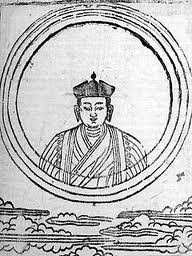
This first one is entitled Hail to Manjushri, it was written by the third Karmapa Rangjung Dorje (1284-1339).
Hail to Manjushri!
All phenomena are like illusions,
though absent they appear to exist;
wise indeed are those who cognize them
within the ever-present unborn.
If you perceive the glorious guru
as a supremely enlightened being,
indivisible from your own mind,
you will receive blessings and strength.
If you, without ceasing, propel the flow
of channels, wind energies, and vital drops-
the nexus of interdependent factors-
the stains of self-love will be swiftly cleansed.
The manifold states of nonconception-
clarity and bliss- I place on the path
of nonapprehension, like patterns in water,
then the true mode of being will be definitely seen.[i]

This next song is from the larger section of the collected songs of Milarepa (1052-1135). Milarepa, one of the greatest yogins tha Tibet saw was the heart student of Marpa Lotsawa. Milarepa’s endurance in his practice, and the joy with which he taught is truly remarkable. This song is a portion of the larger song-story called The Song of a Yogi’s Joy:
The Guru, the disciple, and the secret teachings;
Endurance, perseverance, and the faith;
Wisdom, compassion, and the human form;
All these are ever guides upon the Path.
Solitude with no commotion and disturbance
Is the guide protecting meditation.
The accomplished Guru, the Jetsun,
Is the guide dispelling ignorance and darkness.
Faith without sorrow and weariness
Is the guide which leads you safely to happiness.
The sensations of the five organs
Are the guides which lead you to freedom from “contact.”
The verbal teachings of the Lineage Gurus
Are the guides which illustrate the Three Bodies of the Buddha.
The protectors, the Three Precious Ones,
Are the guides with no faults or mistakes.
Led by these six guides,
One will reach the happy plane of Yoga-
Abiding in the realm of Non-differentiation
In which all views and sophisms are no more.
Remaining in the realm of self-knowledge and self-liberation
Is indeed happy and joyful;
Abiding in the valley where no men dwell,
With confidence and knowledge, one lives in his own way.
With a thundering voice,
He sings the happy song of Yoga.
Falling in the Ten Directions is the rain of fame;
Brought to blooming are the flowers and leaves of Compassion.
The enterprise of Bodhi encompasses the Universe;
The pure fruit of the Bodhi-Heart thus attains perfection.[ii]

The third passage is from Gampopa (1070-1153), one of the two main students of Milarepa, and the first to combine the ear-whispered teachings of Milarepa with the Kadampa monastic tradition, thus institutionalizing the Kagyu lineage as a generally monastic lineage. This passage comes from Gampopa’s Precious Garland of the Supreme Path, a wonderful instruction manual of practical advice from this special master. What follows is his description of the first thing that one should rely on as we tread the path, from the third portion of the text entitled, Ten Things Upon Which To Rely:
The first thing on which we must rely is a holy guru who possesses both realization and compassion. The lama must possess realization because a teacher who has no realization or actual experience is like a painting of water, which cannot quench our thirst, or a painting of fire, which cannot warm us. As well, a lama must possess compassion. If the lama merely has realization but has no compassion, he or she cannot teach and will not help sentient beings develop virtuous qualities and relinquish defects. Thus the first thing ton which we must rely is a lama who possesses both realization and compassion.[iii]

I hope that these passages contribute to a sense of connection and warmth with our teachers, and I hope that this connection helps foster inspiration. May this inspiration translate into diligent practice, and through this practice may we fully realize the essence of our teachers’ instructions. May we develop the same stainless conduct as our teachers! May we too raise the victory banner in the citadel of enlightenment!
May the activities of his Holiness the 17th Karmapa flourish and may all obstacles naturally dissolve into emptiness. May his life be long, and may the compassionate wisdom of his example be known to all beings!
[i] Jinpa, Thubten and Elsner, Jas, trans. Songs of Spiritual Experience. Shambala Publications, 2000. Pg. 157.
[ii] Chang, Garma CC.trans. The HUndered Thousand Songs of Milarepa. Shambala Publications,1999. Pg. 80-81.
[iii] Khenpo Karthar Rinpoche. The Instructions of Gampopa. Snow Lion, 1996. Pg. 22.


![[Valid RSS]](valid-rss-rogers.png "Validate my RSS feed")
 Ganachakra
