


Announcing the publication of Modern Tantric Buddhism!

On October 29th Modern Tantric Buddhism: Embodiment and Authenticity in Dharma Practice was released by North Atlantic Books!
This book is a distillation of much of my teaching and writing over the past few years focusing on how we can bring our practice into our lives in fresh and bold ways, and how we can simultaneously liberate ourselves from the ways in which we limit ourselves through spiritual bypassing, and unexamined dharma practice.
It is a guide for the practitioner of Buddhist Tantra as much as it is an experimental look into how the wisdom of this tradition can be experienced in our busy modern lives in the present era. Much of the inspiration from this book arose directly from the long conversations, the debates, and reflections that we have had together, and I want to be able to share this with you.
Tricycle Magazine was kind enough to publish an excerpt of an interview about the book which you can read here.
Modern Tantric Buddhism is available through Amazon, Penguin Random House, North Atlantic Books, or your local bookstore.
Praise for Modern Tantric Buddhism:
“Modern Tantric Buddhism reads like an extended late-night conversation, wherein Western Buddhists can discover the authentic essence of tantra and develop confidence in its relevance to their own lives and spiritual aspirations. Lama Justin exemplifies an urban yogi who embodies the creative blaze of tantra amidst the grit and turmoil of a great city.”
—CHAGDUD KHADRO, spiritual director of Chagdud Gonpa centers in South America
“Modern Tantric Buddhism steps into bold new territory, offering heartfelt accounts while presenting Buddhist reflections on the great issues of our time. Lama Justin invites readers into the brave exploration that has been his life. He offers a stirring presentation of teachings on death as seen through the eyes of a chaplain in hospice work. Captivating as it is instructive, this book is a potent contribution to the development of American Buddhism.”
—PEMA KHANDRO RINPOCHE, founder and spiritual director of Ngakpa International
“Lama Justin represents a younger generation of well-trained Buddhist teachers who encourage American Tantric Buddhists to trust the power of their practice, find their authentic voice, and express wisdom in the modern world. Modern Tantric Buddhism demonstrates that the wisdom of Tantric Buddhism is as relevant and powerful in the streets of Brooklyn as it was in the remote caves of Tibet. A must-read for the modern tantrika!”
—LAMA WILLA MILLER, founder of Natural Dharma Fellowship and coauthor of The Art of Contemplative Care: Pioneering Voices in Buddhist Chaplaincy and Pastoral Work
“Interweaving lived religious experience, tantric texts, and critical theorists, von Bujdoss shows how Western tantra can transform the structural afflictions of colonialism, whiteness, and patriarchy. For academics, he provides instructive and valuable primary data to theorize the multiple forms that Vajrayana Buddhism is taking after and beyond modernity.”
—ANN GLEIG, associate professor of Religion and Cultural Studies, University of Central Florida, and author of American Dharma: Buddhism Beyond Modernity
“Modern Tantric Buddhism realigns us with tantra’s original core values of integrity, authenticity, and true empowerment. Lama Justin von Bujdoss—scholar, yogi, householder, and chaplain—shows us what tantra is really all about and how to meet the immediacy of our everyday experiences with greater wisdom and compassion.
—DR. MILES NEALE, author of Gradual Awakening
“Lama Justin von Bujdoss offers us an introduction to Vajrayana Buddhism unlike any other of which I am aware. Arising from his courageous application of tantric insights to hospice work, prison ministry, and the task of ‘healing the earth,’ this book has a unique freshness of approach that will engage a broad spectrum of readers.
—REV. FRANCIS V. TISO, author of Rainbow Body and Resurrection
On the panic that accompanies that which goes bump in the night…
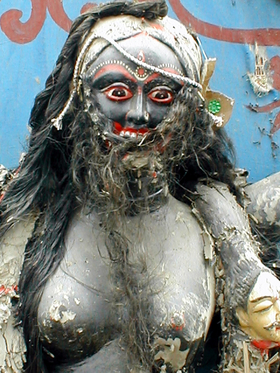
People are scared to empty their minds
fearing that they will be engulfed by the void.
What they don’t realize is that their own mind is the void.
Huang Po
Not too long ago, when a lama came to the dharma center to teach on the Dujom Tersar cycle of chöd, I came across a few references in a variety of writings, both Buddhist and non-Buddhist that describe the experience of panic that arises in the face of the experience of loosening the intensity of the grasp around a permanent self. These reminders have been timely teachers as I have found myself recalling moments of ‘self’ destruction for lack of a better term, as well as deep listening to my own experience of periodic panic that sometimes presages a feeling of a less real sense of self. I feel that this is an under-explored topic, namely the fear that accompanies the spiritual path. Over the years I sometimes wonder if this fear is the fear that our practice will be (or is) successful.
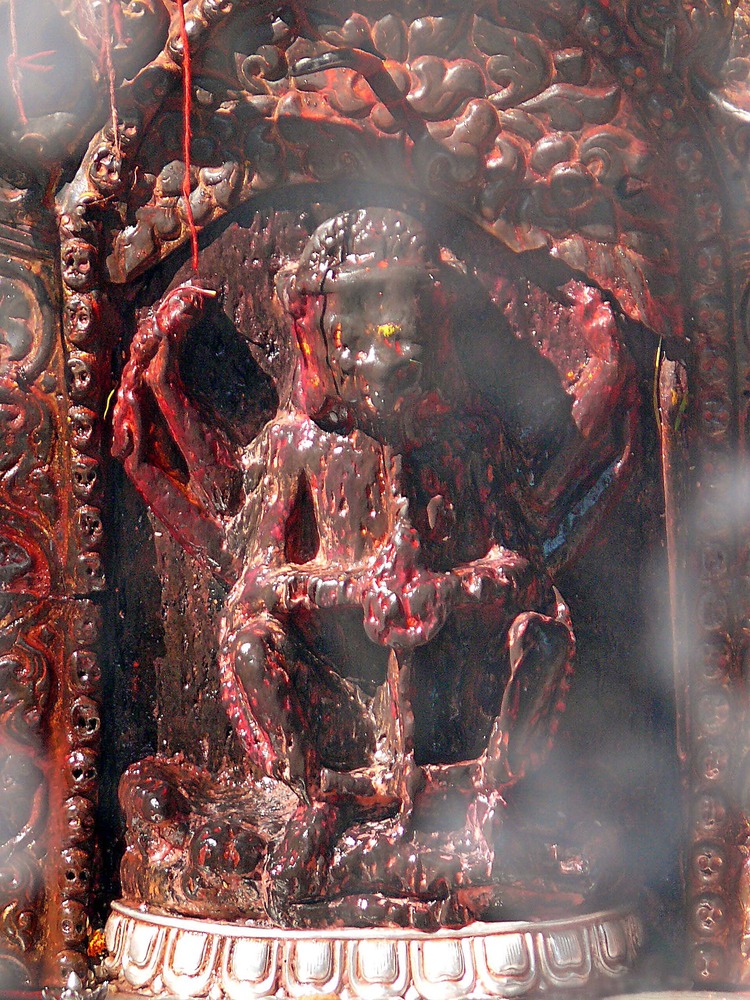
Confess your hidden faults.
Approach what you find repulsive.
Help those you think you cannot help.
Anything you are attached to, give that.
Go to the places that scare you.
Machig Labdrön
Within the context of the practice of vajrayana, the practice of chöd, regardless of any particular lineage, offers a very compelling way through which we might help effectively confront this self that tries to hold together the matrix of identity that wants to know and control the world around us. A complex alignment of dynamics, chöd offers a powerful visualization that chips away the plaque of identity, it slowly releases the grip of the hand that tries to maintain a handle upon what we experience. As we loose our grip, finger by finger, and we feel ourselves slipping, we are easily reminded of the truth of impermanence of the castles of sand that we create and imbue with such power and reality that before we know it, we and everything around us feels real, important, and vitally essential. Whether the visualization emphasizes Prajnaparamita, Vajravarahi or Tröma, it is essential to remember that they all represent the complete luminosity of emptiness; the vividness with which we do not exist, and the bliss associated with realizing that everything around us is pure appearance. The counter-intuitive act of visualizing oneself thrown into a kapala made up of one’s own skull and transformed into an ambrosial offering for all beings, or piled up as a mandala offering upon one’s own flayed skin, these confounding visualizations and the profound sense of generosity required tug at our sense of permanence and our desire to belong constellated in relation to a fixed point within time and space. It is not uncommon to feel a sense of resistance to the practice, a sense of tentative reluctance, or attempts towards pulling back within ourselves.
There can be a lot of pain and suffering when we become aware of how we cling to this wanting to “be”. This alone could easily be regarded as ‘going to a place that scares you’ that so much chöd literature seems to refer to. Sometimes this suffering manifests physically, with a visceral painful feeling, a hollowness or sharp sense of discomfort, other times it arises as a sudden busyness in which all of the sudden there is something very important that we find we need to do- something that distracts us from our practice. Sometimes these new things we find ourselves needing to do seem so important and vital that we are seduced by their wonderful meaning and uniqueness. These of course are the arising of demons. They find us wherever we are and rather powerfully unweave some of the fabric of confidence in resting in the view that allows for chöd to be the powerful practice that it is.

Ordinary people look to their surroundings, while followers of the Way look to Mind, but the true Dharma is to forget them both. The former is easy enough, the latter very difficult. Men are afraid to forget their minds, fearing to fall through the Void with nothing to stay their fall. They do not know that the Void is not really void, but the realm of the real Dharma. – Huang Po
The experience of groundlessness, I was once told by a psychotherapist who happened to be Buddhist, was not something to be cultivated, but rather, an experience more grounded and tangible was deemed as more valuable, within the process of spiritual growth. I have come across a number of psychoanalysts who warn in their writings that unguided exploration and or cultivation of the experience of groundlessness can lead to a state of psychosis. These warnings are interesting. They are interesting in part because I often wonder about the utility of combining psychoanalysis with Buddhist practice, especially if one is going to fully embrace emptiness of self. In all likelihood the combination of both Buddhism and psychotherapy can be a very effective way with which one can effect a necessary change in one’s experience of life to reduce suffering. Yet I sometimes wonder how much we benefit from aligning our living and breathing practice of dharma with the structures of our intellect such as modalities that seek to measure and define our experience as we move along our path as found within the psychoanalytic model. Our intellect often arises in a manner that does not make sense; especially when the sense of self is threatened. Like sparks, or flashes of lightening in the night sky, the reverberation of the reactive ego- the sense of self-nature wrapped up with the demons that keep it preoccupied- obey no one person. They are messy, sometimes terrifying and often very powerful. Similarly, the fast arrival of vajrayogini with her retinue of dakinis arise in an unpredictable way; this is why they are so integral within this practice and this too is why chöd confounds approaches that seek to find a restorative refinement and distillation of the Self. After all, how can one distill that which is not there?

Those who realize the nature of their mind knows
That the mind itself is wisdom-awareness,
And no longer make the mistake of searching for enlightenment from other sources.
In fact, enlightenment cannot be found by searching.
So contemplate your own mind.
This is the highest meditation one can practice;
This very mind is the perfect awakened nature,
the birth place of all the enlightened ones.
Jetsun Milarepa
What if we just stopped running? Stopped trying to make ourselves better, more qualified, more important, more knowable and “ourselves”? What if we stopped in our tracks and turned around to face the executioner of our ego-grasping and gave way to the fear that exists around that process? What if we let the associated pain and suffering come rather than defend ourselves and acclimatized ourselves to the gnashing teeth of the demons who come fast, or the methodical bone crushing of the demons who come slow? What if we stopped sublimating everything by actively using our minds to make everything seem like Dharma, and just rest so that things can simply arise as Dharma; ordinary and unaffected; unpatterned and free from artifice?
Perhaps this is the only way in which the strong grip of our fears and insecurities, our limitations and feelings of being unqualified, will burn off like a morning mist as the sun rises. Perhaps trusting in the process is part of this and putting down the willful need for change allows this sense of self- an illusory doer, be seen for what it is, an expression of empty luminosity.
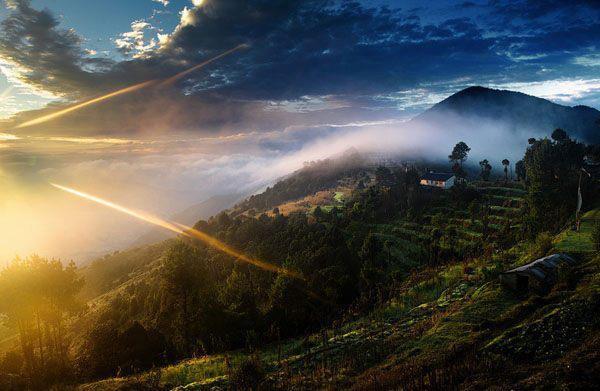
On a more pastoral vajrayana and haughty lamas…

A few weeks ago I read an excellent article about Pope Francis shaking up the ecclesiastic leadership in the United States, and the subsequent reactions from more conservative Catholics. I found myself, despite my own sense of satisfaction in learning more about how the nuts and bolts of how Catholicism in America works, feeling sad and emotional around how far it seems that we as practitioners of Vajrayana have to go in the West before such conversations can occur around the quality of presence of our own spiritual leadership. In a way, we Vajrayana Buddhists are lacking when it comes to real authentic pastoral presence. When I say this I certainly don’t mean to imply that His Holiness Karmapa, or His Holiness Dalai Lama lack pastoral presence. They don’t. I have had the chance to be in their presence in very intimate settings and the degree to which they appear attuned to even the smallest concern of another person is astounding to witness. I refer to the lamas and administrators that represent our gompas, our Buddhist Associations, as well as the general dharma center leadership across the western world.
As it turns out, Pope Francis recently appointed Cardinal Donald Wuerl as the new head of the Congregation of Bishops, replacing Cardinal Raymond L. Burke for his conservatism and lack of pastoral affect. This change in leadership, while subtle in some respects, will hopefully produce long standing effects in how the church presents itself, to whom the church ministers and in what position it will take in relationship to the experience of the transcendent. Pastoralism is something that we commonly find within Christendom; in it’s most basic form it presents a spiritual concern centered around giving spiritual instruction and guidance to others. In this case, the parish priest who is intimately connected to the concerns and needs of his “flock”, needs spiritual, emotional and otherwise, comes to mind. Someone who works tirelessly for the benefit of others- in real terms, not just an aspiration to perform this task but to actually roll ones sleeves up, and get into the mucky mess that comes with being. Pastoralism also has applications that relate to music, art and philosophy, and a personal and ethical desire to return to the simple, the immediately real and what occurs naturally. As a hospice chaplain who operates from within the Vajrayana tradition as an ordained Repa, I am comfortable with discussions around the importance of pastoral presence and what that means. Yet I often find my Vajrayana contemporaries uncomfortable in challenging themselves in a way other than the way that tradition dictates. That the lineage of Tilo, Naro, Marpa and Mila has gotten so rigid and insecure is unfortunate.

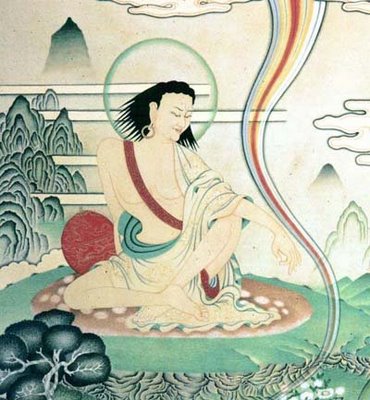
I think that one could definitely say that Milarepa had mastered a pastoral presence, or pastoral affect. In suggesting this I feel that it has less to do with the fact that he lived in retreat, in the pastoral wilds of Tibet as coincidence would have it, but that he could naturally -with simple immediate ease- sense the needs and suffering that others were consumed by because he could sit honestly with what arose within himself. This sounds easy to do, but in actuality it is quite painful and heartbreaking. It is difficult to see others stuck within their own experiences of themselves and even harder to see where we get stuck in similar ways. We generally don’t want to recognize how compelling the hallucinations that we have created actually are and how we lead ourselves around and around in circles, let alone try to work through the baseless obsession with the fact that we are imperfect and need to get somewhere before we can stand on our own two feet. Retreat is certainly a great way to develop spiritual insights, and it is very important, yet retreat does not necessarily produce compassion, and I am not so sure that it produces pastoral presence nearly as well and being fully engaged by what life brings our way. In fact I would argue the latter: compassion arises more uniformly, with more stability outside of a comfortable retreat setting. When living life in full one can easily get to the heart of difficult feelings that arise within the experience of pain and suffering, feel them and then let them flow into the next experience. Retreat can be helpful in this regard, however, I tend to feel that it is easier to seduce ourselves into a comfortable homeostasis in which we are never really forced to face our fears, never asked to consider the shadows, and never really asked to cut deep to the bone and feel that cold pain of the roots of our own suffering. This is why Milarepa is considered semi-wrathful within the text of his guru-yoga; the only way that he could go deeper and deeper within his practice is to cut with skill, precision and power. Cutting deep is important- it is hard and very uncomfortable. Yet, at the end of the day, we are best served when we can access the pain and suffering that we hide from. When we can do this pastoral presence is much more authentic. There is no better model for Vajrayana Buddhists than Milarepa if we are looking to foster a more pastoral Vajrayana.
Occasionally I fear that much of the way that the Vajrayana perspective is presented in the West is somewhat split between pedagogic models that either have students memorize terminology, acquaint oneself with logic, and years of study before they can say that we are Buddhists, and the other extreme that we can simply blend our curiosity of Buddhism with our practice of Christianity, Judaism, Hinduism, etc.- that we don’t need to worry about to committing to any one tradition. We are either definitely going to be born in one of the Hell Realms because we are terribly ignorant, or we are going to be just fine and we need not really worry about specifics- just show up say your prayers and do a bit of instruction without committing to a teacher or cogent path of practice. It is much easier to just follow the rules and sheepishly hide who we are in relationship to dharma than integrate the dharma into our experience of life.
We also seem to suffer from an overly Mahayana perspective around the long period of time through which we must practice before we become realized. We are very infrequently told (or shown) that liberation can come in this moment, on this very seat, in this very session. We are given a practice and generally told that it will take an incalculable (or at least an unknowable) amount of time before enlightenment occurs. We venerate past masters who were exemplary and also taught to believe that we are nothing in comparison to them- we are but just mere shadows. But is this really so? Why are we not taught to take greater responsibility for our realization? Why are we not taught to be creative in our practice, to take our seat and settle into our own pastoral authority? In fact, more often than not, the specific lineage that we are shown is presented more like a line which we shouldn’t deviate from, yet when one looks, most of the great masters struggled to challenge and confront such preconceived ways of being. Eveny lineage has masters who did whatever they needed to do to effect realization- if it meant breaking the rules, so be it.
I fear that some of the leaders that one finds within the mainstream presentation of Vajrayana lack the natural ease that Milarepa brought to the tradition at large: no monasteries, no particular school of thought to tether oneself to, no institutional affiliations, no orthodoxies, no expectations, no roles, just the experience of pure experience. Even though I say this, it should be noted that the growing interest by scholars in the development of the Milarepa’s hagiographical literature presents us with compelling evidence that the creation of the story of Milarepa morphed into what we know today from a wide variety of projections of what his life was thought to have been like by others centuries after his death. Even still, despite the fact that we may only be able to interact with our own inner Milarepa, and the true Milarepa may never be known, there is some indescribable inspiration that he evokes, not unlike the feeling of an early warm Spring day that leaves one feeling naturally resolved and content and excited for whatever comes next. For me part of the joy of Milarepa is that everything is okay, that within the experience of Mahamudra there is nothing to add, nothing to take away, nothing to do, and that we can rest in everything because it is all essentially one taste. This is a powerful root to a penetrating pastoral presence that is without fault. I try in my own way to allow this to inform me as a chaplain and as a teacher at the dharma center rather than whatever ‘rules’ or traditional norms may exist; whether this is a benefit and serves me well in either role is certainly up for debate. Lord knows, I am probably more of a hindrance than a benefit to anyone.
Instead many in the Vajrayana tradition here in the United States, especially those in positions of spiritual leadership seem to fall back upon textual dictates and scripture, the rules and maxims of form and function rather than engage directly, naturally, with how life, and thus, appearances arise. Spiritual bypassing, or the use of spirituality to disengage from actually experiencing what arises and resting within it, appears to be as much the western Buddhist’s unique disease as much as diabetes and obesity are the illnesses that currently define Americans. This bypassing appears to be caused by the constant retelling of the same old story that we are imperfect, that we are not enough and that we are somehow not whole in this moment. More than this, this type of undigested view lacks the rich fertility that provides us with the needed confidence, or escape velocity, to no longer be hindered by the gravity of our habits and misguided constructions of the universe around and within us. It is easier to build a fancy dharma center, easier to go into 3 year retreat, and easier to tell ourselves (and others) that we will never taste any of the fruit of the dharma as we are fundamentally obscured than it is to try to cut through our sad, sorry, slothful sense of being imperfect. There is no better way to blind oneself (and build up one’s sense of importance) than with dogma.
I am reminded of a story I was told about a group of western monastics who criticized a flower offering that a student at a dharma center made one morning. She had happened upon a field of wild flowers while during a morning walk and decided to pick a few to bring to the shrine as an offering. New to the dharma she was motivated by fresh devotion. By the following morning the offering was removed- I was told that the imperfections found upon the leaves of the flowers and the petals reflected the ignorance of the student. The group of monastics were quick to point out that all offerings have to be perfect, the very best- as this is what texts explain. Needless to say, I had a hard time hiding my mixture of disgust and sadness that the inner efforts of devotion made by someone new to the dharma was seen as a violation of protocol and a cause of negative karma due to ignorance. The unbending parochialism of this argument is a constant source of amusement for me. As a chaplain I often find myself having to operate from a place of creativity and skillful means to help provide others with a supportive environment even if it challenges the static spiritual dictates of a given person’s faith. Such rigidity would do more harm for a person who is dying than good.
I wonder what Pope Francis would say of the Catholic version of this event? What do we do when we become overly dogmatic at the expense of killing the experience of another? When do we let our religious dogma undermine our abilities to manifest the connection created by pastoral presence? What makes us Buddhist puritans?

How we work towards achieving this reconnection to our essential wholeness, our naturally expansive and vast experience of all that arises is ultimately up to us. This includes the specific techniques, degrees of effort, and the conceptual models that we temporarily use to get us to a place of spontaneous confidence and certainty. Most important however is that we don’t concertize the path, that we don’t rigidly hold onto our techniques (lest we become cold chauvinists regarding Buddhadharma), as well as a dialectical obsession with how much effort we must apply (we are tying to ease into the experience of Mahamudra, not train for a triathlon), or assign too much of an eternalist reality to the conceptual models we use (whether lay or ordained, male or female, well schooled or illiterate, whether we follow sutra or tantra, are logicians or ritual specialists or neither, we are working with the essence of mind; no one path is necessarily better than the other). Otherwise, the very vows that we take to benefit others become the very cause of perverse haughty dogmatism that does more harm than good. Before we know it we are no better than the demons that we thought we were feeding or coming to learn from and rather than spiritual friends become judges, applying dialectics gathered from scripture and commentarial literature rather than from the direct experience of mind. When does that shift occur? When do we go from spiritual friend to tormentor and judge? When does our fear prevent us from being with what arises and cause us to snuggle up within textual dictates to provide us with comfort and a defensive justification of laziness?

In a way, Pope Francis offers us a wonderful reflection of the ways in which we can become rigid and overly concerned with outer appearance. The conservatives in the church, those who apply the checks and balances of church dogma to the world around them as a way to orient themselves and assert meaning, often lack the same experience and sense of certainty than those who were parish priests and are familiar with the joys and sorrows of their congregations. This is obviously not unique to Catholics, in fact, this kind of separation feels much more prevalent in the Tibetan Buddhist world- and it also appears that we are too afraid to explore this lest we criticize the sangha (let alone cause a rift within it). It may be that ordained sangha and the large dharma organizations that we have created in the west are the biggest sacred cows that we as Buddhists need to confront.

In a podcast on Mahamudra that I happened upon by Reggie Ray, Ray artfully suggests that the lineage doesn’t care about us. Perhaps more to the point, he reinforces the point that our practice of dharma isn’t about our identities in relation to the lineage. The lineage doesn’t care if we become involved as teachers or administrators. The lineage doesn’t care about gompas or lack of gompas. It doesn’t care about dharma centers and their creation, maintenance and growth. The lineage doesn’t care about anything other than our work to recognize our natural face: enlightened being. Everything else is extra. Lineage doesn’t do anything other than reflect our essential nature. We do the rest. We create the world of systems, we collate texts, we publish books, we create limitations and neurotic obsessions, often in the name of lineage. If we are blessed with the chance to look back at our lineage and see how easy it is to get wrapped up in the peripheral details maybe we can return to the experience of simplicity: the experience of naked awareness. When we can do this we don’t have to become anything, or wear anything, or observe any vow, or follow any textual dictate, because we become, in that moment, the Dharma. There is nothing to add or take away from this basic reality.

A close friend who was recently trying to determine where she should be in late December and the beginning portion of January told me, “I could go to Bodh Gaya to participate in the Kagyu Monlam for “Dharma” or I could go home to be with my family and actually live Dharma”. Her time at home would be challenging and ordinary as time spent with family often is- in her case it would be more so as a relative had recently died and there was much support to be offered. The Kagyu Monlam, replete with lavish offerings, is a sophisticated mechanism for making aspiration prayers, a place to see and be seen as a Karma Kagyu practitioner, a place to go from lama to lama for blessings and teachings, and is in many ways the ultimate place to go for generating merit. Yet it is easy, it is obvious, somewhat predictable, and spiritually fattening; you can go there and haughtily throw your weight around feeling that you have unique karma and subtly build your ego. After all, look at me, I’m in Bodh Gaya at monlam, how fortunate am I? Going home to be with family, on the other hand, and all of the challenges that accompany providing support for the children and husband of the family member that recently passed away is a way to live all of what spiritual practice is about. It is also hard, confusing and sometimes boring and not very much fun.
I am grateful for my friend’s distinction here, it was timely and very well put. At the end of the day she answered the question for herself as to which one she decided to do. The question remains for us, which one would we prefer to and why? One is not necessarily better than the other, yet our decision says a lot about where we are right now and it is important to check-in and see where we are from time to time. Where are you?
On voices from the wilderness: “where we go from here…”

We recently lost two very important Kagyu Rinpoches, Karma Chagme, the head of the Nyedo Kagyu and direct lineal descendent of the great mahasiddha Rāga Asya , the very emanation of Amitabha himself, and Kyabje Choje Akong Rinpoche, a great social activist, dharma teacher. Along side Trungpa Rinpoche, Akong Rinpoche as one of the most important Kagyu Rinpoches in how he helped to plant the seeds of dharma in the West, but also create nurture Samye Ling and the system of Samye Dzongs throughout the UK, Scotland, Ireland, Europe and Africa. He was also vital in helping to local the young 17th Karmapa. As a lineage we have also recently lost Kyabje Traleg Rinpoche, Kyabje Tenga Rinpoche, and still feel the loss of Kyabje Bokar Rinpoche.
As long as His Holiness the Gyalwang Karmapa is with us, no matter where he resides, I feel that we are in good hands, and as a student of His Eminence Goshir Gyaltsab Rinpoche, I feel that as long as his activities continue then the dharma will not only flourish but increase in concentration and power. May their lives be long and may they completely destroy our ego-clinging through the power of their skillful means! May their activities increase the depth and wisdom of the Kagyu lineage!
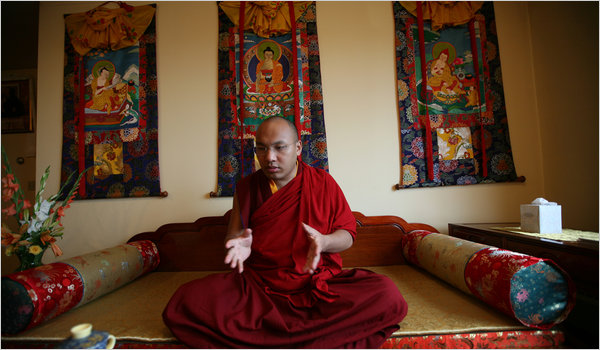
This said, there are some who express concern about where we as Karma Kagyu are going in the West, and I would like to throw my two cents into the ethereal debate. Rather than make this a global argument, metaphorically as well as actually, maybe we should just focus on the Kagyu in America. I do not presume to know much at all about this subject, and even more than that, I have no real qualifications to weigh-in on such a topic, but nevertheless, as one who has deep love for our lineage I am occasionally concerned about how we may be structuring ourselves here in the U.S.
As Karma Kagyu I feel that we can do more than we are doing. We obviously benefit from the hard work and extreme diligence and patience of the masters of the early era: the late Kalu Rinpoche, the late Trungpa Rinpoche, ven. Khenpo Karthar Rinpoche, Thrangu Rinpoche, Bardor Tulku, Ponlop Rinpoche, Lama Norlha, Lama Lordro, Lama Tsingtsang, Lama Rinchen, Lama Dorje, and of course, their guide His Holiness the Gyalwang 16th Karmapa, Rangjung Rikpe Dorje. We owe them a debt of gratitude. Through these teachers we have the benefit of some very solid infrastructures for the study and practice of the dharma- we have a great number of translators, translation committees, places for extended as well as short retreat as well as the beginning of a sangha which while still young and tender might hopefully grow into a single unified family of victorious ones. Yet right now the sangha may be our weakest link.

America is a unique place in that across the board we like to think of ourselves on the collective level as a unified group that share similar values, and yet we also very easily cleave along a variety of lines that include ethnicity, religion, gender, sexual orientation, race and political views. The obvious benefit is that there is the potential for most anyone to find a niche within the American experience. The fundamental flaw is that we are only part of the group until we don’t want to be, until our desire-lines of identity pull us into our sub-groups. When we separate from the collective in this way, the American experience becomes very static and disjointed. Likewise, when we try to singularly drop our histories, the various layers of culture that have helped to shape us as people, in favor of the collective identity, we lose the richness and the brilliance that we bring to the entire American organism. There is something about the fundamental tension between the more idealized identity as Americans (which is a construction) and our identity as a member of a variety of sub-groups (also ultimately a construction) that allows us to question the values of both sides of our being that can allow us to grow into dynamic citizens. That said, there is nothing preventing us from remaining stagnant within our identity on either side, either a stalwart “American” or member of a sub-group that doesn’t want to be part of the collective . When this happens unity, connection and communication becomes impossible.
Similarly, the essential flaw that we as American Karma Kagyu face is the idea that we actually think that know what we are doing. We feel that we are correct in projecting a particular meta-view upon ourselves as followers of the wisdom lineage of the Karma Kagyu, and that this view has to be expressed in a particular unified way. We assume that we must all adhere to the values as a group that were most recently innovated by Jamgon Kongtrul Lodro Thaye in 18th century Tibet, who while being an amazing genius and autodidact, has been used (perhaps unintentionally) to create a blanket meta-identity that may have been taken to the extreme. At times I feel that ultimately this lack of balance has led many who feel connected to a wide variety of sub-groups to feel left out and as a result, not integrated into the larger view of what we may be as a lineage. As if the notion of a unified Karma Kagyu lineage, or any lineage, has ever existed until the “modern” era.
I think that it is worth throwing into the mix that the lines of all four major schools of Tantric Buddhism might be more a product of modern academia than anything else. It might even be that we have all contaminated one another through the cross-pollination of inter-lineage growth in the past than our projections and assumptions allow us to believe. Our identities are more blended that we might like. An example of this can be demonstrated by His Holiness Sakya Trizin when he recently gave the empowerment of Dudjom Lingpa’s Three Wrathful Ones in New York City.

I think that it was Trungpa Rinpoche who called the Kagyu lineage the ‘mishap lineage’, which I will loosely interpret to mean that at its best our lineage just happens; it is not the product of strategic planning. Why is this? Well, perhaps we are not the product of controlled strategic planning either; our mind/heart matrix of thought/emotion is a system of constant mishaps, all sorts of stuff arises, sometimes we can clearly rest in what arises, other times we get carried away by our hallucinations. But one thing is certain, problems arise once we try to force a structure upon the way things should be.
In this way, I tend to wonder if we may have made the fundamental error of leaning too much upon the 18th/19th century classicism of monastic Karma Kagyu as a model for the entirety of American Karma Kagyu (the vast majority of whom are lay) in the 21st century. It sounds kind of absurd actually when I see it written out like that, and I don’t think that it is too much of a stretch to suggest that if this is the case, then perhaps we lose some of our credibility and accessibility with those who resonate with the sub-groups that feel at odds with the way the dharma is presented. How are young people with little interest in India or Tibet, let alone their history, and who have little money to travel to India to feel connected? What about some curious souls from the South Bronx, Brownsville, Oakland, Compton, or even large swathes of Suburbia who want to better understand their relationship to their experience of suffering to connect?
The dynamic energy of engaged being as is inherently expressed by a wide variety of groups of all imaginable ethnicity, gender, sexual orientation, race and other points of orientation doesn’t seem to be held by the container of this kind of singular classical Tibetan approach. Perhaps it is paternalism or some type of chauvinism, and perhaps it isn’t- lord knows the internet is full of such debates, and my point here is not to cast blame upon anyone other than our limited view. That said, I tend to feel that what matters most here is that the essential tension between “self-identity” as a member of any particular group in relation to the experience of gaining certainty in our not having any particular “self” as taught through the dharma is being lost to an increasing number of Americans. These sparks of tension allow the power of tantric Buddhism to blow up our ideas of who we think we are and how we tend to conceive of the world around and within ourselves. To ‘inadvertently’ create the assumption that one can only experience this through assuming that we all need to be conversant in 18th/19th century Tibetan classical Buddhist thought only serves to disempower the vast majority of sentient beings in the United States. It allows few people to come and be held as they expolre the sparky nature of what it means to familiarize oneself with the view. Perhaps Europe is different, or Central and South America, and Aftrica, but I suspect not.
The way that much of the Karma Kagyu lineage is being presented these days in the United States appears to be more of a preservation of monasticism and the imposition of this structure upon the inner lives of the sangha, rather than a skilled blending, meeting people where the are, and creating the container that allows the safety and intimacy necessary to challenging the assumptions of who and what we are, and what the whole field of appearance might be.

The result is that it is not uncommon to find that there are many gorgeous Karma Kagyu dharma dharma centers, stunning in beauty and immaculate in appearance, real museum quality reproductions of what one might have found in Tibet before the Chinese holocaust. Yet, it is also possible to feel the cold clinical nature of many of these places. In looking even closer, it is easy to see how tender and fragmented the sanghas appear. This makes me feel sad. After all, it is sangha that is vital for the continuation of the practice of dharma. When I visit places that resemble these perfect visions of what dharma is supposed to look like visually, I think of Drukpa Kunley, Milarepa, Phadampa Sangye and Shabkar with great tenderness (and humor) and take delight in my meager identity as a so-called Repa. These teachers (myself completely excluded) were vital commentators, alternatives and voices in the wilderness that dharma cannot be owned, trapped in books, and is not only to be delivered through the medium of classicism which often runs the risk of becoming overly dusty and theoretical. There is a lot of wisdom in their path, and many teachings in their relationship with the institutions that presented dharma in a particular kind of way.
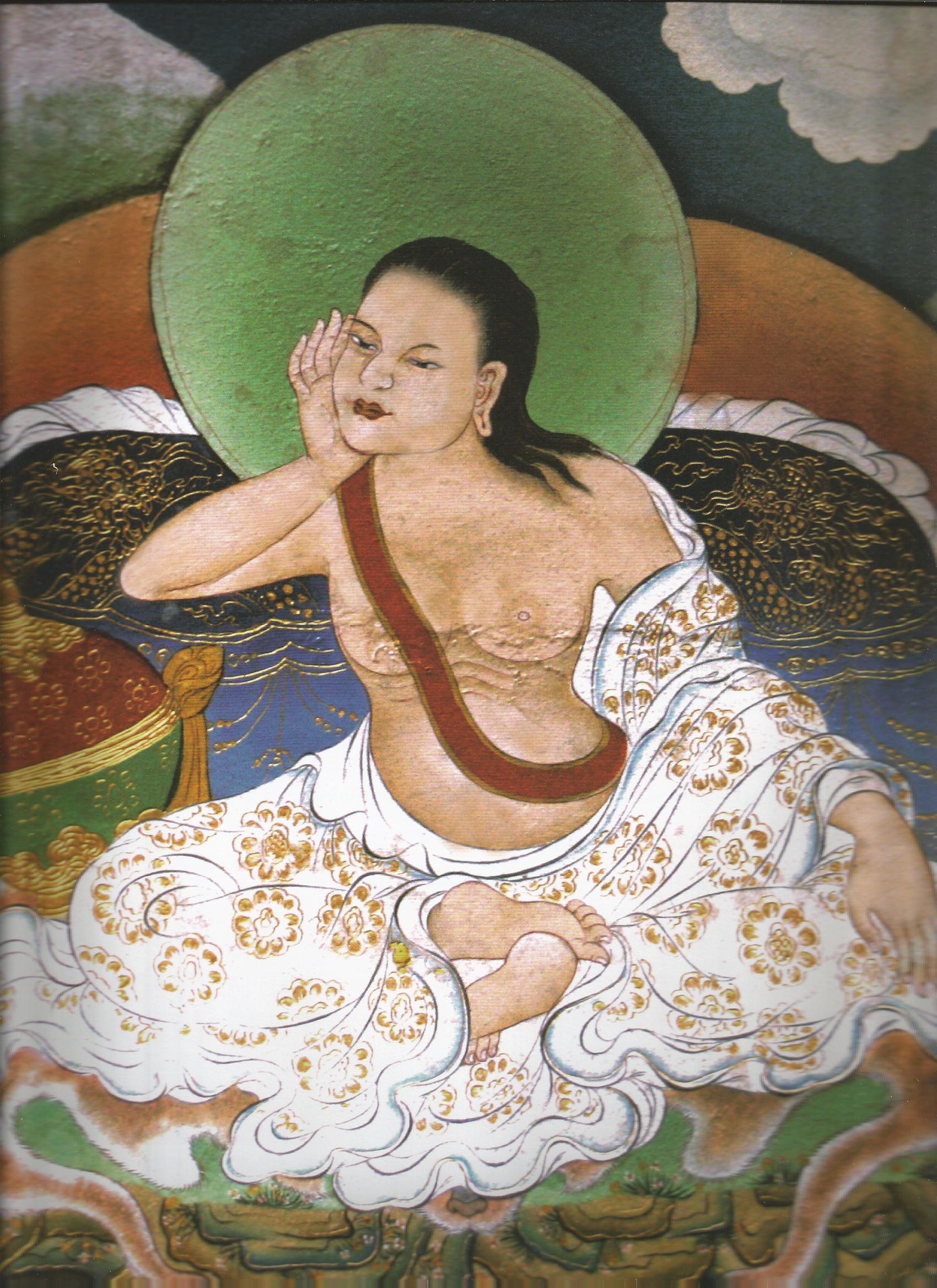
What we seem to fail to realize, or perhaps disassociate from, is that the Karma Kagyu lineage is best when it is a blended practice of fierce engaged practice activity mixed with the subtlety and discipline that one finds in Jamgon Kongtrul Lodro Thaye. Just as we need the sun and the moon for there to be balance on Earth, perhaps we need both the paths of Rechungpa and Gampopa as symbols of who we are, who we might wish to become, and from which point we wish to engage the dharma. We need to look at where we become too comfortable and lazy and bring our whole experience as people into our practice. Good dharma practice has nothing to do with beautiful dharma centers, rich coffers, and exquisite elegance. In fact, the best practice arises from confronting the entire hallucination of this “self” and the world around us. We are often well served to this end in challenging our assumptions of how our dharma centers should appear, notice when our devotion becomes the habit obsession rather than a mixture of connection and gratitude, and when in trying to be “good”, how we accidentally cause great harm to those we tell ourselves we are committed to benefiting.
Ultimately, everything that has been created by our foreparents within the Karma Kagyu in America is wonderful, and we should rejoice in the amazing progress. It really is amazing what has come into being. And yet, we might be getting a bit lazy and myopic and I pray that we can make things a bit more messy and sparky and dynamic for everyone who might be attracted to this vibrant and wonderful lineage. I pray that our dharma teachers can strike a rich and engaged balance for their students! I pray that our lineage can hold the experience of every person from every walk of life who approaches us! I pray that we face mishaps every day and that the sparks of tension within our experience of being cause endless dakas and dakinis to bless us!
On real time Buddhist pastoral care and the experience of loss when a lama dies

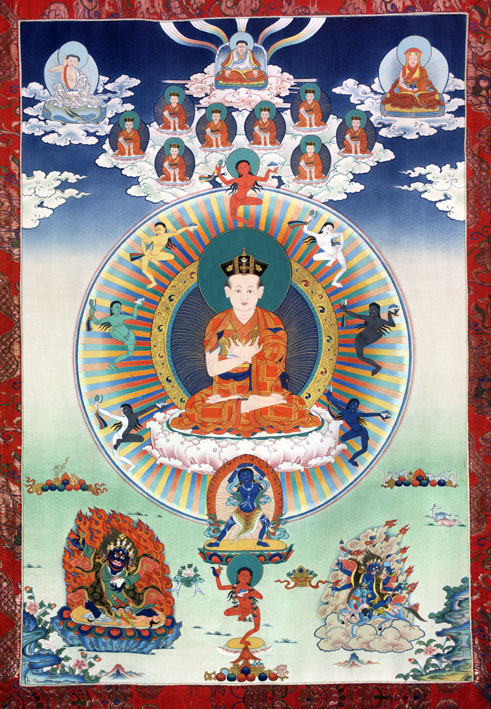
The past week has been a tough one for the Kagyu lineage. Recently the great Karma Chagme Rinpoche passed away in New Delhi, and one of the first trailblazers of dharma in the West, Akong Rinpoche, along with two travel companions was murdered in Eastern Tibet. Needless to say, these two important lamas impacted the lives of many, many, people who practice dharma, and in the case of Akong Rinpoche many Tibetans who passed through the schools and hospitals that he was instrumental in building in Tibet.
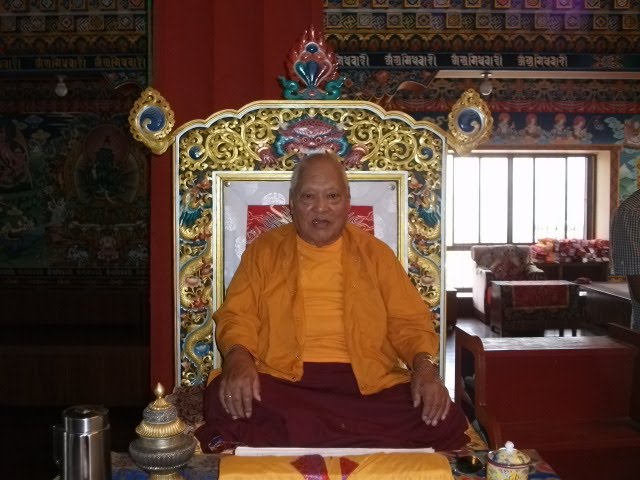
I had the wonderful pleasure of receiving the transmission of Rāga Asya’s (the 1st Karma Chagme) The Union of Mahamudra and Dzogchen in New York City when he was traveling through the United States in 1998/99. Both Karma Chagme Rinpoche as well as his son Sangtrul Rinpoche took turns teaching the text line by line- it was an extraordinary privilege to be there for such a transmission. Years later, in 2005, I visited Karma Chagme at his monastery in Pharping where I was fortunate enough to receive Namchö Amitabha from him, which in a way was like receiving it from Amitabha himself. His Holiness, the Gyalwang Karmapa’s letter of condolence regarding Karma Chagme’s death can be seen here.
I never had the pleasure of meeting Akong Rinpoche, although I did visit Samye Ling during the summer of 1995. Samye Ling was (and continues to be) a vital center for the preservation and teaching of the Kagyu lineage. You can read His Holiness’ statement of condolence regarding Akong Rinpoche’s death here.

Without a doubt, my limited relationship to these masters pales in comparison to the stories of others, especially those who were direct disciples of these two great teachers, yet I thought that I would share the way in which I came to develop my own personal relationship with them. Even if all we have seen is a photo of them, or read a text or teaching by them and not actually met them then we still have a connection with them. In fact, physical proximity is not necessarily very important if you can hold the connection between yourself and a lama within your heart. After all, where is the lama? Where is the lama’s mind? Is there an edge, or separation, that keeps us away from constantly being able to experience the wakeful luminosity of the lama?
There is a real sense of loss with the passing of these two Rinpoches that has stuck with me in a way that I am trying to better understand. I rejoice in all of their activities and pray that their activities continue to flourish, and yet I am very aware of the temporary break in the immediate benefit that these teachers manifest. Ultimately, it is okay to feel sad and upset, these feelings -all thoughts/feelings that arise in fact- are okay. If we can hold whatever arises as pure appearance, as the arising of thought as-the-lama then there is no loss of intimate connection with the lama, no separation and no real loss other than the physical lama.
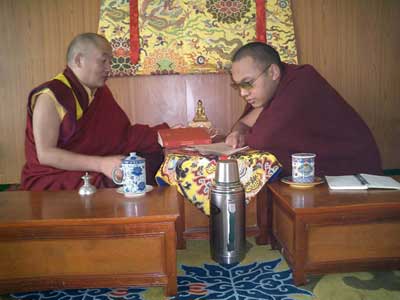
I was very moved to learn of the visit that His Holiness Karmapa and His Eminence Goshir Gyaltsab Rinpoche made to Karma Chagme before his death. An account of that visit can be seen here. As a hospice chaplain, I felt that His Holiness and His Eminence were modelling a sense of spiritual care that I could identify with. I find that there was a profound teaching in seeing two great masters going to be with another great master as he approached the end of life. I saw a reflection of them in the work I do. In my case it is one ordinary person going to be with other ordinary people who are in the process of dying or who have just died, yet the level of intimacy and connection that can occur between two people under these circumstances is much more profound than we often give credit. What’s more, that level of caring, a natural compassionate resolve, in which two very busy lamas take time to visit one who is dying is something that we can all learn to blend into our own busy lives. Perhaps we can also start to drop the enduring experience of ordinariness too, but that should be the topic of another blog post.
Death is often seen as a passing, as a separation, and as an ending. Trying to see it otherwise, or trying to allow myself see death more clearly for what it is, is one of the things that keeps me refreshed and motivated in the work I do. I also feel that there is a link to the way we see death, the way we relate to it, and the way that we see our own minds; the way that we relate to everything that appears. A mind full of fear of death is a mind plagued by duality and is therefore unable to rest in the natural vastness of it’s essential nature with ease. As we begin to familiarize ourselves with the mind as deathless, as expansive luminosity, then we simultaneously seem to develop more equanimity around what death may be. As a relative expression of death Karma Chagme’s death seems to reveal the power of his realization as he sat in thugdam for several days. Akong Rinpoche’s death reminds me of many things, it was “ordinary” in a way that Milarepa’s death appeared. It was also sudden and violent, two things that we often shy away from as practitioners of dharma- two things we often try to avoid. There is a lot in this, a lot in dying in a manner that most Buddhists seem to want to shy away from. Most of the time I think we see our deaths as knowable and slightly intentional in that we generally want to be prepared for it as it comes. We cannot always do that; death is unavoidable. Death is inevitable. It comes when it does.

As a lineage, we have lost two very important and influential masters. The question now very well may be; “where do we go from here”? At times like this, when experiencing moments of sadness and loss, it is nice to be told what we should do. Yet this is the critical moment in which perhaps we can benefit the most in taking some quiet moments to reflect upon and review all that these masters have given us. If we can spend time cultivating gratitude for each instruction, each display of teaching, each kind supportive glance, and bolster within ourselves the resolve to continue to practice what they have given us with the intent of resting in the display of appearance as no different than the lama, then we have touched upon something wonderfully profound. If we can continue with what we committed to ourselves to and bring all that arises with loss onto the path rather than shut down, hibernate in a feeling of shock, and let all certainty fade, then we are practicing the ultimate guru yoga.
If we can do this it seems that many questions and fears naturally dissipate. It doesn’t necessarily mean that we become naturally happy and that life turns around, but that we continue to remain in union with the essence of the lama, always open to their blessings, always part of their lineage. This can lead to certainty in the dharma and the realizations that dawn from an engaged dharma practice. This experience of certainty helps aide us in developing natural ease in our experience of mind so that we have definitive understanding, the experience of natural knowing or resting in the nature of our minds. In this way, no matter where we happen to live, no matter what cultural mores we follow, or no matter what language we speak, no matter what gender or sexual orientation, no matter if we practice in a fancy dharma center, or a scrappy one, or our simple homes, we take a seat amongst Tilo, Naro, Marpa, Milarepa, the incomparable physician of Dakpo and everyone who passed the enduring nectar of dharma from vessel to vessel throughout time.
My thoughts and prayers go out to all students of Karma Chagme Rinpoche and Akong Rinpoche, may your practice deepen and may their activities continue throughout time and space! May we all finally gain certainty in resting in the experience of lama-as-experience! Gewo!

on bustin’ up sacred cows like piñatas and re-envisioning our frames of reference…

A participant and fellow traveler on the journey created by the new class on Buddhist Tantra which recently set sail from New York Tsurphu Goshir Dharma Center suggested that I write a blog post to explore and refute the analysis of how the Madhyamaka view arose in India as presented by Ronald M. Davidson in his book, Indian Esoteric Buddhism: A Social History of the Tantric Movement. Davidson essentially posits that the middle-way position demonstrated by the Madhyamaka was borne out of dialectical necessity in response to the intellectual climate of the time, a possible influence by Greek Skepticism, as well as an environment of competition for support and patronage of various Hindu and Buddhist schools of thought. In all of its slippery middle-way dynamism the Madhyamaka won out for it’s virtually unknowable evenness, and for entering the realm of epistemology as a means of defending Buddhism from the attacks of Hindu philosophers. Socially and historically, Davidson’s position seems to make sense- he paints the picture of a time in which it seems very possible that at the very least the social dynamics at play in that moment helped the Madhyamaka position gain the favor that it did. Davidson’s book seeks to present the development of Indian Esoteric Buddhism through the lens of social history- as such it is not surprising that he would make this argument. That said, Davidson’s argument does stand at odds with the prevailing description of the rise of the Madhyamaka as presented within the standard histories found within the various lineages of Himalayan Tantric Buddhism as well as larger Mahayana literature. My friend’s discomfort and sense of irritation makes sense. I still remember sitting opposite the Buddhist scholar Christian Wedemeyer eighteen years ago when I was an idealistic twenty year old one morning for breakfast at the YWCA in Delhi when he told me for the first time that there we probably many Nagarjunas. Oh, the strange and irrational discomfort that coursed through my being during that meal.
Yet, when we look more closely, this kind of reaction is not so surprising. There appears to be a rich and wonderfully marbled lump of meat to be found between the bones of standard orthodoxy and those of deeper investigative analysis, meat that can sustain us, that we can offer up towards deeper practice, meat that we can offer to the yidams the dakas and dakinis as well as the dharmapalas and the members of their entourage.
The meat of fear, of anger and pride, made fatty and nutritious through the habits of wanting to be good, to succeed and not wanting to look at the inconsistencies that may exist within our own personal integration with our theology is delicious! What delicacy!

This still warm flesh, smelling of iron and mineral sustenance, salty and thus not unlike the tears remaining after a possible breakdown related to examining our sacred cows, our idolized notions and our addictions to squeaky clean reductive perfection is a nutritious meal. These salty tears and the wondrous tear-ducts that offer a seemingly endless supply are the source of vital ornamentation when we finally notice how much we have taken for granted our lineage, the patchwork of terms- the words and lines of thought- that we feel the need to project upon ourselves rather than looking to see if we can find them within ourselves.
Seldom do we take the time to dissect what we have within us as we explore the fantastic and wonderful structures that we seek to force upon everything around us. It is rare that we can hold the skin of our identity-within-our-practice pinned back, open, revealing all of that which drives us to want to transcend, or transform things, including aspects of ourselves that we cannot accept. Even more rare are the times when we can see how calcified our hearts have become by the thick hard fat of self-righteousness, how tired and inflamed our organs may have become through our stubborn dogmatism, our desire to make clouds solid, our attempts to etch history into titanium so as to make it last forever, or to try to crystallize the warm breath of the dakinis into objects we can own.

It isn’t often that we can remain in one place, to rest in being vulnerable and insecure, and to wonder about why it is that we believe what we do, or to even allow ourselves the room to wonder what it is that we believe. What of the frequency of how often we can explore the deep dark color of our faith in relation to our belief, vital and essential, like the gelatinous marrow within the bones we often neglect? What else do we neglect, or even worse, choose to neglect? How often do we shut down our curiosity with the logic that coming to some kind of certainty within our own practice isn’t possible without first achieving realization? What does the term realization really mean? What shape, color, or size does realization take?

What of the warm sticky blood of our own realization that courses through our vajra-body~ the essence of mantra, an ambrosial essence that is nothing but the bliss-heart of Vajrasattva, the stainless mind of expansive non-referential space? Can we acknowledge it as we move through the appearance of time and the appearance of space, or will we banish it to some point-yet-undetermined that we call ‘the future’?
I can’t say whether Davidson is right or wrong. I can’t say that there was only one Nagarjuna who lived for hundreds of years or many Nagarjunas who penned works in a continuum of growth and inquiry inspired by a previous personage. But I am coming to appreciate that somewhere between the truth of historical fact and the skillful means of magical story that inspires and kindles the flame of deep seated dharma practice, resides a powerful tension. Within this place of tension the friction of building ourselves up and letting ourselves fall to pieces, over and over again leaves us naked, exposed within a curious intimacy with what arises around and within us.
What may be most important is the blissfulness of the songs of birds, the kind compassion of the lama who appears as the people we meet in our lives, the breath that fill our lungs and the appreciation that there isn’t really anything to learn, memorize or integrate. Perhaps all we need to know is that Nagarjuna lives in us as much as he may have lived and breathed in the early days of Buddhist Tantra.
In an essay on Gods and Titans within the context of archetypal psychology, James Hillman wrote of the danger of the over interiorization that we have applied to the larger symbols that the Gods represent within the human psyche. He urges us to respect these Gods as real forces that are a part of us, just as we are expressions of them; when we only look at them in an overly deep, individual, supremely personal manner we commit acts of violence towards them as well as to our larger function within the outer world- perhaps we could call that world the world of appearance- the display of phenomena around us. His warning reminds us of the importance of simultaneously holding both the inner as well as the outer; the literal and the interpreted, the mythic and the ‘real’ (as in ordinary). To fall into one or the other is to lose our balance and inadvertently kill a god, to kill our ordinary selves as well-springs of wisdom, or our histories and the way that Buddhas and Bodhisattvas arise within us. It is a delicate dance, a dance of heart and mind, of wisdom and compassion, of inner flow and understanding.

It may very well be that the Madhyamaka arose as a revealed treasure through the wisdom and skill of Nagarjuna, and it arose in relation to competing view points. In this manner, perhaps it arose interdependently within the frame of reference of Nagarjuna and his spiritual practice as well as the intellectual/political/cultural milieu of the day. How can we separate the two, why do we need to, and when do suppress one at the expense of the other? Sometimes we try to de-emphasize the ordinary in exchange for the mythic, other times we neglect the expansive essence-oriented vastness for what we may feel is more pragmatic. Either way both views on their own miss the mark, both create terrible violence and suppression. A powerful question may remain: how can we hold both? How can we remain open to not knowing the answer, and rather remain as the answer? How can we let the sacred cows go to pasture and do what they will while resting into arising as natural expressions of timeless Buddha-nature, perhaps the essential form of the cow-heard?
Within us is a powerful source of origin of all of the buddhas, bodhisattvas, and dharmapalas, as well as all of the beings of the six realms of existence. We are the simultaneity of the action and the doer, the very continuum that we think that we need to effect to make clearer, more pure, and more tantric. I pray that we can know each one of these rich meaty bits within the context of a smiling awareness and settle into them in a way that reflects them in all of their vast perfect purity in the worlds that we find our-self passing through. In this way, may we seek new heights as well as new depths and understand that there may not be much difference between the two other than the labels that we assign to them.
Gewo!

on Chöd, bodies of illusion, and transmission of the blessings of lineage…
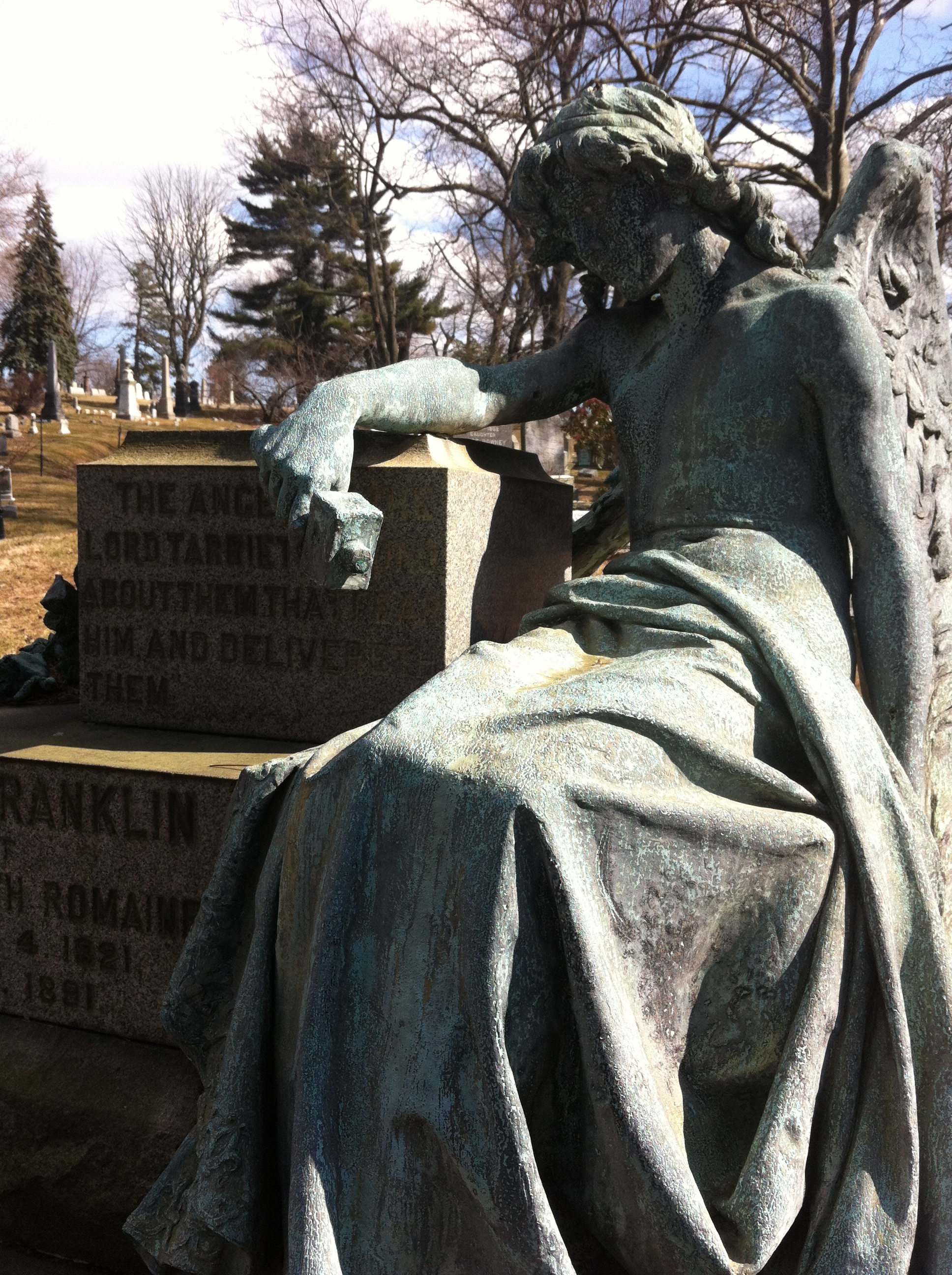
A reader recently reached out on facebook and asked me to write a blog post touching on how lineage inspires us and how transmission works in modern day terms. Needless to say, I was heartened by her request as I found it flattering, and because I have been playing around with this topic as it pertains to teaching Ngöndro at New York Tsurphu Goshir Dharma Center. So, as an offering to this friend I write this post, warts and all, please feel free to correct it where I stray.
As Monday was Chotrul Düchen I went to Greenwood Cemetery to practice Chöd and Marpa guru yoga. It had been a while since I had practiced there and I have been trying to remain aware of all of the local spirits, gods, and other beings whenever we do Chöd at the center as well as when we do our daily offerings to the protectors as of late, why not add cemetery beings as well, no? Lest we forget, vajrayana brings with it a wide spectrum of beings, beings that we often risk denying existence by having an overly symbolic read of this particular vehicle. I tend to feel that the more one does Chöd, the more one can sense some of what may linger in places like cemeteries and other similar places. It is easy to say that our cemeteries are nothing the the charnel grounds of yesteryear- the terrifying haunted ones frequented by dakinis, tigers, jackals and other scavenging animals. At Greenwood you won’t find freshly dead bodies rotting in a forest- visceral reminders of impermanence that grab- but when you take the time to really feel and take-in the monuments left behind to memorialize the pain of death, the sad realization that “this too did pass”, somehow the quiet solitude of the cemetery becomes quickly filled with spectres of those who passed in all manners of ways. Whether poisoned, or burned to death, drowned, or left alone, most ways of having met death are preserved there. Indeed, it is probably safe to say that very few of those whose remains are slowly composting were okay with the process of dying.
There is something so amazing about getting out and doing Chöd and other practices in the world- its a poignant way to bring the world into one’s practice. Chöd has long been practiced “in the field”, so to speak, that is, in cemeteries, charnel grounds, places of fear and similar such locations. A reader once pointed out to me how civil war battlefields are excellent places for such practice; indeed they are, as are Superfund sites and industrial wastelands (the modern day charnel ground?). There are many. Taking one’s practice outside and into the world can be a powerful way of emulating the examples of those notable lineage holders that we direct our prayers towards. It may well be that the places in the sadhana where we take refuge in all of the siddhas in the Chöd lineage, the father lineage of method headed by Padampa Sangye, and the mother lineage of wisdom headed by Vajrayogini herself, when we are doing this practice in a cemetery, or a place that instills fear, a place of desolation, we create the conditions to reflect, the activities of Machik Labdron and all of the many facets of the lineage of Chöd that she inspired. In this way we are manifesting a matrix of blessings that constitute a transmission of blessings that can be more real than we think. This is very real and significant inner connection with the Chöd lineage, is something to hold dear and blend with one’s being. These moments of sustaining connection when we feel confidently grounded, when it feels as if we are carrying the lineage with us as we walk to the grocery store, as we awaken in the morning, as we practice in formal sessions and as we go about our lives in post-meditation are incredibly profound.
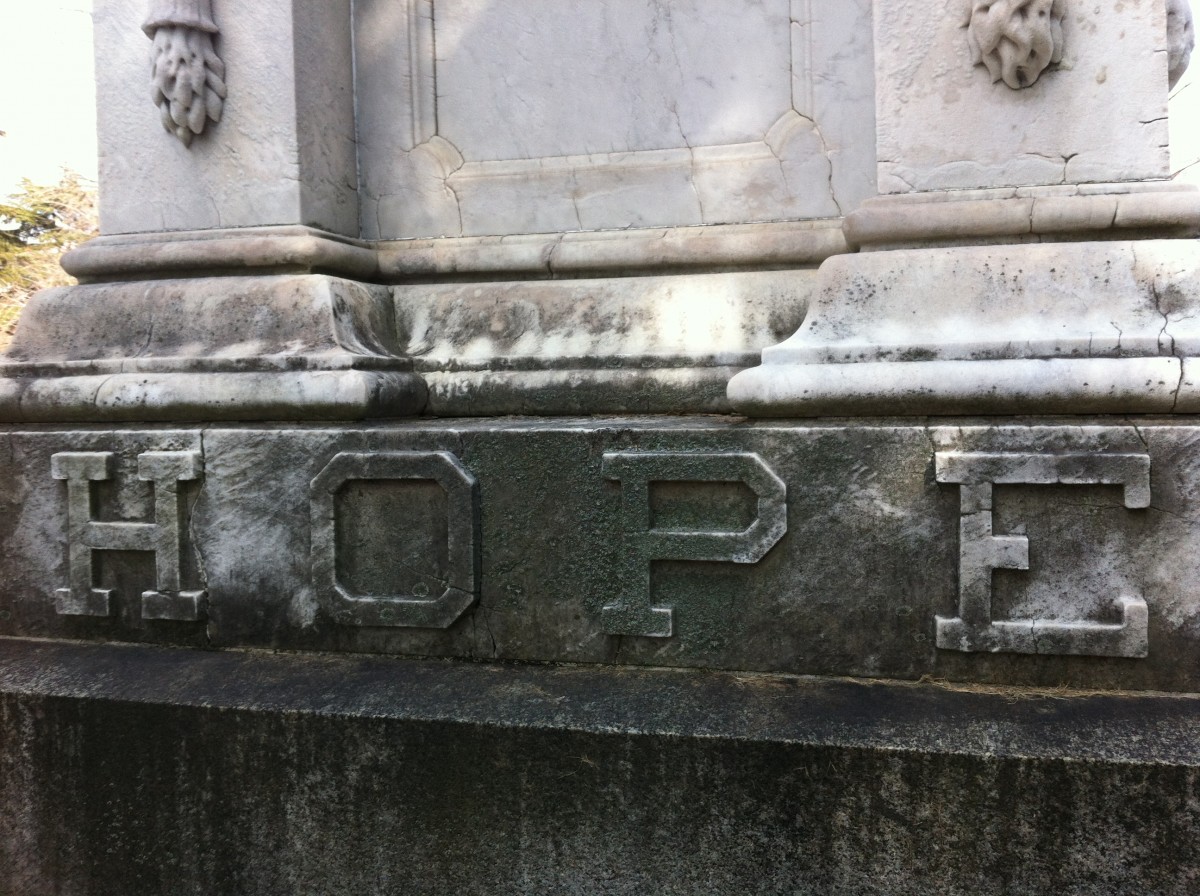
Seated next to the cold marble monument of the Hope family, amid the late winter/early spring afternoon light, as the sun peeked through the clouds revealing patches of rich blue, I invited Greenwood’s slumbering guests. I offered the mudras of body speech and mind; all that appears as form, all that is heard as sound, and all that is thought or conceived of by the mind to the supreme assembly of the Chöd lineage. These offerings, the entire ground of my experience of that particular moment became an offering to Machik Labdron, Padampa Sangye and his retinue, Vajrayogini and her retinue, Lord Buddha, Prajnaparamita and an array of Chödpas, as well as the eight classes of gods under oath, rakshas and rakshasis, mamos, demons of illness and karmic creditors.

That moment, spent in a vast cemetery in Brooklyn, surrounded by over five hundred thousand graves, a wonderful practice site that is also the location of the Battle of Long Island, the first and largest battle in the American Revolution, became a moment of connection, a moment where the possibility of intimacy with a particular practice arose and provided great meaning. Moments like these, when we can dissolve the notion of Self, fully adorned with our foibles and limitations, our fears and anxieties, ornamented by our feelings of inferiority and clumsiness, when this can recede into the dawn of resting within the experience of the simultaneity of the field of refuge and our experience of mind, we create the occasion of inner empowerment, of blessing, of relationship which connects us beyond time and space to our lineage. This is what keeps everything fresh and allows us to appreciate the illusion-like mirage of who we think we are.
I am always relieved (and grateful) whenever this experience occurs (sadly, it is not a very frequent occurrence) as these moments serve to remind me of just how much intention is part of the essential fuel of meaningful dharma practice. We are often taught the importance of developing bodhicitta- the mind of enlightenment. This is crucial. It is the way we frame and contextualize our practice; reflecting upon bodhicitta acts in a twofold manner: giving our practice meaning as well as bolstering it through the merit created by the generation of compassionate resolve (relative bodhicitta) and the wisdom of emptiness (ultimate bodhicitta). While this is really important- it seems like an additional intention is vital as well, a point that was instilled in me by my first teacher, the late Ani Dechen Zangmo. This is the intention that our practice brings fruit in a natural unimpeded way, that we open ourselves up to experiencing the possibility of fruition. If for example, we begin our practice sessions convinced that we are complete failures and that practice will only benefit us slowly over incalculable aeons, then there is a strong likelihood that this is how our experiences may arise. It doesn’t mean that just because we think we will get enlightened in one meditation session that we will, rather, her advice was to keep alive the possibility that our practice will bring fruit- because after all, one day it will. Whether it be Ngöndro, Chöd, Calm Abiding, or any other form of practice- when we disconnect ourselves from the inevitability of our recognition of our inherent Buddha nature we throw a rather large self-created stumbling block in our way.
I am reminded of an Irish woman who I befriended fifteen years ago in Bodh Gaya. We came to be friends over many shared breakfasts with a large group of western practitioners who stayed at the Burmese Vihar. At the time she was following a Gelukpa teacher- and for some reason that I fail to remember, was encountering doubt about her practice. I had suggested that she meet the late Kyabje Bokar Rinpoche, a very dear teacher, who was leading the Kagyu Monlam, and helped to arrange a meeting. It proved to be meaningful to her as ten months later I ran into her at Bokar Rinpoche’s annual Mahamudra Seminar. At one point after lunch she and I met for tea and I asked what she thought of the seminar- she started to cry and then smiled and told me how amazed she was by the fact that Bokar Rinpoche suggested that our practice could bring the fruit of realization in this life-time. The very notion that realization wasn’t necessarily something that was to be experienced at some point in the distant future was so counter of the view that she had cultivated- she was now tasting the possibility, she was joyful, light, buoyant; she seemed to have had a profound realization that changed her. It was really amazing- recalling that afternoon conversation still brings great joy to me and leaves me feeling happy.

That the experience of deep realization need not be something that eludes us because of a particular conception of time, or because we think that we are unworthy, or unable, broken, far away from our teacher, or tiny is something that can run counter to the way we see the world around us and our experience of it. This is not to diminish these feelings. I realize just how easy it can be to feel distant, incapable and unworthy. Yet I have come to learn from my own experience that during those moments when I can naturally offer all appearance, all sound, all mental formulations; when I can just rest in the experience of mind; when everything seems to settle into ease; then I am reminded of the illusory nature of Self, and that it is not real. These moments of receptivity are powerful and they break the habit of feeling that we are deluded beings, they are moments of empowerment, and personal moments of inner transmission.
Along these lines, we find in the guru yogas of Milarepa, Gampopa and Marpa prayers that help us keep the possibility of the experience of direct awakening ever present:
Grant your blessings so that all obscurations of karma, klesha, knowledge and habitual tendencies may be purified at this very moment.
Grant your blessings so that they may be purified on this very seat.
Grant your blessings so that they may be purified during this very session.
Grant your blessings so that our very beings may be purified.
Grant your blessings so that our very beings may be liberated.
Grant your blessings so that they may be liberated at this very moment.
Grant your blessings so that may be liberated on this very seat.
Grant your blessings so that they may be liberated during this very session.
This very moment! This very seat! This very session! What say you? Does this fall within our frame of reference? I can only speak for myself, but I sincerely hope it does.
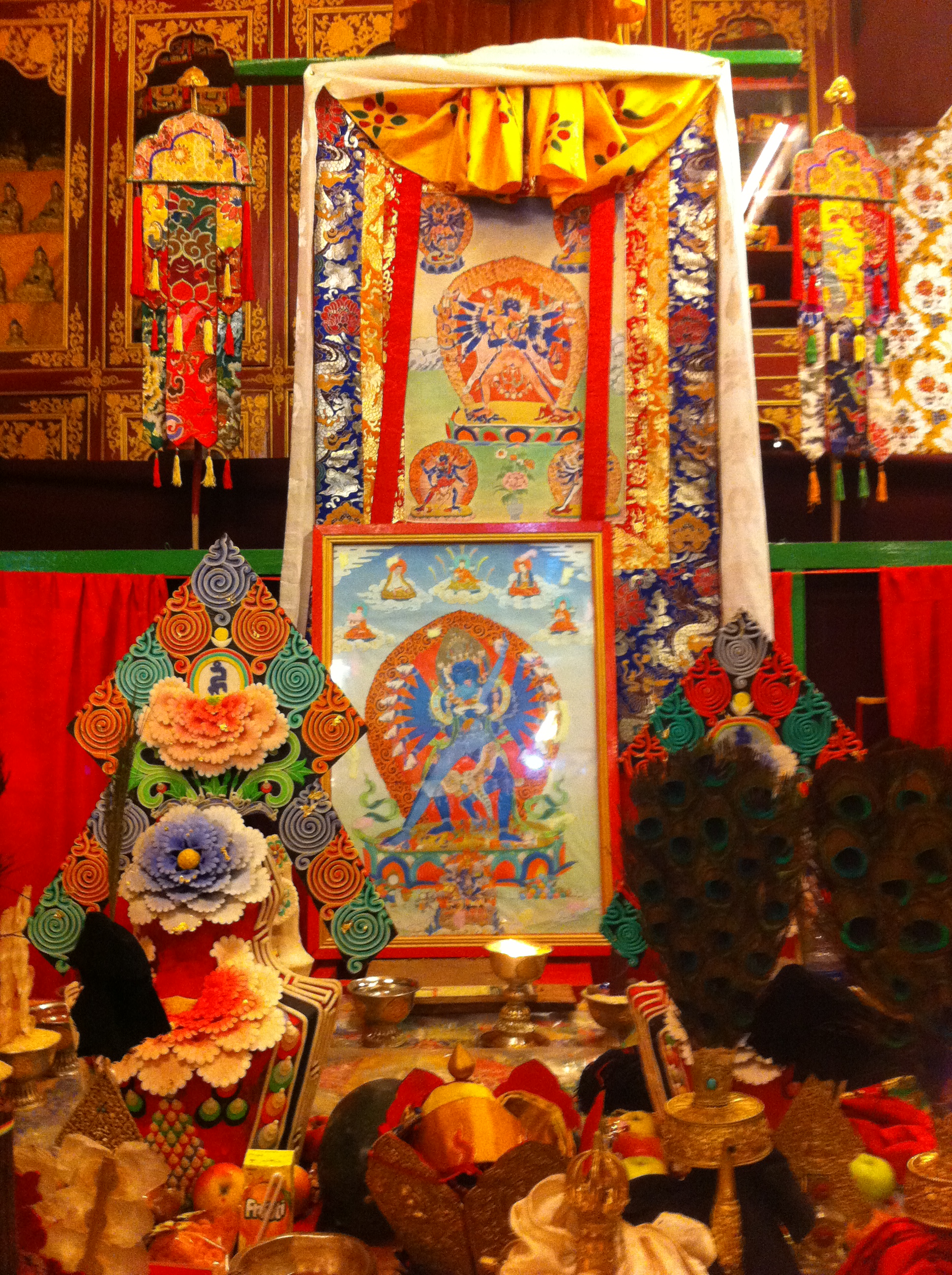
In a way this view is worth exploring when it comes to receiving empowerments, or the transmission of a particular dharma from a qualified lineage holder. Just as we explored above our relative receptivity towards actually being empowered within our practice, and what those experiences are like, it is worth looking at how we take empowerments, and when we do, what it is that we are receiving.
Before I go any further I would like to underscore my lack of qualifications for actually having any real worthy insights on this topic and to share the title of an excellent book that touches on a variety of aspects around empowerment, that is Tsele Natsok Rangdröl’s Empowerment and the Path of Liberation. I cannot recommend this book enough, and must warn that in comparison to the words of Tsele Natsok Rangdröl, my words are not much more than the dance of a puppet that is being used by a blind, deaf and mute crazed puppeteer. Nevertheless, I feel that the view instilled by Ani Zangmo and the late Kyabje Bokar Rinpoche are worth examining especially in regard to what is possible when we attend and receive empowerments.
It is generally said that in the past, especially when great masters were conferring empowerments, that the power of the blessings of the practices were so strong that there was the distinct possibility that the act of conferring empowerment had the effect of completely ripening the recipient thereby creating the circumstances for immediate enlightenment. These days this is very rare indeed. It is also worth noting that in the good old days of 5th through 12th century India the nature of conferring empowerments may have been somewhat different than what we have come to experience these days. The stories found in the Seven Instruction Lineages by Jonang Taranatha, capture some of the atmosphere of what things may have been like.
Generally speaking there are four empowerments: vase empowerment, secret empowerment, knowledge/wisdom empowerment, and the precious word empowerment. Each of these empowerments help to ripen us in differing ways so that we may actually achieve the experience of the particular deity for whom we are being empowered. The vase empowerment purifies all negative karma created by the body, blesses the vajra-body, empowers us to enter into creation stage practices, and allows one to achieve the nirmanakaya stage. The secret empowerment purifies all negative karma created through speech, empowers us to recite the mantra, allows us the possibility of achieving illusory-body as well as the sambhogakaya stage. The knowledge/wisdom empowerment purifies all negative karma created by mind, blesses the vajra mind, plants the seeds for the experience of fierce blazing, lays the ground for achieving the dharmakaya stage. The precious word empowerment purifies all negativities created by body, speech, mind and all obscurations, in the Nyingma tradition it plants the seeds for treckchö, and in the Kagyu lineage it plants the seeds for the experience of the state of Vajradhara, the experience of bliss-emptiness, supreme mahamudra, the svabhavikaya.
Again, as I am by no means an expert, I heartily refer those interested to explore Tsele Natsok Rangdröl’s work as well at Book Six/Part Four of Jamgon Kongtrul Lodro Thaye’s masterpiece, The Treasury of Knowledge. Chapter 12 deals with Initiation- there is a wealth of knowledge to be found in this chapter. Each lineage has differences in the structure of empowerments, and one also finds diversity in the way that the empowerments are broken down or elaborated upon, Hevajra is different than Chakrasamvara, and Kalachakra is different still. Nevertheless, despite the wide range, there are tonal similarities that are clear and distinct, as it the central importance of empowerment and transmission in vajrayana.
Of the function and purificatory effects of empowerment, Kongtrul says:
Initiations purify the obscurations of body, speech, and mind, and the three equally,
Establish competencies for the four indestructible states, ripen one as a fit trainee
Of the generations stage, self-blessing, and example and actual pristine awareness,
And bring about the attainment of the rank of vajra master.
Kongtrul essentially says that empowerments plant the seeds for all of the subsequent practice related to the empowerment. From the permission to visualize oneself as the deity and begining to tread the path of the generation stage all the way through completion stage practices, through to the fruition activities of the vajra master. This view is held as central today amongst the vajrayana lineages today as it was during Kongtrul’s time in the 19th century.

When large transmission cycles are offered, as in the case of the Kagyu Ngak Dzöd which was recently given by the precious master His Eminence Goshir Gyaltsab Rinpoche at his monastic seat, Densa Palchen Chosling Monastery, or when the Rinchen Terdzöd or Dam Ngak Dzöd are given these cycles of empowerments are often given to fulfill a few functions. These large cycles serve to offer to the next generation of young masters the transmissions that they will receive, maintain and propagate, thereby guaranteeing that the dharma continues through time. Some of these cycles have specific groupings so that disciples can receive a certain themed set of empowerments. Lastly these collections act as storehouses where some of the rarer empowerments are protected such as Buddhakapala and Chatuhpita.
There are many ways that people receive empowerments, in some cases we take them as we would a blessing, in other cases it might be to create a connection with a particular cycle of practice, or with a particular master of the past. Sometimes we specifically take them as we know that we will be taking these practices on in the future. From there we move on to obtain the reading transmission and instructions on perform the desired the practices.
Whichever the case may be, it might be worth considering that a great deal rests upon our intention as we receive these transmissions so that their intangible benefits are also transmitted: the blessings, the connection with the vajra master and with our fellow participants who we become karmically linked with, as well as all of the ripening effects of all of the articles of empowerment, vase, crown, vajra and so on. We should certainly engender the mind of awakening throughout the process, and we should keep in our mind that in receiving empowerment we also forge a connection with an entire transmission lineage throughout time. We become part of the lineage and it us: where is the difference between the lineage and our mind?
Can we allow the possibility of cultivating the ground which contains the seeds of the four empowerments? We never really know just how close those sprouts may be to pushing up the rich fertile soil of our being and fully manifesting.
In this way, in our own deeply personal way, we receive the lineage. It is a profound time of vast meaning. It may be that if we take empowerments with a focused resolve to actually receive the lineage, the connection, the blessings, the ripening and the not very easily communicable essential experience of the nature of mind, that what is conferred is the true lineage. Whether this is actually true or not is difficult to know (or prove), but it does stand to reason that even though the actual conferral of an empowerment contains many benefits that enrich us, there is a lot that we too can bring to the experience. Receptivity is one thing; if we can allow ourselves to stretch this sense receptivity through time and space then the transmission that we receive can be as complete as can be. In a moment we can recieve the transmission of a complete expression of enlightenment.
Whether we are mixing the body, speech and mind of Machik Labdron with ours, thereby receiving direct empowerment from her, or from Lord Marpa during a session of guru yoga on the anniversary of his parinirvana, or from our very own vajra master in flesh-and-blood, the degree to what we receive and how completely it blends with our being is up to us. May we all receive and hold the transmission of the wondrous buddha-dharma and may we manifest it completely and perfectly! May all of phenomena be a precious charnel ground where we can reach beyond the limitations of this illusory self and experience the expansive ground of awareness! As winter turns to spring, may the seeds of empowerment begin to sprout everywhere allowing for the complete expression of wisdom-mind like a rising sun!
Gewo!

on time machines, weaving words and loosening our belt so that our minds can expand…

My last blog post touched a lot of nerves- in a good way, from what I can tell, and it also seemed to have displeased others who came away from it thinking that it was written to complain about laziness, ‘spiritual materialism’ and the existence of a spiritual marketplace which often become more of a self-help, soft-core spiritual path. While I understand the reaction, I don’t agree with such facile readings of the post- not that its difficile in the first place.
Whatever the case may be, whether these posts, and this blog, are worth the ether that allow them a fragile existence of any kind or not, leads me to a few deeper problems that have been something of a point of concern as well as curiosity for me lately, that is: language and time.
I would first like to avoid the immediate association with these terms any cosmic relationship with philosophy and loosey-goosey bedroom-eyed mysticism, while simultaneously acknowledging that language and time are obviously thematically treated in great depth in both the study of philosophy and mysticism. It may be that we are best served (for the purposes of this post) in allowing our analytical minds, the mind of blended comparisons and of discernment, to step aside as we examine for ourselves within the context of the personal meditation experience, how and what language and time mean, and how they appear. Let’s put aside the study philosophy and try to approach this from what unfolds naturally on the meditation cushion, or, as we walk, or dream, as we paint and dance through this life of ours- for meditation experiences are always different from philosophical investigations.
We define ourselves through the use of language. Outwardly we describe who we are physically, our characteristics and so forth, and then we fill in all of the details, our personalities, likes and dislikes, and all the rest. We further dabble in collaborative fiction through supporting the personal narratives of our friends and loved ones, and in offering counter-narrative of those we dislike. Soon, what may have begun as a relatively blank page (a debatable point indeed) has become filled with a testimony of who we would like be, who we envision ourselves as, and the way that we interpret the world around us. This language is a tapestry of meaning, one in which we both consciously and unconsciously weave together a living history, along with the plotted trajectories of the future events that have yet to be lived. In and of themselves these products of our individual relationship with language are amazing works of art that capture how we conceive, what we can allow to be, and what we must keep at bay. They are our hells and our anchors; perhaps they prevent us from flying off into a manic subconscious world; or perhaps they confine us to knowable modalities of being that provide us with the tools for the experience of life. Whichever the case may be, and I suspect that it is most likely a combination of the two (and many others) at differing points in time, language -in this context- acts, more often than not, like a prison; it is like a thief, and even more, language is like an unreliable friend whom we continue to trust even though she will continue to disappoint. For somehow we cannot describe away the pain of loss, the experience of death, the terrible bouts with illness, and the fact that one day we will be forced to say goodbye to all that we hold dear- no matter how much we may try.
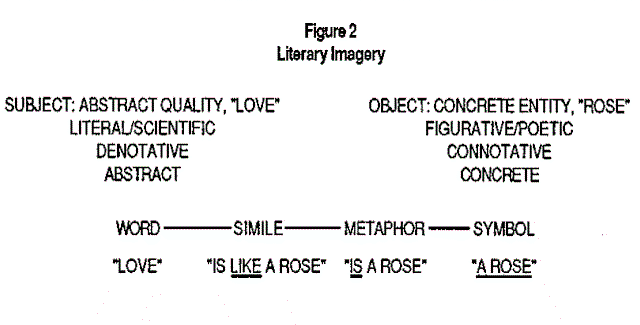
The images we create with our internal literary drives have a hieroglyphic quality in the true sense of the word hieroglyphic, that is: a highly symbolic form of writing which is difficult to interpret/assign meaning. In the beginning was the word. From that word, an entire world was created, a veritable cosmos- our interwoven personal narratives develop with increasing complexity and nuance creating a web, a net, or systemic literary story-line in which we capture every detail. As I sit here, writing both this blog post as well as my experience of today, the soft beautiful light coming through the windows between the treas and fluttering prayer flags is captured as is the sweet smell of a yet uneaten pineapple offered in a recent Mahakala tsok that simultaneously soothes and excites.
Everything we do, all we experience, tends to be added to this net of meaning that is cast upon the phenomenal world.
There are times when we are able to put down our pens, or turn off whatever device we use to compose these narratives of distinctive being- one of the most common device in such work is our discursive mind. The mind of spacial relationships, of color schemes, the mind of philosophy and dualistic comparisons. Perhaps this is also the sociology mind, the mind of architecture, the mind of economics, and the mind of urban planning. That part of us which organizes, the desire to play with the economics of mind; the way we become hypnotized by the production, consumption, and transfer of phenomena.
When we can put this down- although we’re not really putting anything down- then what we were formerly engaging with becomes less of an object and more of an experience. There is almost a sense of relief in this, a wonderful supporting ease and perhaps the experience of a type of contentment.
In his very condensed version of the Ninth Karmapa’s The Ocean of Meaning, entitled Opening the Door to Certainty, the late Kyabje Bokar Rinpoche touched upon the enhancement practices of Mahamudra meditation. These are described as ‘enhancement through eliminating five false ideas’. The first of the five false ideas is that of objects. Of eliminating the false ideas about objects Bokar Rinpoche writes:
Without grasping something real in the notion of samsara that must be abandoned and nirvana that must be actualized, but placing ourselves in the infinite one-taste of primordial awareness [of knowing] the non-duality of all phenomena gathered by pairs such as virtue and non-virtue, we eliminate false ideas about objects.
This is a wonderfully powerful instruction, that while presented as an enhancement practice in the context of the Mahamudra system, is worthy of examining, especially in light of how easily we craft global narratives of everything within and without. I wonder how we can ‘place ourselves in the infinite one-taste of primordial awareness’ or settle ourselves in a position of quiet knowing in which we can allow ourselves to dissolve the need for narrative, comparisons, and allow the direct of experience of the world around us (and within us) to arise; a dancing array of inherently perfect appearance. Easier said than done? I’m not so sure about that- if we can playfully try to fold this into our everyday activities, I suspect that bit by bit we can massage the habits of stale knowing. If we can play around with the view we’re really practicing something profound.

The second of the five false ideas is that of time. Of eliminating the false ideas about time, Bokar Rinpoche continues:
Although there is no fundamental truth about the reality of the three times, we think within a mode obscured by the division into three times. Consequently, realizing equanimity which does not establish a distinction of the three times, we eliminate the false ideas about time.
This instruction is especially relevant in helping to loosen the grasping of the compelling reality of our narration as we constantly pin things down (including ourselves) to various points in time. Our past informs us in the present and helps determine the future; or so we tend to think. Ideas of time having particular characteristics is a lovely subtle subject- Buddhism is rife with them: the number of aeons, life times, or years that it will take before we fully awaken is just one example. Assuming that the past was a particular way, the notion of the golden days of long ago in relation to these degenerate times, is another poignant example. The very notion of systematic evolution (individual spiritual evolution) is a wonderful blended assumption rooted in the false ideas of objects and time. How many others do we hold on to?
What other unexamined aspects of our faith tradition do we just assume out of the habits of appearance and time? What would it be like if we crafted our own notions based upon our experiences?
Wangchuk Dorje reminds us: “The division of the three times (past, present, and future) are simply the imputations of ignorant fools.” More specifically, he warns us that included within this is the relationship that we may feel that we have with the past and future. He further continues, “yogins and yoginis who have manifested this [realization] are able to bless a great aeon into an instant and an instant into a great aeon… …if they were separate entities this would not be possible.” Yet it is possible, and, it is up to us to ease into allowing this possibility. This gets back to having set ideas about who we are, what we are capable of, and all of the other stories we have woven.
What happens when we wrestle with the solidity of time? Or loosen our belts so that time can slip away…

When will your liberation occur? Forget the texts, and all of the things you have heard, when will it be possible to truly ease into the mind’s essential nature? After ngondro? After you have mastered your yidam practice? After a three year retreat? After ordination? After you die, in the bardo? After you die seven times? One hundred thousand times? In the future? What about right now? Did you already do it in the past, but got all distracted?
When we can see words as playful birds, and time reflected in the way that clouds appear and disappear in the sky, and the the solidity of our identities as the smoke of incense floating through the the rays of a setting sun, then maybe we can experience mind a little more clearly. Not just the mind’s stillness, but by feeling out, as if expanding awareness to meet the bounds of space, without saying, doing, thinking, making notations, and without being Buddhist. In trying to do this over and over, the artifice of relative reality can be seen, a necessary strange place that allows us to communicate, to help others, to support ourselves in the process of familiarizing ourselves with the mind- but not ourselves, not our identities. Yet when we tighten our belts, we become men and women, Buddhists, with mass, height, characteristics, distinct identities that feel, want and need. We have a cannon to follow and refer to, we experiment less and assume that it will all work out in the future, a bunch of now moments later, but the very now we live in is never seen as the free open experience of whatever arises without characteristics.

Wangchuk Dorje reminds us that we cannot realize this through “merely listening and reflecting, examining and analyzing, being very knowledgeable, having a sharp intellect, being skilled in exposition, being an excellent teacher or logician, and the like.” He goes on to quote the Gandavyuhasutra:
The teachings of the perfect Buddha are not realized by simply hearing them. For example, someone may be helplessly carried away by a river but still die of thirst. Not to meditate on the dharma is like that.
And:
Someone may stand at the cross roads and wish everyone prosperity, but they won’t receive any of it themselves. Not to meditate on the dharma is like that.
We can go around with ideas of this and that, with loads of empowerments, secret instructions and a plethora of practices to choose from but the real wisdom comes from practice, from trial and error. In fact, just one simple practice is more than enough- by sticking to it and blending it with our waking and sleeping moments great wonders are possible. We are very well served by examining how and why we hold these truths about ourselves, our paths, and time to be self-evident. In attempting to let the constancy of our personal narrative fall away like an unneeded belt, lets take these words and use them to unzip themselves so that our view is that of the experience of mind, fresh, free, naked and not of the three times.
on the shakedown, being a contender and the tantric rub…

In my training as a chaplain there was a fair amount of emphasis on learning how to connect and remain with difficult feelings that others were in the midst of negotiating. Sickness, old age and death certainly shake up a lot of feelings- add depression, psychosis, loss, and physical/emotional/spiritual pain and you really have a lot to learn to become familiar with. We were encouraged to sit in, remain with, and thoroughly explore what these feelings bring up within us. Something always arises, we don’t have to look deep, as the game of thought/feeling association is something that the mind/heart just seems to naturally play. I’m not sure that you can, or want to, change that. What we can do is become more aware of these associations, and in so doing, get some room within this process that normally, on an average day has the effect of being like a big heavy ring in our noses that lead us this way and that without our knowing what is going on.
Lately I have been mulling over an uncomfortable notion that leaves me often feeling grumpy, pessimistic and a little exhausted: Buddhism in America is doomed to fail. Or, we really run the risk of mucking-up the whole affair. I don’t really feel this way all of the time, but I do feel this way from time to time. It’s good to to sit with this discomfort and not whitewash it with the quick spiritual bypass of an investigated pure view. Besides, when I look around I find plenty of reason to feel this way.
In a recent blog post on Tricycle.com, one which I found profoundly disjointed and dissatisfying seemed to help confirm these speculative worries. Check it out here. It seems that we as Americans have a hard time approaching Buddhism outside of a self-help, therapy-related arena. It’s not really very surprising I suppose, given the huge publishing and marketing machine that has arisen around the self-help-industrial-complex and that of therapy. Millions of dollars are invested every year and many millions more are reaped from soft, happy, easy to read, and even easier to hear books that promise some kind of feeling of connection and meaning in a life that can be quite challenging. Yet, these new hybrids of Buddhism lacks most of what makes Buddhism, Buddhism. In reading some of the comments, one person suggested that people want to learn about Buddhist meditation but not follow any religious path. I suppose this person is referring to Buddhism as an adjective and not a noun, it’s hard for me to not feel like I’m standing in quicksand in reading the comments- there appears to be little solid ground.

I occasionally vacillate between the ‘standard’ Buddhist compassionate response to this dilemma by saying: “Well, at least the dharma is making it into people’s lives in some way- albeit in drips and drabs”, and a more militant feeling of disgust rooted in the sense that these little candy coated titles, prosaic presentations of the perfection of wisdom, are peddled more like Prozac than anything else. Where is the gnosis? How is the seemingly real and hard-fast rule of reality poked at and re-examined by these titles and ‘Buddhist’ forms of meditation? How does Buddhist therapy, psychotherapy in particular, negotiate the fundamental paradox that the Self that we seek to free and know better doesn’t exist? Is shining a light on the Psyche, bringing it into the realm of conscious mind, the same as enlightenment?
These are no small equations to balance.
In fact, I still find it bizarre that many of today’s western Buddhist dharma teachers are psychotherapists. Why is this necessary? Does it lend more credence to the Buddhadharma? I appreciate the desire to integrate psychology into Buddhism from time to time, but I don’t see the value of a permanent amalgam of the two. I also can see the value of presenting a parallel structure in order to help present Buddhism, yet I feel the need to remind myself at the very least, that parallel doesn’t mean the same. There is a real risk of creating hybrid Frankenstein-like equivalencies in which the experience of familiarization of mind (and by extension, reality itself- apparent and otherwise) is the same as having an integrated-Self.

When in meditation it’s pretty clear that trying to describe the way we subtly grasp after time, or after having an experience and then trying to quantify it, that words fail us. This is nothing new, but it is startling when we settle ourselves into meditation and just rest our minds and then let ourselves notice the grasping that we are prone to.
Try and describe a remedy to grasping.
Already the use of the word ‘remedy’ creates a dynamic that is problematic- and before you know it meditation easily feels like a mess. Yet when we let go into a natural awareness (and can truly see that there is nothing to take away or add), somehow we gain the clarity to ‘see’ again. Words in their relative function are amazing. They are magical jewels that ornament, they provide meaning and bless us with the ability to express ourselves, and yet they have limitations as well; so to for concepts, notions, ideas, and other components that buttress meaning within our experience of the universe. When we hold on and let our habitual grasping go it seems like the structures that we like to use to help explore Buddhism gain a sense of permanence and then what do we have? How easy it can be to subtly miss the mark and assign permanence to the ideas that we use towards our own liberation.
And yet, for some reason we fail to spend our precious time in these investigations. We fail to massage the heart and sit with whatever arises and learn how to experience it as an expression of enlightenment, and instead we opt for the self-help and therapy structuralism that seems rife with hypnotic distractions which may, at the end of the day, not serve us well if we want to follow the Buddhist path.
Oh, man, but to charge $150 an hour to teach ngondrö or shamatha, that ain’t gonna happen.
But, $150 an hour is reasonable for a jog on the never-ending treadmill of analysis, that’s some good shit! Snake oil never felt so luxurious!
So is hitting a home-run with a best-selling book on finding the everyday wisdom of Buddhism in five minutes. You’ll definitely have plenty of jonesing people lost in the foggy mist of the American dream lined up to buy your sequel or pay obscene prices for retreats complete with yoga. Don’t forget to wear the latest DKNY dharma inspired sweatpants! That way everyone will know how serious you are about Buddhism. If you are finding it hard to stabilize your energies in the central channel, don’t worry, you can buy jeweler that does it for you. Wow, I can just imagine how jealous King Indrabhuti might be- this makes Guyasamaja seem so pedantic. We can all relax, the NY Times says that Glam is the new Om! Oh, for a few dollars more…

I finally wrapped up Christian Wedemeyer’s Making Sense of Tantric Buddhism: History, Semiology and Transgression in the India Traditions. Its a real masterwork in many ways. Christian’s writing is lucid, evocative and filled with well pointed wit. He brilliantly describes the varying academic “approaches” to the point of origin, development, audience, and practitioners of Buddhist Tantra in haunting detail; haunting in how easy it is to miss the mark and get caught up in one’s own academic back-story while attempting to treat a topic as complex and elusive as Tantra. That part of the Buddhakapala Tantra is translated and included as an appendix is a special gift. All in all, Christian’s delivery feels like the smooth cut of Manjusri’s sword, cutting through all of the ways that we feel the need to add more to things as they are. In fact, one of the most profound take-away from the work is how we as Buddhists bring our own back-stories to our Buddhism, or that as humans rather, this is a very automatic thing- as Buddhists we are no different. The way the events of our lives, the pains and joys, the highs and the lows, the limitations of our scope of vision (inner and outer) as well as our limited understanding of time all make us see what we see when we approach the dharma. It’s difficult to see clearly. Nevertheless, I highly recommend this book, so much so that I’m using it in a year-long course on exploring Buddhist Tantra at New York Tsurphu Goshir Dharma Center– if you haven’t become familiar with the work of the good Dr. Wedemeyer, I encourage you to do so.
I savor the sense of discomfort that I am left with from reading this book in seeing just how easily we miss the mark in thinking that we know how things are, how comfortable we get in our places of ‘knowing’, and how in order to get close to definitive meaning, perhaps we have to become comfortable with the discomfort of wandering, solitary, a hero- or vira/pawo, not unlike the symbol of a cowboy.

Somehow when we get a Buddhism that is comfortable, cozy and full of the humorous wisdom of smiling Asian men- the Buddhism of cups of afternoon herbal tea- of the slow spiritual by-pass that separates us from the aspects of ourselves that are blood-thirsty, that are impatient, that can be uncomfortable we begin to fool ourselves. At moments like these our spiritual path becomes a re-living of our back-story, what we want to believe (often out of convenience), and we are lead by that same thick metal nose-ring along our stupid spiritual path. All the while the times of sand pass (as they naturally do) and we fail to head the silent whispers of the possibility of death. Yet when we can see these dynamics more clearly, it is easier to wake up to the freshness and clarity of all that arises- it is as if we remove the Vaseline on a camera lens that gives everything that soft hazy, lazy, comfy, lack of urgency. With clarity comes the ability to act- something which great cowboys like Hevajra, Chakrasamvara and Buddhakapala do with great effect.

Maybe there’s not enough room in town for the both of us after-all. Maybe there’s not enough room for the dualistic discursive ground that informs us in our spiritual paths when we use our path to run away from discomfort, inadequacy, complacency, homogeneity, and fear of truly addressing our needs.
Like Chakrasamvara or Hevajra, or Vajrayogini and Palden Lhamo, the solitary hero, the lonely cowboy often does what she needs because it is what needs to be done. Ungrateful work, no doubt, but vital. Facing the demons of bandits, posses of violent drunken thugs, the cowboy negotiates the law, killing as she needs, reluctantly at times, and at other times becoming the very law that she seeks to uphold.
Can we take hold of our practice in a way that makes it real and authentic, that honors/connects it to it’s roots without welding it to facile sub-structures that may speak more to our own inability to make our own origami shapes out of the never-ending supply of dharma?
Can we shed our soft assumptions, see our back-story, and our addictions to reality being a particular way for what they are?
We all know that sooner or later the hangman’s noose will tighten around this neck of ours, and that Yama’s posse is hot on our trail. Time to roll up that blanket, cowboy and act. You know what to do. Tantra is unrepentantly non-dual, be careful of how you approach it. If you can see the lama in appearance you’ll be alright. If you don’t, there are other gunslingers out there- try one out, learn from them…

So, as I redouble my efforts to remain hopeful that our impatience and childish desire to run away from scary monsters is just an adventitious temporary stain (to reference Rangjung Dorje’s Mahamudra Aspiration Prayer), and rest in my feelings of grumpiness, futility and desperation I wonder: can you connect with the pimp and the pusher? With the snake oil salesman who rolls into town with a bottle and a bunch of promises? With the soft pastel clothes of a self-help guru? What about the lone hero who just wants a fist full of dollars? Could you have been a contender? What part of you wants to look hot on your cushion, with sexy mudras, and a bedroom-eyes meditation gaze? From where do these impulses arise? To where do they go?
These seductive subtle demons are tricky in that they are comfortable. They speak to us in just the way we want to be spoken to, they look good (like us), and they just want us to be comfortable. In fact, they may appear less like demons and more like attractive young gods and goddesses that urge us to bring some of accoutrements of the long-life gods’ realm into our lives, but beware of comfort- look deeply at what you are grasping after- I wonder what it is…
on text, owning our language and the ghostly apparitions of self…

I have been somewhat remiss in writing over the summer- my primary excuse is the time consuming work that I have put into renovating the space that we will be using for New York Tsurphu Goshir Dharma Center. My secondary excuse cuts a little closer to the bone; I was feeling uninspired and unsure about claiming the role as one of the two resident teachers at the dharma center.
Lately I have found myself struggling between feeling like a defender of vajrayana orthodoxy and a greater rebelliousness around how vajrayana is presented here in the United States. Or, more specifically, I have been struggling to make sense of the way that tantric Buddhism has come into being as we know it according to the latest historical research, versus the way that Tibetan common religious history describes it. A recent trip to India only helped to add more fuel to this struggle.
Right now I feel that I am swimming in text and coming to appreciate that the dharma is so fluid and hard to pin down that any attempt to understand it historically is very difficult. Tantric Buddhism is often a murky world where definitive meaning is less commonly found than one might like. Yet there is a great benefit in exploring the historical record; what better way to learn than through the experience of others? What better way to appreciate a sadhana than to see how it has come down to us from the 8th century to this moment? What better way to try an connect to a lineage than to see just how syncretic it has been up until recently?
Pulled in these two directions (the orthodox and the rebellious), I occasionally find myself desiring the room and time to distill and slowly mull-over, consider, and explore the rich complexities that surround the foggy notion that there is an objective definitive knowledge of tantric Buddhism. More appealing to me is when I feel able to dance between my connection to orthodoxy and rebelliousness, between the sneaky rebel, ready to shift identity and push through my own stogy norms, and a sense of connection to a definitive lineage, a member of a family of lineal descendents that ground, orient, and provide me with a feeling of connection to those who have come before me. Such a dance can be hard, even exhausting, other times it can be blissfully easy and infectious, like a warm breeze in the early spring, igniting a deep happiness that presages a sense of well-being. Indeed this is the well-spring that inspires me in planning the curriculum of classes that will be offered at New York Tsurphu Goshir Dharma Center.
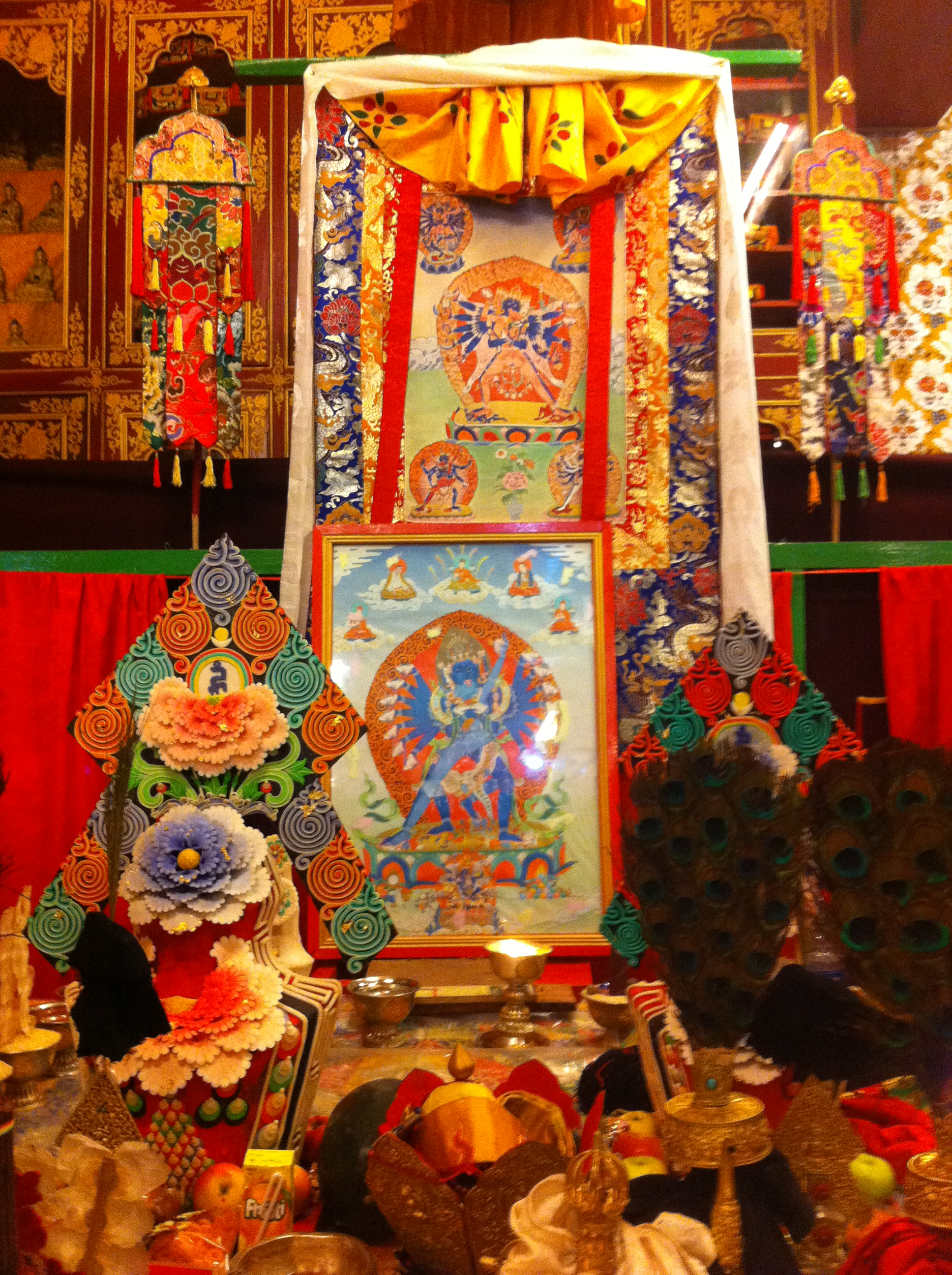
As previously mentioned, I recently returned from Palchen Chosling Monastery in Sikkim, India. I was there to attend the Kagyü Ngak Dzöd empowerments and the related oral transmission offered respectively by His Eminence Goshir Gyaltsab Rinpoche and the retreat master at Palchen Chosling Monastery’s retreat center, Drubon Rinpoche. An astounding event, the Kawang ceremonies were elaborate and extensive. The chief recipient was His Holiness Taklung Shabdung Rinpoche Rangrig Dorjee Nyima, the head of the Taklung sub-lineage of the larger Kagyu lineage. There were also a variety of other tulkus and khenpos from all over the Himalayan area who came to receive this vital transmission. The Kagyü Ngak Dzöd is one of the “Five Treasuries” that was compiled in the 19th century by Jamgon Kongtrul Lodrö Thaye. Out of the five, this is a collection of all of the empowerment texts, sadhanas, commentaries, and pith instructions of the thirteen major tantric practices that Marpa Lotsawa received in India at the feet of Naropa, Maitrepa, Sri Santibhadra and others. Included are the major and minor practices of Vajrapani and the long life practice of Amitayus from Machik Drupai Gyalmo as received by Rechungpa from his teachers in India, Balachandra and Machik Drupai Gyalmo herself. Also added by Kongtrul are the empowerments of Chakshipa (four-arm Mahakala) and Dusulma (Vetali) and Tseringma.

Of all of Kongtrul’s five treasuries, the Kagyü Ngak Dzöd has always held a special place in my heart. I think that the main reason for this is that I have a strong interest in the early roots of the Kagyü lineage, especially the transfer/transplanting of the core lineage practices from 11th century India to Tibet. Even the very act of bringing the texts that comprise the Kagyü Ngak Dzöd from Ralang to Brooklyn felt like a way to connect to Marpa Lotsawa- in the right setting it could even be seen as a form of guru yoga.
When we read the biographies of Marpa and similar figures of that time period, most of which were composed centuries after their actual lives were lived, we read of the hardship experienced in travel, of the dangerousness of the water and roads, of the corruption of the custom agents, even the identity/racial tensions between the enlightened Indians and Nepalis and their otherwise dim-witted neighbors from the north. In short, it was not easy for Marpa- and when we look closely, and perhaps even more importantly, when we look honestly, most of these same factors still exist today for western students of dharma who travel to India to learn at the feet of great masters there. The only difference is that it is often the Tibetans now, and not the Indians, who assume that we are naturally dim-witted vessels capable of nothing more than confusing the dharma for which we have come to learn.
This sensibility is so powerfully present within our conception of who we are in relation to Tibetans, and it was demonstrated with great clarity during a break in the empowerments I attended in Sikkim. A western woman who was attending the Kawang ceremonies tried to convince me that English is inherently a violent language in comparison to Tibetan, a language which she said was naturally coded with self-arising compassion and enlightened activity. There was, she claimed, evidence proved by brain scans that showed that when one speaks English there is an activation of all of the centers of the brain associated with anger, and of course, when one speaks Tibetan, an activation of all of the brain centers associated with compassion. Tibetan history certainly stands as a witness, as it should, to prove that such views are overly facile and fairytale projections that I would love to see expanded upon. Nevertheless, I was saddened and curious as to why this otherwise intelligent and motivated person wanted to assume that she was inherently flawed by the language that she spoke, indeed, even gravely hindered by this language to the point where dharma practice seemed more of an aspiration than something she could actually allow herself access to. For her, the practice works better if you are Tibetan, or at least speak Tibetan. What then of the 11th and 12th century Tibetans who never knew Sanskrit, the language from which the tantras were translated?
I am beginning to wonder whether or not dharma practice can really take root and generate fruit in the West without a deep exploration of the way we blend it within ourselves to reveal our conceptual habits- especially those of language. I am by no means a linguist, nor am I sure that one needs to be a linguist in order to explore how we use language, how we appreciate language, and how we unconsciously express ourselves (especially our habits and frames of reference) through language. There seems to be a great deal of power and transformative value within examining, and perhaps even unraveling all of the assumptions that we create through rote linguistic responses to the events and circumstances around us. Language is, after all, a set of symbols. Words often have a variety of meanings, ephemeral like soft wispy smoke starting out in one form and transforming as if through an alchemical process, into something else. We craft dialectics out of these words, define stances, elucidate positions, hammer-out identities and create entire worlds out of these words. Often these worlds are created out of a dialectic that supports us in our self-oriented perspective of the world within which we find ourselves; a position that creates suffering.

These powerful words can take on such seemingly real and concrete meaning that a critical investigation of how we create our identities (and thereby reinforce them through language) is vital to ensure that we can blend dharma practice (whichever form it takes) into our experience of life. This contemplative practice of examining how we continue to bind ourselves to a samsaric dialectic is very important. The woman I described above is a great example of someone who while well-meaning, has placed herself in a position in which she can’t allow herself the fruition of dharma practice because of the identity that she has created for herself- an identity that is not Tibetan.
How we use language and whether or not we can gather the guts to claim our practice within our linguistic (and perhaps even cultural/genetic backgrounds) is thus very important and not something to be taken lightly.
During my recent time in Sikkim I was grateful (and lucky) to share a handful of evenings with a friend who is both a gifted lama and translator. He happens to be American, did a three-year retreat in Mirik at the seat of the late kyabje Bokar Rinpoche, Bokar Ngedhon Chökhor Ling, and is now very interested/concerned with how dharma practice appears in the West and what it will look like as it continues to be transferred from India, Nepal, Tibet, and Bhutan. Of the many topics that we discussed, one of the primary ones that we came back to was the translation of dharma texts from Tibetan to English. In his eyes this seemed to be vitally important (for him as a translator) and for me in the sense that I happen to be convinced that we may just be playing “buddhist” house until we pull our practice (including practice texts and all commentarial literature) into our experience of life. A real sustained and honest exegesis is important if we really want to honor the spirit demonstrated within the core existential frustration and soul-searching (for lack of a better term) engendered by the Buddha and countless later masters. It may be that in failing to do this, the galvanizing factors that lead us to practice risk being lost by the sedating power of scented candles, plush meditation cushions, expensive meditation clothing, and prohibitively expensive weekend retreats.
In a dharma world where people seem to vacillate between ‘sitting’ dharma and ‘service’ dharma, sometimes in a cycle of burnout where one replenishes the other, I don’t see dharma but a cycle of subtle suffering within the dharma. Such a dynamic seems to lack depth and a greater awareness of how to become the dharma, how to integrate it.
How humbling that even great bodhisattvas, before achieving the 8th bhumi known as Achala (or Immovable) are still susceptible to wrong view, mistaken perspectives and mistakes in guiding others. No wonder it is possible to misinterpret our surroundings, our direction and even our intentions. Perhaps for this reason a sustained exegesis may be central to spiritual growth; a way to bolster and reinforce personal meditative experience.

What does sustained exegesis mean, or what might it look like?
There is no one answer to this question. After a number of evenings of conversation that lasted several hours with my friend in Sikkim we retired feeling passionately about our individual interests, paths, and the fiery topics that inspire and create the conditions to re-double our effort and energy around practice. What we found was that our interests, and perhaps by extension, our paths are and will be different. They are unique to who we are, to our qualities, and the way that we manifest in relation to, and within the dharma.
Whether it be Karma Chakme’s commentary on Rangjung Dorje’s writings on Chöd contained within the Rinchen Trengwa, or Pawo Tsugklag Trengwa’s commentaries on Vajrayogini, or any number of practice texts and their supporting literature, it is important to blend ourselves into the text. It is important to examine how our habitual linguistic theories about ‘ourselves’ and the way we ‘are’ remain discordant from the paths laid before us. How do we achieve a sense of connection to lineage? What does it take to breathe our exegetic process? What would it look like to constantly occupy a sense of connection to the center of whatever mandala that we practice? How will we manifest that in a manner that honors our natural abilities?

Not only are these are profoundly important questions that need to be resolved on a personal level within the context of our individual practice as well as within our dharma communities, they are not new. Ronald M. Davidson touches on this topic in relation to the way in which Marpa Lotsawa achieved experience within his dharma practice as well that of Gampopa in his thought provoking book Tibetan Renaissance: Tantric Buddhism in the Rebirth of Tibetan Culture. Davidson relates that Marpa and his student Ngok Chödor, who was the central inheritor of his lineage of textual exegesis, especially with regard to the Hevajra Tantra, was a proponent of the earlier Indian tradition of textual exegesis through which Marpa was able to master the large amount of tantric textual material that he learned from Naropa and his other teachers. Of this he writes:
It may be strange to some readers to stress the difference between tantric study and tantric practice, but Marpa himself was said to have obtained Buddhahood without meditating, and Drokmi’s pandita Gayadhara was noted for seldom practicing contemplation. In fact, by the late eleventh and early twelfth century, tantric exegesis had become an important area of study and exercise, and Gampopa’s received writings seldom quoted the tantras and almost never made reference to the normative points of controversy in the tantric commentaries.
Davidson points out the value that was placed upon tantric exegesis which when fully engaged can offer a powerful compliment to contemplative practice. It may be that this aspect of ‘practice’, one which I like to think of as ‘breathing text’ or perhaps more accurately, ‘becoming text’, seems to fall by the wayside by our often simplistic modern romantic sensibilities that suggest that text and textual study is less important than meditation practice. To create this kind of dichotomy is unnecessary. In fact it doesn’t make sense. When our practice becomes so natural that we have memorized parts of our sadhanas, where does text end and where does the practice of meditation begin? The same goes for mantras; when we blend mantra recitation with resting in mind, how can you make a distinction between the two?
Another great consideration comes from the potential power of words. As I have mentioned in previous blog posts in reference to the late Kyabje Bokar Rinpoche’s wonderful condensed commentary on the ninth Karmapa’s Ocean of Definitive Meaning, the mind is pointed out as the lama, as is appearance, and by extension, text. In this regard I am reminded of reading a number of dharma texts that electrified me, gave me goosebumps, and seemed to shift my perspective so that I could see more clearly. In fact, the feeling created in those moments can be incredibly profound and if not always life-changing, perhaps practice-changing. Several pointing-out texts come to mind, as do certain sufi texts and a variety of chan Buddhist texts. It seems clear that no one spiritual tradition seems to have a monopoly on the power of well placed words (nor does any specific language).
The brilliance of Gampopa, one of the heart sons of Jetsun Milarepa, may lay in his synthetic approach to exegesis. He was known for many things, a gifted meditator, a focused monk,and a Tibetan doctor, as well as other attributes attested in his biographies. What is less emphasized is the uniquely ‘outsider’ approach that Gampopa took towards exegesis. Lacking the same traditional training emphasized by Marpa and Ngok Chödor, Gampopa created his own doctrinal line that blended Kagyu traditions with Kadampa traditions often using traditional Mahayana language to explain tantra, and vice versa. This fusion, was indeed new and kicked up quite a storm that lasted for centuries. His blending of the yogic tradition maintained by Milarepa, Marpa, Naropa and Tilopa with the primarily Mahayana monastic tradition that was represented by the Kadampa was in many ways unprecedented.
It took centuries for Buddhism to take root in Tibet from India in a way that was Tibetan. I tend to feel that it will take a similar amount of time in the West. In a sense, we are living in the midst of a very exciting time, a time not unlike that of Marpa. If this is the case, how can we take the dharma that has been brought to us and allow for it to take root and blend within our general culture? How can we do this within our individual cultures of language, or perception, and experience? Will we allow ourselves to empower ourselves to breath the texts that have been passed down over a thousand years and let authentic dharma arise? What does that look like for us right now?
When we look at how we practice in this light, as part of a continuum, in which we help to shape the future just as those who have come before us helped to shape us where we are now, these issues feel more alive and immediate than they are often presented. Our texts, our service, and our mediation seats beat with the life of dharma that is so full of vitality and unbelievable potential. I pray that we can allow ourselves to express this fully and thereby let the seeds of untold realization take root on these shores! May great fields of indigenous mahasiddhas arise in this moment! May we arise as buddhas!


![[Valid RSS]](valid-rss-rogers.png "Validate my RSS feed")
 Ganachakra